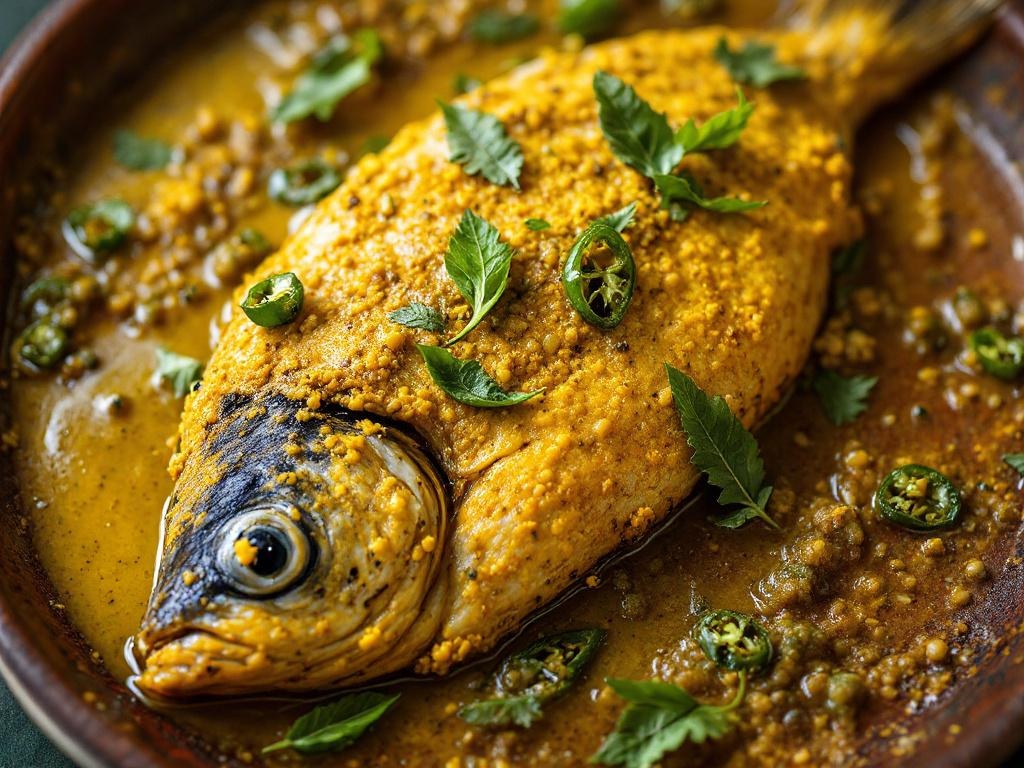
-
1
Soak 3 tablespoons brown mustard seeds in 40ml room-temperature water for 5 minutes to soften; grind to smooth, thick paste using mortar and pestle or wet grinder — paste should be thick, grainy, and bright yellow.
-
2
In bowl, combine mustard paste, 200g yogurt, minced ginger, green chillies, deseeded dried red chilli, salt, sugar, turmeric, and black pepper; whisk until uniform sauce forms — it should be thick, pourable, and pungent.
-
3
Pat fish pieces dry; lay on work surface; brush both sides generously with mustard-yogurt mixture, working sauce into skin and crevices; if using whole fish, stuff cavity with some sauce as well.
-
4
Prepare banana leaf (or parchment) by lightly wiping with damp cloth to make pliable; lay on work surface; place mustard-coated fish in centre; fold leaf around fish to create sealed parcel, securing with toothpick if needed.
-
5
Set up bamboo or metal steamer basket over pot with 5cm simmering water; place sealed fish parcel on steaming platform.
-
6
Cover steamer tightly with its lid, steam for 18 minutes if fish is halved, or 24 minutes if whole — fish flesh should be opaque, cooked through, and just tender; mustard sauce should have thickened and adhered to flesh.
-
7
Carefully remove steamed parcel; open leaf to release trapped steam (it will be very hot); transfer fish with all cooking juices to serving platter, leaving banana leaf behind if desired.
-
8
Drizzle with mustard oil and lemon juice; serve immediately whilst still steaming, with steamed rice and sautéed greens — the delicate hilsa flesh and pungent mustard coating is a classic Bengali preparation; leftovers remain flavourful when eaten cold the next day.