-
1
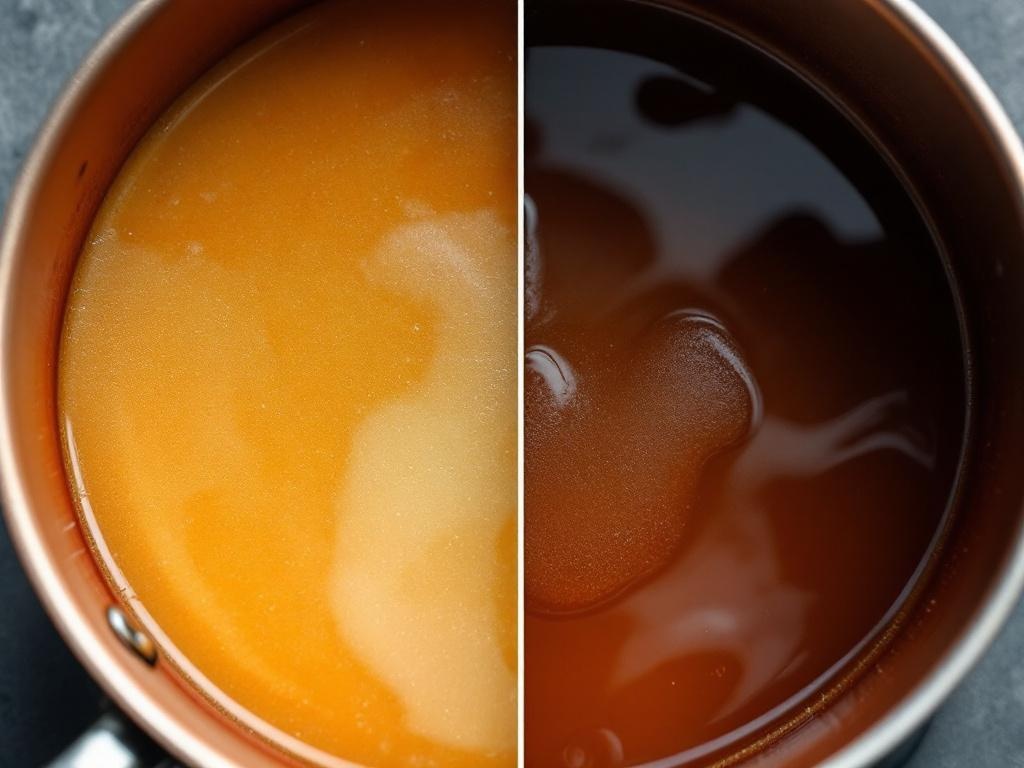
DRY METHOD:
-
2
Pour all 250 g sugar into a heavy-bottomed saucepan without stirring; place over medium heat.
-
3
Watch the sugar melt from the edges inward; once melted at the perimeter, gently tilt the pan to distribute heat evenly, reaching a deep amber color (160–170 °C / 320–338 °F).
-
4
Remove from heat and immediately add cold cream (caution: vigorous bubbling occurs); whisk until smooth.
-
5
Add butter and salt; whisk until fully incorporated, then pour onto parchment and cool to room temperature.
-
6
WET METHOD:
-
7
Combine 250 g sugar and 60 ml water in a heavy-bottomed saucepan; stir over medium heat until sugar dissolves.
-
8
Stop stirring; increase heat to medium-high and allow the mixture to bubble, watching for amber color (160–170 °C).
-
9
Remove from heat and add cold cream slowly; whisk until smooth, then add butter and salt.
-
10
Cool to room temperature on parchment.
-
11
Use a heavy-bottomed stainless steel pan — avoid non-stick, which degrades at caramelisation temperatures, and avoid copper without tin lining
-
12
A digital instant-read thermometer removes all guesswork — but also train your eye to read colour as a backup
-
13
For dry caramel without stirring, swirl the pan gently to redistribute liquid sugar while solids melt at edges
-
14
For salted caramel, add fleur de sel after emulsifying butter — salt added too early can inhibit caramelisation and affect colour
-
15
For spun sugar or pulled sugar work, add 10% glucose to the wet caramel to prevent crystallisation and extend workability