2 tsp
garam masala(divided — freshly ground blend if possible)
1 tsp
ground cumin
1 tsp
ground coriander
40 g
fresh ginger(finely grated)
8 cloves
garlic(crushed to a fine paste)
3 tbsp
ghee(or neutral oil)
2 large
white onion(finely sliced)
400 g
whole plum tomatoes(canned or fresh, blended smooth)
150 ml
double cream(stirred in at the end — do not boil after adding)
2 tsp
kasuri methi (dried fenugreek leaves)(crushed between palms — the defining aromatic of the masala)
1.5 tsp
salt(adjusted to taste)
· · ·
Method
1
Combine chicken with yogurt, 1 tbsp Kashmiri chilli, 1 tsp garam masala, half the ginger, half the garlic, and 1 tsp salt. Marinate minimum 4 hours, overnight preferred.
Yogurt marinade works through lactic acid, which begins denaturing the proteins on the surface of the chicken within 2 hours, tenderising the flesh. Kashmiri chilli is chosen for its bright, fruity heat rather than the dark, earthy heat of other chilli varieties — it produces the characteristic orange-red colour. The overnight marinade allows deeper penetration of spice compounds.
2
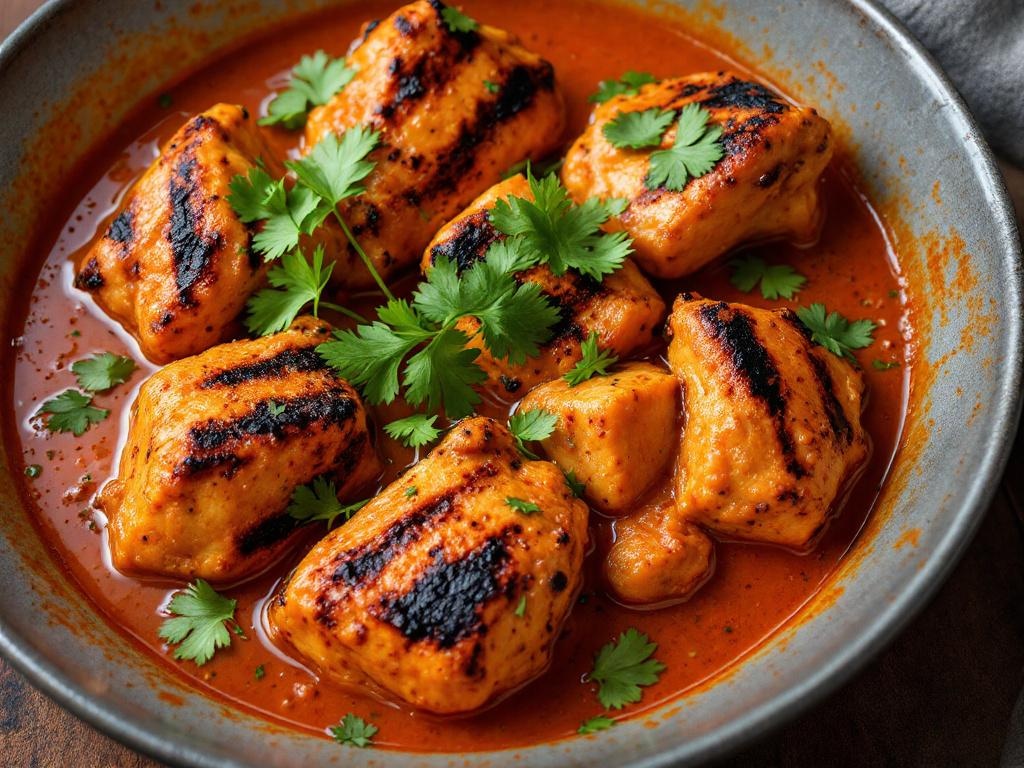
Thread on skewers or arrange on a foil-lined baking tray. Grill or broil at maximum heat (240°C) until charred at the edges, 12–15 minutes. The char is not cosmetic — it is the flavour.
The Maillard reaction that creates char requires both high heat and low moisture. The oven must be preheated to maximum temperature and the chicken surface must be relatively dry (pat off excess marinade). The pyrazines and furans created by charring contribute smoke and roasted notes that distinguish tikka from poached chicken. No tandoor substitute reaches 480°C, but maximum broiler heat achieves an adequate approximation.
3
In a heavy pan, heat ghee over medium. Cook sliced onions with a pinch of salt, 20–25 minutes until deeply golden and reduced. Do not rush.
Onions are 5% sugar by weight. When cooked slowly at medium heat, this sugar caramelises and the onions collapse to a quarter of their raw volume. The resulting paste is sweet, deeply savoury, and complex — the structural base of most North Indian curries. High heat produces a sharp, raw-sulphur flavour from incompletely broken-down allicin compounds that no amount of spice will conceal.
4
Add remaining garlic and ginger paste. Cook 2 minutes until raw smell disappears. Add remaining chilli powder, cumin, and coriander. Fry 1 minute.
The bhunao technique — stir and fry continuously in fat — requires the garlic and ginger to be cooked until their raw smell is completely gone. This means volatile sulphur compounds and terpenoids have evaporated, leaving behind sweet, caramelised aromatics. Adding spices before this point carries the raw notes forward. The 1-minute fry for ground spices blooms their fat-soluble flavour compounds into the oil.
5
Add tomatoes. Simmer uncovered 15 minutes until thick and the fat separates at the edges — this is the bhunao, the sign the masala is ready.
When the fat separates and pools around the edges of the masala, it means the tomato water has completely evaporated and the spices are now frying in oil again, not boiling in water. This creates concentrated flavour and a deep, brick-orange colour. If the masala is still simmering in liquid at 15 minutes, cook longer — the bhunao moment cannot be rushed.
6
Blend sauce until completely smooth. Return to pan, add charred chicken, simmer together 5 minutes.
Blending creates a completely emulsified, silky sauce — no individual vegetable chunks remain. The secondary 5-minute simmer with the chicken serves two purposes: it finishes the chicken through to the centre (tandoor charring only penetrates 5mm), and allows the chicken to release its juices into the sauce, enriching and thickening it.
7
Reduce heat to very low. Stir in cream, remaining garam masala, and crushed kasuri methi. Do not boil. Season to taste.
Cream added to a boiling sauce breaks — the fat separates and the sauce becomes grainy. The heat must be at a bare simmer or lower. Kasuri methi (dried fenugreek leaves) is added last because its key aromatic compound, sotolon, is highly volatile and evaporates within seconds at cooking temperatures. The palm-crush motion ruptures the leaf cells and releases more aroma at the moment of addition.
8
Serve with basmati rice or roti.
Basmati rice is washed 3 times before cooking — surface starch removal prevents the cooked grains from clumping. The absorption method (1 cup rice to 1.5 cups water) is preferred over boiling because it produces drier, more separate grains. The resting step after cooking — covered, off heat, 10 minutes — allows steam to redistribute and finish the rice without overcooking.