-
1
Soak broad beans overnight in cool water; drain and rinse thoroughly.
-
2
Steam beans for 45 minutes until completely tender; cool and crush lightly with a fork — do not pulverise.
-
3
Toast flour in a dry pan over medium heat for 3 minutes, stirring constantly, until pale tan; cool.
-
4
Combine crushed beans, toasted flour, salt, and water in a glass vessel; fold until cohesive — texture should resemble wet sand with distinct bean pieces.
-
5
Toast Sichuan peppercorns briefly if using; crush and stir through paste.
-
6
Cover with cheesecloth; ferment in cool, dark conditions (12–15°C ideal) for minimum 6 months, stirring weekly.
-
7
At 6 months: young, fruity, peppery — use in mapo tofu, chilli oils. At 2+ years: deep, funky, complex — use sparingly as umami base.
-
8
Transfer to sterilised jars; keep refrigerated or cool storage indefinitely.
-
9
USE: 1–2 tbsp (20–40 g) per dish as foundation for Sichuan cuisine; blooms in hot oil before sauce construction.
-
10
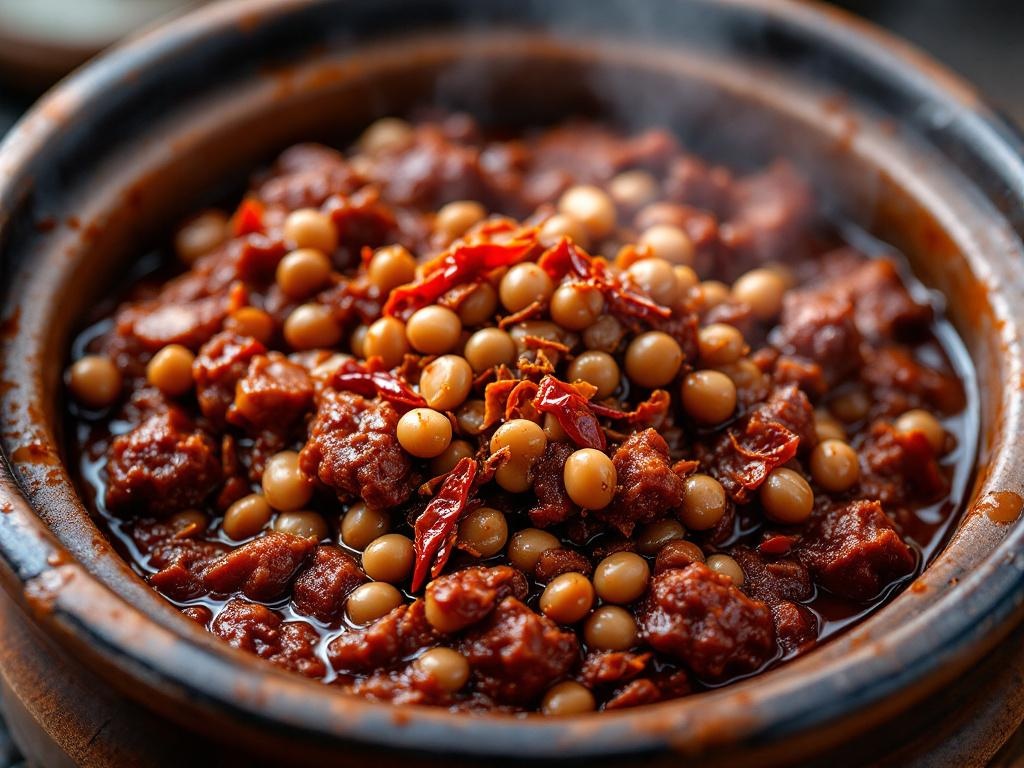
DOUBANJIANG (Sichuan Fermented Bean Paste)
-
11
Yield: 750 ml jar | Fermentation: 6–36 months
-
12
500 g dried fava beans (or yellow soybeans)
-
13
150 g fine sea salt
-
14
20 g koji (Aspergillus oryzae) or koji powder
-
15
150 ml filtered water (for initial hydration)
-
16
Soak dried beans overnight in cold water; drain and cook in fresh water until completely tender (1.5–2 hours), then drain thoroughly.
-
17
Inoculate cooled beans with koji powder; spread on clean cloth and ferment at 18–22°C (64–72°F) for 5–7 days until white mycelium develops.
-
18
Transfer koji-colonized beans to sterilized glass jar; mix in sea salt (approximately 25–30% by weight of beans).
-
19
Cover with muslin and ferment in sunlight at 15–20°C (59–68°F) for minimum 6 months; aged 2–3 years develops richer, more complex profile.
-
20
Stir twice weekly during first month, then weekly; paste will gradually darken and intensify.
-
21
Once fermentation is complete, transfer to airtight container and refrigerate.
-
22
FRESH (6 months): fruity, slightly sweet, lighter colour. AGED (24+ months): deeper umami, denser texture, mahogany colour. Use 1–2 tbsp per dish.
-
23
For mapo tofu: fry doubanjiang with garlic and ginger first, add stock, then tofu — this sequence extracts maximum flavour
-
24
A teaspoon of doubanjiang added to any meat braise adds a savoury depth that is impossible to identify but impossible to miss
-
25
For the characteristic Sichuan red oil, fry 3–4 tablespoons of aged doubanjiang in 100ml neutral oil until the oil is deeply red, then strain — this becomes a condiment in its own right
-
26
Combined with black bean paste (douchi) for mapo tofu for additional fermented depth
-
27
Keeps refrigerated for months — the fermentation continues slowly