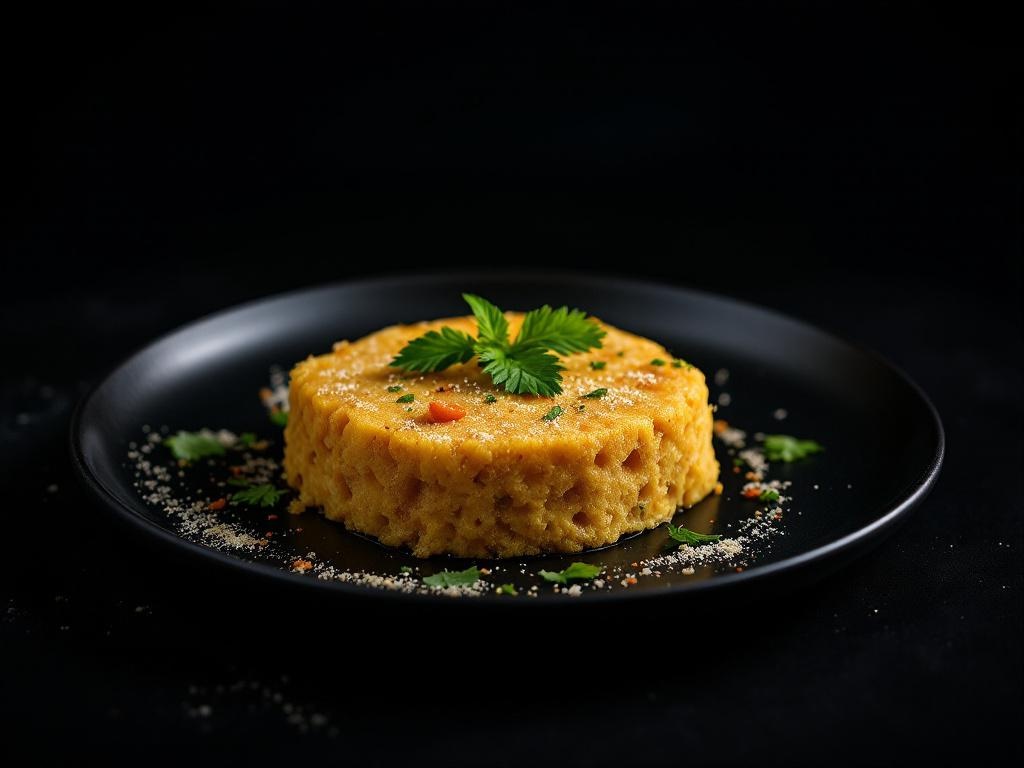
-
1
Mix chickpea flour, 100ml yogurt, 40ml oil, 80ml water, salt, sugar, and fenugreek seeds in bowl; whisk until smooth, lump-free batter; cover loosely with cloth and leave at room temperature for 8 hours to ferment — batter should become thicker, develop sour aroma, and increase slightly in volume.
-
2
Dissolve baking soda in 20ml water; gently fold into fermented batter just before steaming — do not overmix; batter should be pourable but thicker than pancake batter.
-
3
Heat 40ml oil in small pan over medium heat; add mustard seeds, when they finish crackling, add minced green chilli, garlic, ginger, curry leaves, and asafoetida; cook 2 minutes until fragrant.
-
4
Reserve half the tempering; fold remaining half into fermented batter gently using spatula.
-
5
Oil a 20×20cm square or round shallow steaming pan lightly; pour battered mixture into pan, spreading evenly to 2cm depth; drizzle reserved tempering across surface.
-
6
Pour water into steamer pot or wok to 5cm depth, place trivet inside; bring water to boil; carefully place dhokla pan on trivet, cover steamer with tight-fitting lid; steam for 25 minutes — dhokla should spring back when lightly pressed and cake should have risen by one-third.
-
7
Remove from steamer, cool 5 minutes in pan; run thin knife around edges to loosen; invert carefully onto cutting board or plate; cut into 3×3cm square pieces or 5cm triangles.
-
8
Drizzle with additional oil if desired, serve warm or at room temperature with fresh green chutney or tamarind chutney; dhokla is naturally moist, spongy, and stays fresh for 2 days covered.