-
1
Set a wide, heavy pan over high heat. Add the clams and mussels with a splash of white wine, cover tightly, and cook until the shells open — 2 to 3 minutes. Remove each shellfish as its shell parts; discard any that remain closed. Strain the liquor through a fine cloth and add it to the simmering fish stock. Shell most of the clams and mussels, leaving a few in the shell for presentation. Reserve all the shellfish aside.
-
2
Wipe the pan. Warm 2 tablespoons of olive oil over medium heat, add the garlic, and cook until fragrant. Add the scampi or prawns and sauté for 2 to 3 minutes, until the shells turn pink and opaque. Remove from the heat while still slightly under. Shell them if desired and add the shells and heads to the stock. Reserve the scampi with the clams and mussels.
-
3
In a wide, heavy-based saucepan, warm the remaining olive oil over medium-high heat. Add the rice and toast it, stirring constantly, until each grain turns translucent at the edge with a white core at the centre — about 2 minutes. The rice will hiss lightly against the hot fat.
-
4
Add a ladleful of the hot shellfish-enriched stock. Stir steadily. When the liquid is almost absorbed, add another ladleful. Continue in this way, maintaining a gentle, steady simmer — a quiet, even bubbling — adding stock and stirring for 16 to 18 minutes, until the rice is nearly but not fully cooked: each grain should yield at the surface while keeping a small firm core when pressed between finger and thumb.
-
5
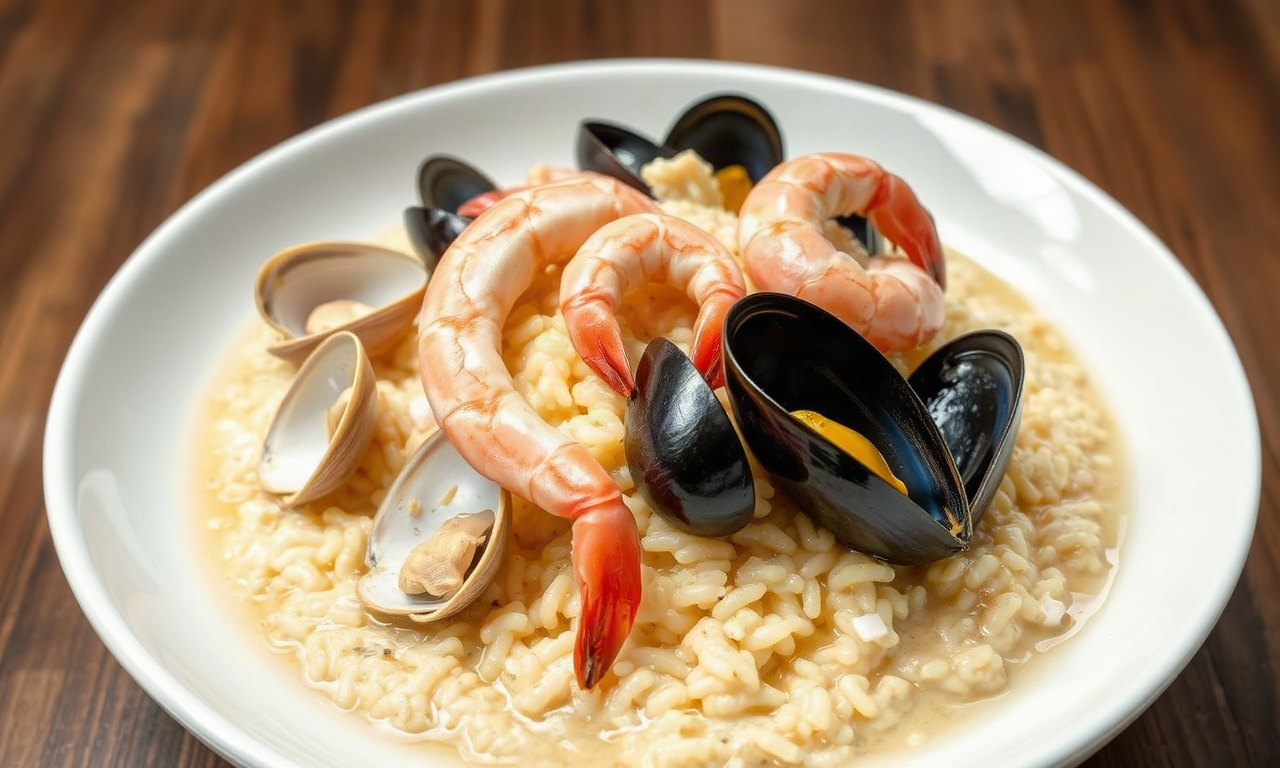
This is where the dish lives or dies. Fold the reserved clams, mussels, and scampi into the risotto in the last 1 to 2 minutes of cooking, together with any strained liquor still to hand. The shellfish must only warm through in the rice's heat, not cook further. Remove the pan from the heat while the rice retains a slight firmness at the centre.
-
6
Off the heat, beat in the cold butter in pieces — no Parmigiano — stirring vigorously until the risotto is loose and creamy. When the pan is shaken, the risotto should fall in a slow, even wave. Serve immediately, on its own, as a first course.