Mexico — derived from Spanish colonial marinade tradition; widely used across Mexico and Central America
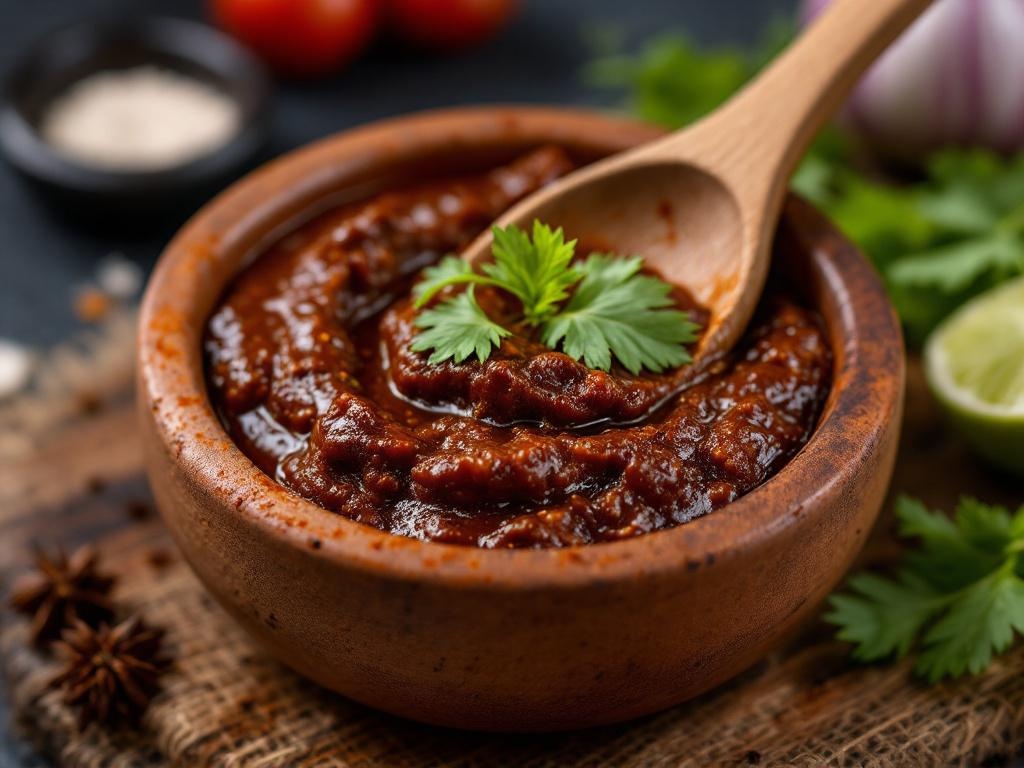
Adobo sauce is one of the most versatile pantry preparations in Mexican cooking — a dark, smoky, mildly spiced paste made from reconstituted dried chillies (typically ancho, mulato, or guajillo), vinegar, garlic, cumin, and oregano. It is the sauce in which chipotle chillies are packed commercially, but the homemade version is richer, more complex, and far more useful as a general-purpose cooking sauce. The process begins with toasting dried chillies, soaking them in hot water until supple, then blending them with garlic, cumin, Mexican oregano, black pepper, and vinegar. The ratio of vinegar is key: enough to provide its characteristic tangy backbone without overwhelming the earthy chilli base. Adobo's uses are almost limitless. Pork shoulder marinated in adobo and slow-roasted becomes cochinita pibil (when wrapped in banana leaf). Chicken thighs rubbed with adobo and grilled develop a caramelised, smoky crust. A spoon stirred into beans deepens them dramatically. Diluted with stock, it becomes a quick braising liquid for any protein. The term 'adobo' derives from the Spanish word for marinade and appears throughout the former Spanish empire — Filipino adobo (a vinegar braise), Puerto Rican adobo (a dry spice blend), and Mexican adobo sauce are related by etymology and the Spanish colonial legacy but are distinctly different preparations. The Mexican version is defined by its dried chilli base and dark mahogany colour.
Earthy, smoky, mildly acidic — dark and complex with dried fruit notes from the chillies
Dark paste turns fragrant and deepens in color as you fry it in oil — raw adobo smells flat and dusty.
Fail: Fry the blended sauce in oil after blending. Skip this step and the sauce lacks depth and tastes raw.
Fry the blended sauce in oil after blending. Skip this step and the sauce lacks depth and tastes raw.
- 60ml soy sauce (preferably tamari, gluten-free)
- 60ml apple cider vinegar
- 40ml water
- 25g brown sugar
- 15ml anatto-infused oil (or 6 whole star anise bruised)
- 8 garlic cloves, minced
- 10g ginger, minced
- 4 bay leaves (preferably California or Turkish)
- 8 black peppercorns, crushed
- 3g kosher salt
- 2 dried bay leaves
- Combine soy sauce, apple cider vinegar, water, and brown sugar in non-reactive saucepan over medium heat; stir until sugar dissolves completely.
- Add minced garlic and ginger; simmer 3 minutes without boiling.
- Toast bay leaves and crushed black peppercorns in separate dry skillet over medium heat for 1 minute until fragrant; transfer to saucepan.
- Stir in anatto oil and salt; simmer 8 minutes until slightly reduced and flavors meld—do not boil aggressively.
- Remove from heat and cool to room temperature completely.
- Strain through fine sieve into sterilized glass jar, pressing solids gently; discard bay leaves and peppercorns.
- Store in refrigerator up to 3 weeks; whisk briefly before each use as suspension may separate.
- Add a chipotle chilli or two for additional smokiness
- Adobo freezes well in ice cube trays — cube and store for months
- A small piece of Mexican chocolate added to the sauce adds subtle richness
- Apple cider vinegar can replace red wine vinegar for a slightly fruitier note
- A pinch of cinnamon and clove in the spice mix is traditional in some regional versions