Provenance 1000 — Italian Authority tier 1

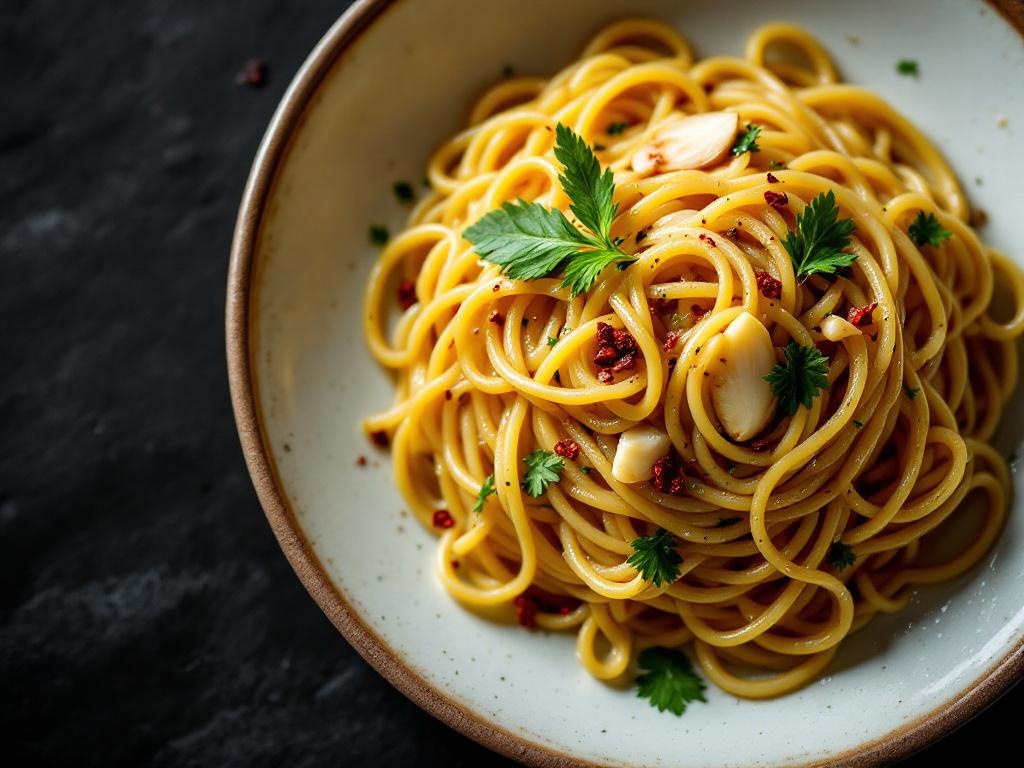
Aglio e Olio

Naples, Campania, and southern Italy broadly. The dish is the quintessential cucina povera (poor kitchen) preparation — made from pantry staples by anyone who has returned home too late to cook properly. Beloved precisely because its simplicity is also its difficulty.

Spaghetti aglio e olio is a 1am dish — the food of Naples at midnight, made from what is always in the kitchen. Spaghetti, garlic, olive oil, dried chilli, parsley, pasta water. The emulsion of oil and starchy pasta water is the sauce — not a garnish, a sauce. Executed with precision, it is one of the great pasta dishes. Executed carelessly — burnt garlic, insufficient pasta water, no emulsification — it is a plate of oily noodles.

Falanghina from Campania — it is the wine of Naples, it is the wine of aglio e olio. The slight bitterness of the Falanghina mirrors the bitterness of the toasted chilli; the fruit echoes the sweetness of the properly cooked garlic. A cold Nastro Azzurro is also correct — this is a midnight dish.

{"Garlic preparation: thinly sliced (not minced, not pressed) — slices create a different surface area to minced garlic and release the allicin more slowly, resulting in sweeter, less acrid flavour","Garlic colour: golden, not brown — pull the pan from the heat the moment the garlic turns pale gold. Brown garlic is bitter; raw garlic is harsh; pale gold is sweet","Add a ladleful of pasta water to the garlic oil before the pasta — this pre-emulsification begins the sauce before the pasta arrives","Peperoncino: dried Calabrian chilli flakes, added when the garlic is barely golden and the oil is hot enough to toast the chilli — 30 seconds in the oil before pasta water is added","Pasta water volume: reserve 300ml. The pasta should finish cooking in the pan with the garlic oil and pasta water — the final minute in the pan builds the emulsion","Flat-leaf parsley: added off heat at the very end, coarsely chopped — not wilted, not pre-added"}

The moment where aglio e olio lives or dies is the 30 seconds the garlic is in the oil — this is the entire technique of the dish. The oil must be over medium heat. The garlic goes in cold-oil or warm-oil (not screaming hot). Watch the edges first — they colour before the centre. The moment the edges turn pale gold, add the chilli, let it bloom for 10 seconds, then add pasta water. The temperature drops, the emulsification begins. The garlic finishes cooking in the water-oil emulsion, arriving at sweetness rather than bitterness.

{"Burning the garlic: the single most common reason aglio e olio is disappointing — burnt garlic is irreversibly bitter and taints the entire dish","Insufficient pasta water: without enough starchy water, the olive oil remains separate from the pasta — the dish is oily, not sauced","Minced garlic: releases compounds too quickly in hot oil, with a higher risk of burning"}

C h i n e s e s c a l l i o n o i l n o o d l e s ( n o o d l e s t o s s e d i n s l o w - i n f u s e d s c a l l i o n o i l s a m e p r i n c i p l e o f f a t i n f u s e d w i t h a r o m a t i c s ) ; K o r e a n g a r l i c n o o d l e s ( s i m i l a r p a n t r y - b a s e d n o o d l e d i s h w i t h s l o w - c o o k e d g a r l i c ) ; S p a n i s h p a s t a a j o y a c e i t e ( s a m e t e c h n i q u e , s a m e n a m e , s a m e c u l t u r a l l o g i c ) .