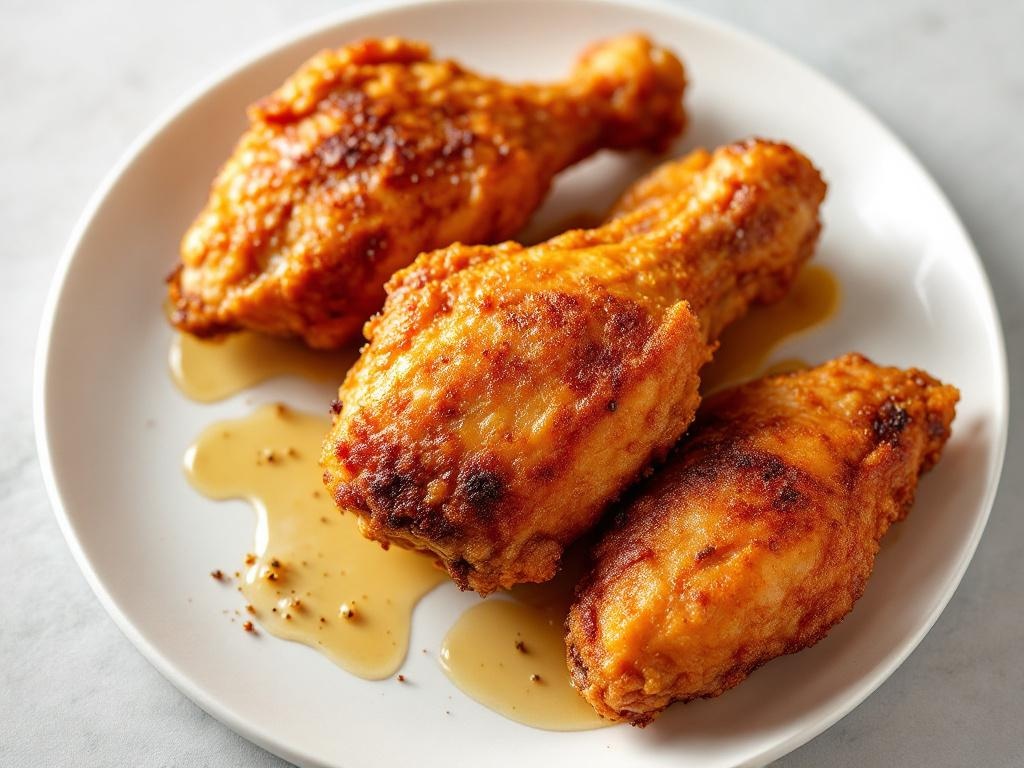
Air Fryer Chicken (Why It Works — Convection Science and Rapid Crisping)
One of 50 entries · Provenance 1000 — Viral
Air fryer appliance technology; Philips first commercial air fryer 2010; viral content peak via TikTok and YouTube 2019–2023
The air fryer became one of the best-selling kitchen appliances of the 2020s, driven by social media content and TikTok recipe videos that demonstrated crispy results without deep oil immersion. Air fryer chicken — from whole thighs to chicken wings to breaded cutlets — became the defining category of air fryer content. Understanding why the air fryer works so effectively for chicken helps produce consistently excellent results. An air fryer is a compact convection oven. The heating element is positioned at the top, and a powerful fan circulates hot air at high velocity around the food in a small enclosed space. The small chamber volume means the air reaches the target temperature very quickly, and the proximity of the heat element to the food intensifies the effect. The rapid air circulation strips away the steam layer that would otherwise form around cooking food, which is why air fryer results are drier and crispier than standard oven results — water is constantly being moved away from the food surface. For chicken pieces, the air fryer produces results closest to roasting in a very hot oven with a convection fan, but in a fraction of the time. Bone-in skin-on chicken thighs cooked at 200°C for 25 minutes in an air fryer achieve a crispness that would require 45 minutes in a standard oven. The key techniques: food must be patted dry before cooking — excess surface moisture creates steam that defeats the crisping mechanism. Spraying with a light coat of oil (or brushing) provides the fat necessary for the Maillard reaction to proceed. Overcrowding defeats the whole purpose — the circulating hot air must be able to reach all surfaces. For breaded chicken, a thin even breadcrumb coating (Panko is ideal) sprayed lightly with oil produces a crust that is indistinguishable from shallow-frying in texture, while using a fraction of the oil.
Crispy golden skin, juicy interior, seasoning-forward without deep fry oil heaviness
visual: Chicken surface turns golden and crisp to touch; interior stays juicy when cut open.
Pat chicken completely dry before air frying — surface moisture creates steam and defeats crisping.