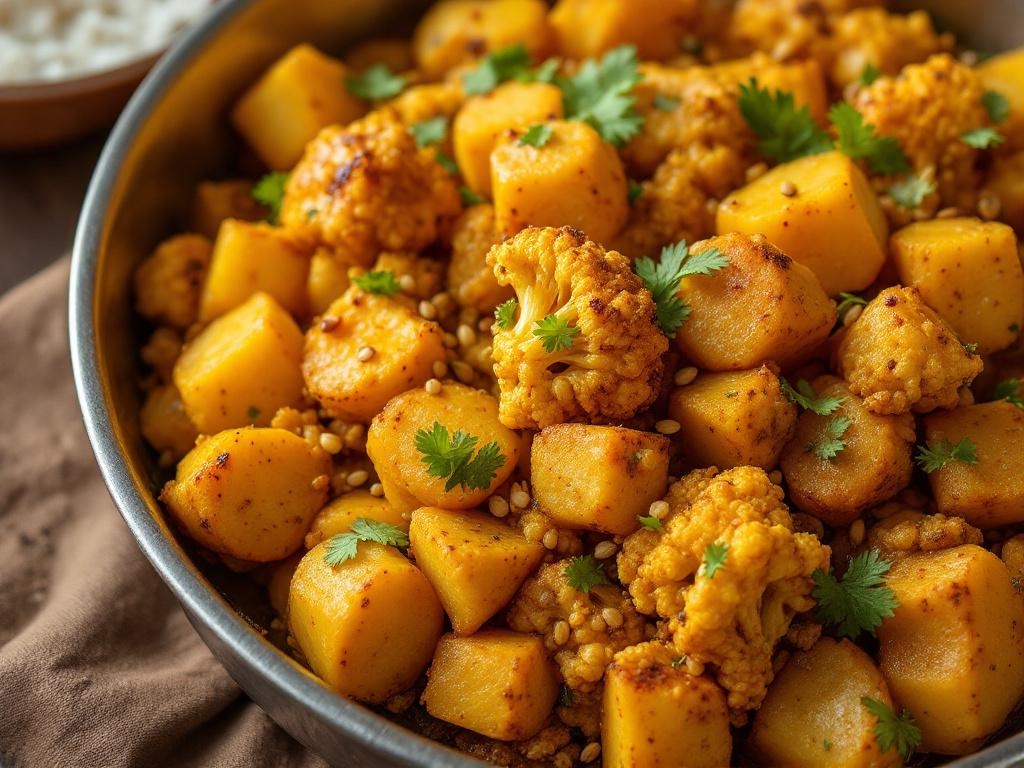
Punjab and northern India. Aloo gobi is a staple of Punjabi home cooking, eaten daily in homes across the region. It is served with chapati (the everyday bread of North India), not rice. The simplicity of the dish belies the precision required in the bhuna base.
Aloo gobi (potato and cauliflower curry) is a dry-style North Indian sabzi — potatoes and cauliflower cooked together in a masala of onion, tomato, ginger, garlic, and warming spices until the vegetables are tender but not mushy, and the sauce has reduced to a thick, clingy coating. The dish is deliberately dry — not soupy. It is the workhorse of the Indian vegetable repertoire.
Chapati (whole wheat flatbread) and dal makhani — aloo gobi in North India is always served as part of a thali with bread, lentils, and yoghurt. It is a supporting dish in a composed meal, not a standalone.
{"Potatoes: waxy variety (Desiree or Yukon Gold), cut into 3cm cubes — floury potatoes disintegrate during cooking","Cauliflower: cut into large florets (4-5cm) — small florets overcook before the potatoes are done","The masala: fry onion until deep golden, add ginger-garlic paste, cook off the raw smell, add tomato and cook until the oil separates — this bhuna base is what gives aloo gobi its depth","Spices: cumin seeds bloomed in oil first, then turmeric, coriander powder, cumin powder, Kashmiri chilli — added to the onion-tomato base","Dry cooking technique: add the vegetables to the masala, toss to coat, then cover and cook over low heat — no added water. The steam from the vegetables themselves cooks them","Finish: uncover for the final 5 minutes to dry out any excess moisture and develop a slight char on the potato edges"}
The moment where aloo gobi lives or dies is the cover-and-steam method — once the vegetables are coated in masala, reduce heat to very low, cover tightly, and do not lift the lid for 15 minutes. The vegetables steam in their own moisture within the sealed vessel. When you open the lid at 15 minutes, the cauliflower should be just tender and the potatoes almost done. Uncover and increase heat to finish and dry out. This sequence produces aloo gobi that is neither dry-raw nor waterlogged.
{"Adding water: aloo gobi should be dry — water produces a watery, soupy result","Overcooking the cauliflower: it becomes mushy and grey rather than tender-firm and golden","Under-cooked masala base: the tomato must be cooked until the oil separates, or the sabzi will taste raw and sharp"}