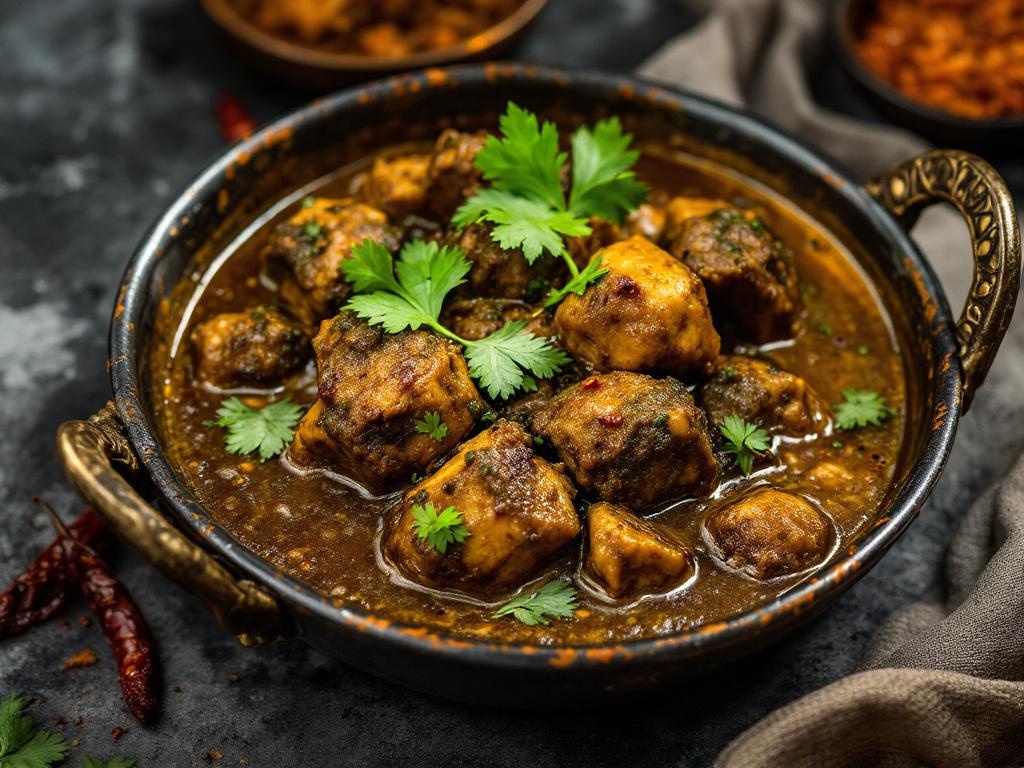
Andhra Pradesh, particularly Guntur and Krishna districts — Telugu culinary tradition
Gongura Mutton is among the most distinctively regional dishes in all of Indian cooking — a spiced lamb curry built around gongura (Hibiscus sabdariffa, known as sorrel leaf or roselle), a sour green leaf that functions as both vegetable and souring agent in Andhra Pradesh. If you have not eaten gongura, you cannot fully understand Andhra food: its sharp, fermented-tasting sourness is unlike tamarind, unlike lime, unlike any other souring agent in the South Indian pantry. Gongura leaves are either fresh or pickled (the pickled version, gongura pachadi, is one of Andhra's most important condiments). In gongura mutton, the leaves are cooked separately until soft and slightly darkened, then blended into a paste and added to the mutton curry at the end of cooking. The result is a curry that is simultaneously hot, sour, and deeply spiced — with the distinct metallic-sharp note that only gongura provides. Andhra cuisine is known for its use of heat — more dried red chillies per dish than almost any other regional Indian cooking — and gongura mutton exemplifies this: the sourness of the leaf is necessary to cut through the fat of the mutton and the intensity of the chilli. The dish is traditionally eaten with plain white rice, the starch absorbing both the chilli heat and the sourness of the gongura.
Fiery, sharply sour, intensely spiced — the most assertive flavour profile in South Indian cooking
visual: Gongura paste added late turns the curry sharply sour and darkens — a fermented-tasting green bite unlike tamarind or…
Add gongura paste in the final 10–15 minutes or it loses its bright sourness; add it raw and the leaf tastes harsh.