Sicily — Street Food & Fritti canon Authority tier 1

Arancini

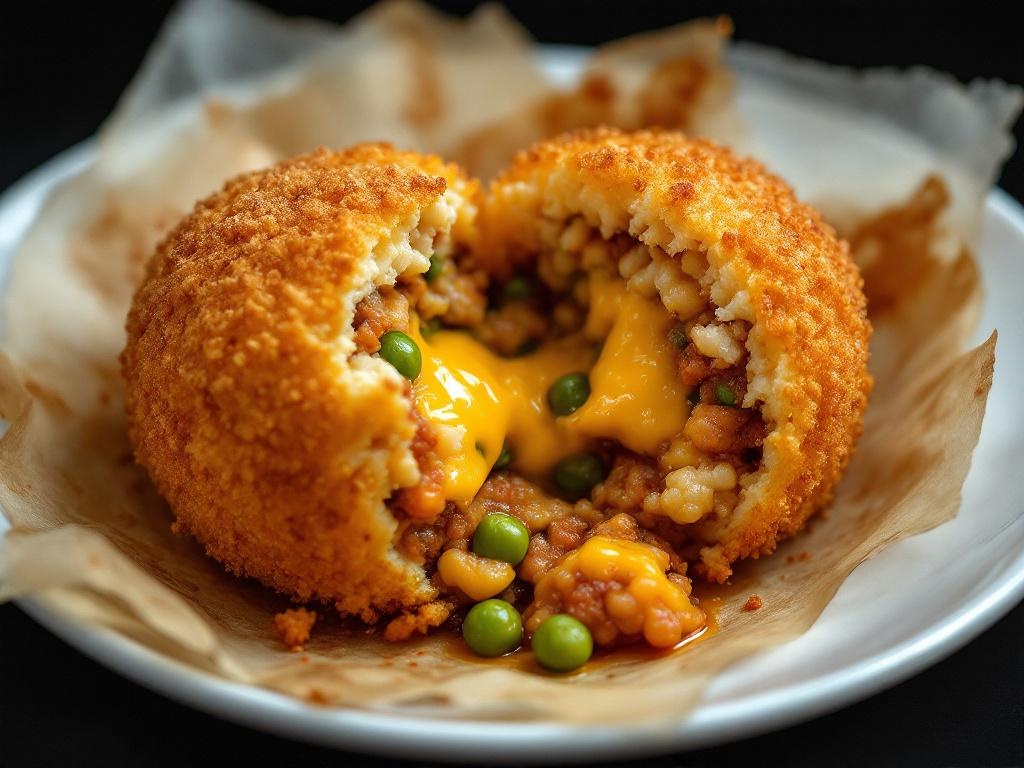
Arancini (or arancine in Palermo, where the feminine form and the round shape prevail over Catania's masculine, conical version) are Sicily's most famous street food—golden, deep-fried rice balls stuffed with ragù, peas, and cheese that represent an edible encapsulation of the island's Arab-Norman heritage. The name means 'little oranges,' a reference to their golden fried exterior and, in Palermo's round version, their citrus-like shape. The rice—traditionally short-grain, cooked in broth with saffron for colour—is cooled and mixed with beaten eggs and grated cheese (caciocavallo or Parmigiano), then formed around a filling. The canonical ragù filling (arancini al ragù) contains a slow-cooked meat sauce with peas, cubed mozzarella or caciocavallo, and sometimes a touch of béchamel. Other classic fillings include 'al burro' (ham and mozzarella with béchamel) and 'agli spinaci' (spinach and mozzarella). The formed balls are rolled in flour, dipped in beaten egg, coated in fine breadcrumbs, and deep-fried at 170-175°C until the exterior achieves a deep, burnished gold. The ideal arancino is shattering-crisp outside, with a compact rice shell giving way to a molten, saucy interior where the cheese has melted into stretchy threads. The size is important—a proper Sicilian arancino is substantial, roughly the size of a fist (or larger), serving as a complete meal. The Catania-Palermo rivalry extends to shape (conical in Catania, round in Palermo), gender (masculine arancino in Catania, feminine arancina in Palermo), and filling preferences. Street vendors and rosticcerie across Sicily sell them by the thousands, kept warm behind glass counters, their golden spheres stacked in pyramids that are among the island's most recognizable visual symbols.

Cook rice in saffron broth, cool completely before forming. Fill generously with ragù, peas, and melting cheese. Bread coating: flour, egg, breadcrumbs. Fry at 170-175°C until deep golden. Substantial size—a fist or larger. Serve hot.

Wet your hands when forming to prevent sticking. Double-bread for extra crunch. Refrigerate formed arancini for 30 minutes before frying—they hold shape better. The ragù should be on the drier side to prevent sogginess. Some masters add a disc of cheese in the centre for maximum stretch.

Rice too hot when forming (falls apart). Insufficient breadcrumb coating (cracks during frying). Oil not hot enough (greasy, no crust). Too little filling (bland centre). Making them too small (missing the point). Using long-grain rice.

Mary Taylor Simeti, Sicilian Food; Ferrara & Ferrara, Cucina Siciliana

Brazilian coxinha (stuffed-fried street food) Japanese onigiri (rice ball logic) Indian samosa (filled-fried tradition)