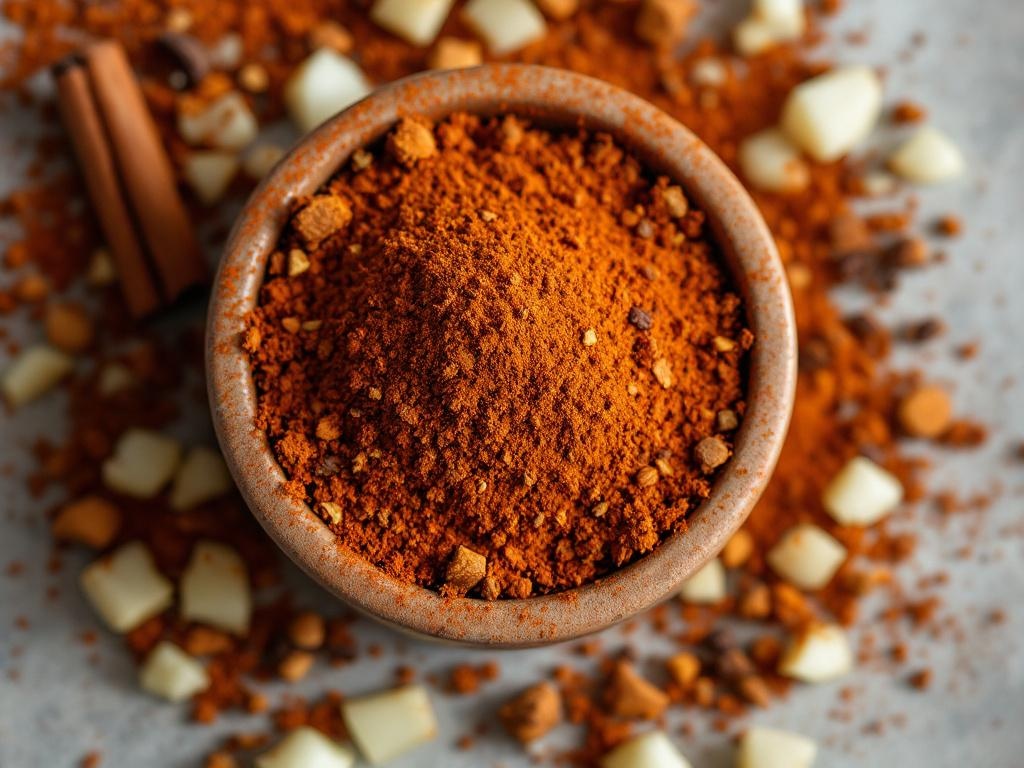
The Arab world — Levant, Gulf, North Africa; each country has a regional variant
Baharat (Arabic for 'spices') is the all-purpose spice blend of the Arab world — a warmer, more assertively spiced preparation than garam masala, used throughout Lebanon, Syria, Iraq, Jordan, Egypt, and the Gulf states. Like all regional spice blends, its exact composition varies by country, city, and family. The core of baharat is typically: allspice, black pepper, cinnamon, coriander, cloves, nutmeg, cumin, and paprika. Turkish baharat often adds mint. Saudi Arabian baharat includes dried limes (loomi). Lebanese seven-spice (sabaa baharat) is a specific and widely used variation with a fixed ratio of seven ingredients. Baharat is used as a cooking spice (added early to onions and meat) and as a finishing spice — its uses are less prescriptive than garam masala. Kafta (minced lamb skewers), rice pilaf, braised lamb shanks, and stuffed vegetables all rely on baharat. The smell of baharat cooking in a Levantine kitchen — particularly with onion, lamb fat, and pine nuts — is one of the most evocative aromas in the Middle Eastern food canon. The paprika distinguishes baharat from other warm spice blends — it adds both colour and a mild smoky sweetness that roots the mixture in the Levantine rather than South Asian tradition. Some regional versions use smoked paprika for a deeper character.
Warm, rounded, allspice-forward — aromatic with cinnamon and pepper, coloured with paprika
visual: Dry-roast whole spices until fragrant, then grind fresh — allspice backbone dominates, paprika added after grinding to prevent scorching.
Omit allspice and the blend collapses — it is the defining note of baharat and cannot be replaced by individual spices.