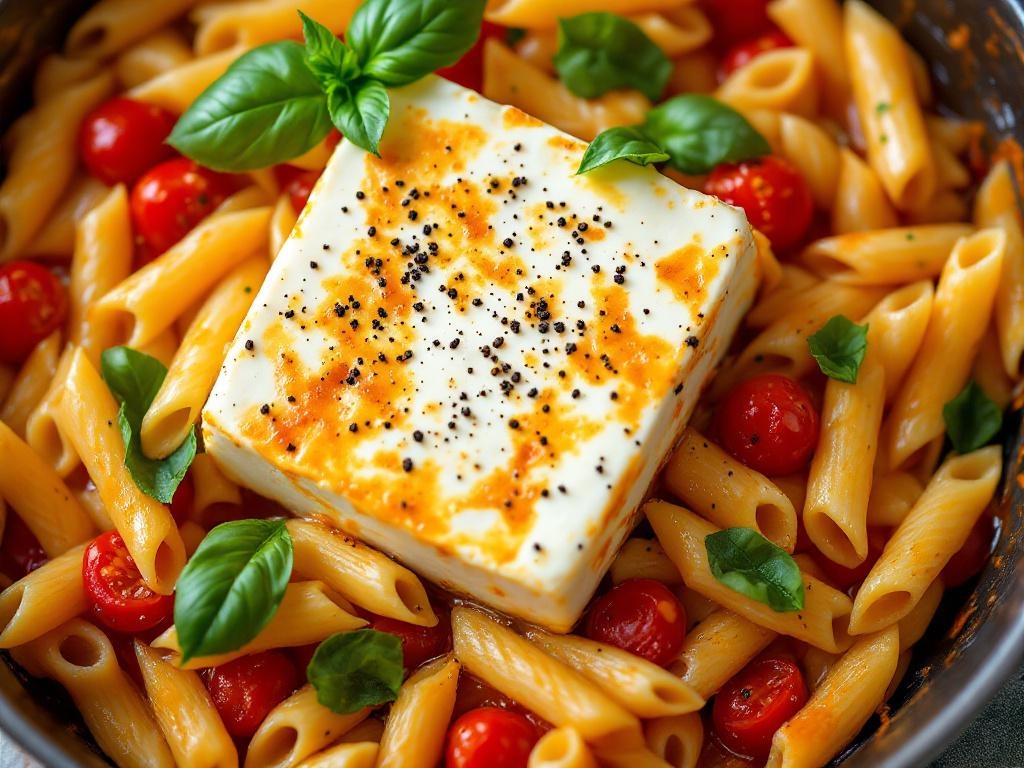
Baked Feta Pasta (Finnish TikTok Viral — Oven Method and Acid Balance)
One of 50 entries · Provenance 1000 — Viral
Finland — Jenni Häyrinen, blog ilosyöjä, 2019; viral globally via TikTok January 2021
Baked feta pasta became TikTok's most replicated recipe of 2021, but its origin predates the platform by years. Finnish food blogger Jenni Häyrinen posted the recipe on her blog ilosyöjä in 2019, calling it uunifetapasta. It went truly viral when American food writer MacKenzie Smith shared it in January 2021, causing feta cheese to sell out across the United States. The dish is not a gimmick: the technique is genuinely sound and the flavour result — sweet roasted tomatoes, creamy melted feta, and pasta — is greater than the sum of its parts. The correct method places a block of good-quality Greek feta in the centre of a deep baking dish surrounded by cherry tomatoes, whole garlic cloves, olive oil, black pepper, and a pinch of chilli flakes. The dish goes into a 400°F oven for 35 to 40 minutes until the tomatoes burst and the feta takes on a golden, slightly blistered surface. The feta should be baked as a whole block — not crumbled — so it softens internally while developing a crust. Where most viral versions fail is in acid balance and starch integration. As the dish comes out of the oven, the feta and tomatoes are mashed together. The mixture is salty from the feta and sweet-acidic from the tomatoes, but without an additional acid hit — a squeeze of lemon, a splash of red wine vinegar, or both — the sauce reads as flat. A handful of fresh basil added off the heat brightens the herbaceous register. The pasta should be cooked al dente and added to the baking dish with a ladle of pasta water. The starch in the cooking water is essential: it emulsifies the olive oil, tomato juice, and melted feta into a cohesive sauce rather than a greasy pool. The ratio of pasta to sauce is important — do not overcook the pasta or add too much.
Creamy-salty feta, sweet roasted tomato, olive oil richness, fresh herb brightness
Tomatoes burst and feta turns golden in the oven—the block creams instead of crumbling.
Fail: Tomatoes burst and feta turns golden in the oven—the block creams instead of crumbling.
Tomatoes burst and feta turns golden in the oven—the block creams instead of crumbling.
- 200 g feta cheese DOP (Greek or Bulgarian), whole block
- 400 g San Marzano DOP tomatoes, canned whole
- 120 ml extra virgin olive oil (Koroneiki, cold-pressed)
- 4 garlic cloves, crushed
- 6 Kalamata olives, pitted
- 1 tsp dried oregano (Greek)
- 0.5 tsp Aleppo pepper
- 200 g linguine or fettuccine
- 15 ml fresh lemon juice
- Fleur de sel
- Tellicherry black pepper
- Preheat oven to 200°C. Place feta block in a shallow ceramic dish; arrange crushed tomatoes, olives, and garlic around it.
- Drizzle entire dish with 100 ml olive oil; scatter oregano and Aleppo pepper over top.
- Bake uncovered for 22 minutes until feta edges soften and tomatoes blister slightly.
- Bring 2 liters salted water to rolling boil; cook pasta 2 minutes under al dente target; reserve 120 ml pasta water.
- Remove dish from oven; crush feta into creamy mass with a fork, emulsifying with pan juices and remaining 20 ml raw olive oil.
- Add hot drained pasta directly to feta dish; toss vigorously, adding pasta water in 30 ml increments until sauce coats noodles with glossy emulsion (45–60 seconds).
- Finish with lemon juice, fleur de sel, and cracked black pepper; serve immediately in warmed bowls.
- Add a few Kalamata olives and capers to the baking dish for a puttanesca dimension
- A splash of ouzo or white wine in the dish before baking adds aromatic depth
- For extra richness, stir a spoonful of cream cheese into the mashed mixture
- Penne or rigatoni hold the sauce better than thin pasta — surface area matters
- The dish reheats well with a splash of water — add fresh basil only at serving