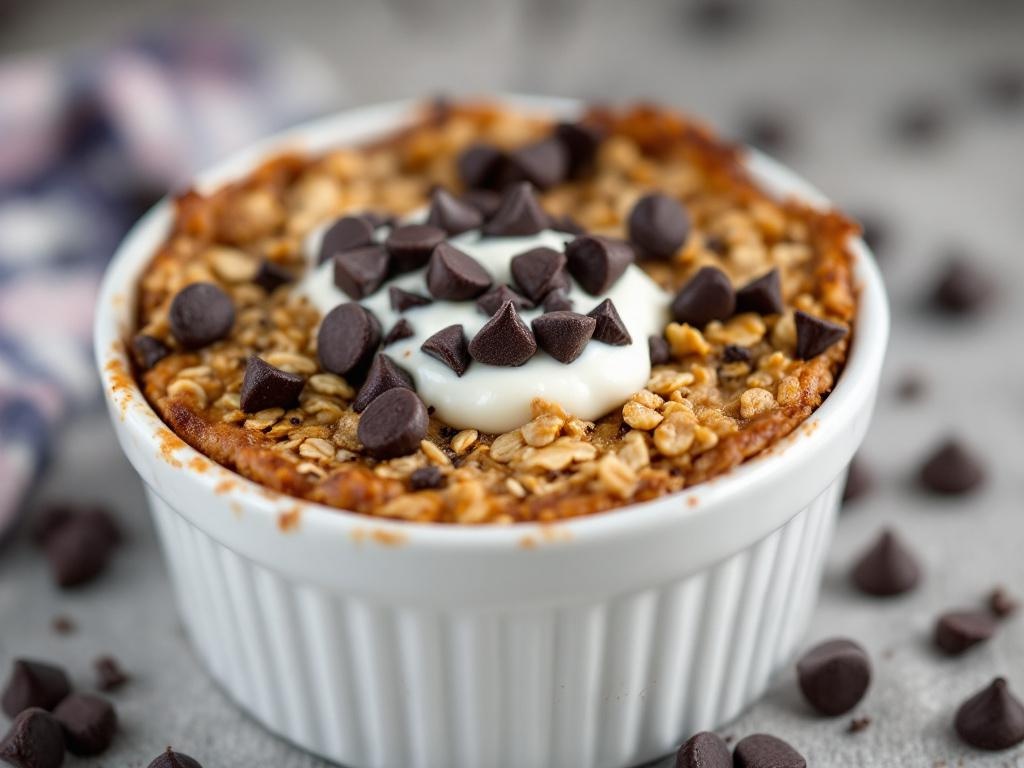
Baked Oats (Overnight into Oven — Texture and Sweetness Balance)
One of 50 entries · Provenance 1000 — Viral
Health food blog culture; went viral on TikTok 2021 through multiple creator formats
Baked oats became a significant TikTok food trend from 2021 onward, with creators demonstrating a format that blends rolled oats into a batter-like consistency and bakes it in a ramekin or small baking dish, producing a texture somewhere between a muffin, a brownie, and a porridge. The appeal — a warm, cake-like breakfast that is nutritionally dense — was enormous, and the recipe format proved endlessly adaptable to flavour variations. The correct base method: rolled oats are blended in a high-speed blender until they reach a fine flour-like consistency. One egg is blended in with a ripe banana (the primary natural sweetener), a tablespoon of nut butter, a splash of milk, a teaspoon of baking powder, a pinch of salt, and optional flavourings such as vanilla, cocoa powder, or cinnamon. The banana serves the dual role of sweetener and binder — it should be fully ripe with visible brown spots for maximum sweetness and flavour. Without a ripe banana, the result is bland and requires significant added sugar to compensate. The batter is poured into a greased ramekin or small baking dish and baked at 180°C for 20–25 minutes. The correct result is set around the edges with a slightly soft, fudgy centre that firms as it cools. A tooth-pick inserted at the centre should come out with a few moist crumbs — not raw batter, not completely clean. Over-baking produces a dry, dense texture that loses the characteristic cakey quality. The 'overnight' version involves mixing the batter the night before and refrigerating it, allowing the oats to absorb the liquid fully. This resting produces a noticeably smoother, more cohesive texture. The baking time may need an additional 3–5 minutes for the chilled batter. Toppings — fresh berries, chocolate chips pressed in before baking, or a drizzle of nut butter after — complete the dish.
Warm banana sweetness, toasty oat base, nut butter richness, optional chocolate depth
tactile: Blended oats feel flour-fine between fingers; ripe banana skin is heavily spotted brown and yields to thumb pressure.
Blend oats to flour or texture turns gritty; use heavily spotted banana or sweetness fails and structure collapses.