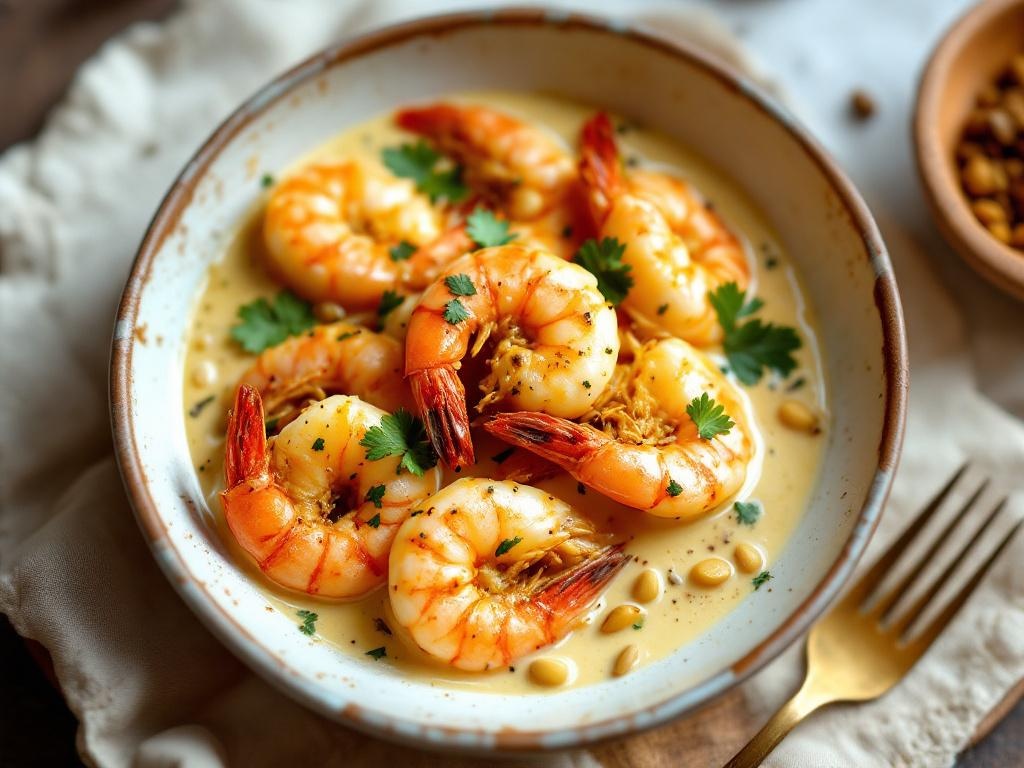
Bengali Chingri Malai Curry (Prawn in Coconut Cream)
One of 60 entries · Provenance 1000 — Indian
Bengal (West Bengal and Bangladesh) — a festive and celebratory preparation; associated with Bengali seafood traditions and the coastal and riverine communities of the Sundarbans delta
Chingri malai curry — tiger prawns cooked in a sauce of fresh coconut cream with whole spice — is Bengal's most refined and celebratory seafood preparation. The name is a gentle linguistic contradiction: 'malai' in Bengali refers to the cream of fresh coconut (malaier) rather than the dairy malai of North India — though the association with luxury and richness is identical. This is a dish served at weddings and festivities, its rich coconut cream sauce and premium prawn carrying the status of occasion food. The technique begins with the prawns — ideally large, fresh tiger prawns with heads on — being lightly sautéed in mustard oil with turmeric to firm the flesh. In authentic preparation, the prawn heads are retained or cooked separately to extract their flavour into the coconut sauce: prawn heads are the flavour foundation of the dish's sauce, contributing iodine-sweet prawn fat that integrates with the coconut cream. The spice philosophy of chingri malai curry is unusually restrained for Indian cooking: whole spices only — bay leaf, clove, cardamom, and cinnamon — plus a small amount of ginger. No dry chilli powder, no complex masala. The restraint is deliberate: the coconut cream and prawn sweetness must dominate; they cannot compete with a complex spice base. This is Bengali cooking's approach to luxury product — stand aside and let quality speak. Coconut cream is added in stages: coconut milk first to build the sauce body, then fresh cream of coconut at the end for richness. The finishing stage must be done at low heat — boiling coconut cream splits immediately, curdling the sauce. The sauce should be ivory-golden, glossy, and coat the prawns in a cream that is substantial but not dense.
Rich, ivory coconut cream sweetness against iodine-rich prawn fat, mustard oil earthiness, and fragrant whole spice — celebratory, restrained, and product-led
visual: Prawn heads release their sweet brine into the coconut cream as it stays below a simmer — the sauce…
Boiling the coconut cream splits it into grease and whey; the sauce becomes grainy and separated — the dish is lost.