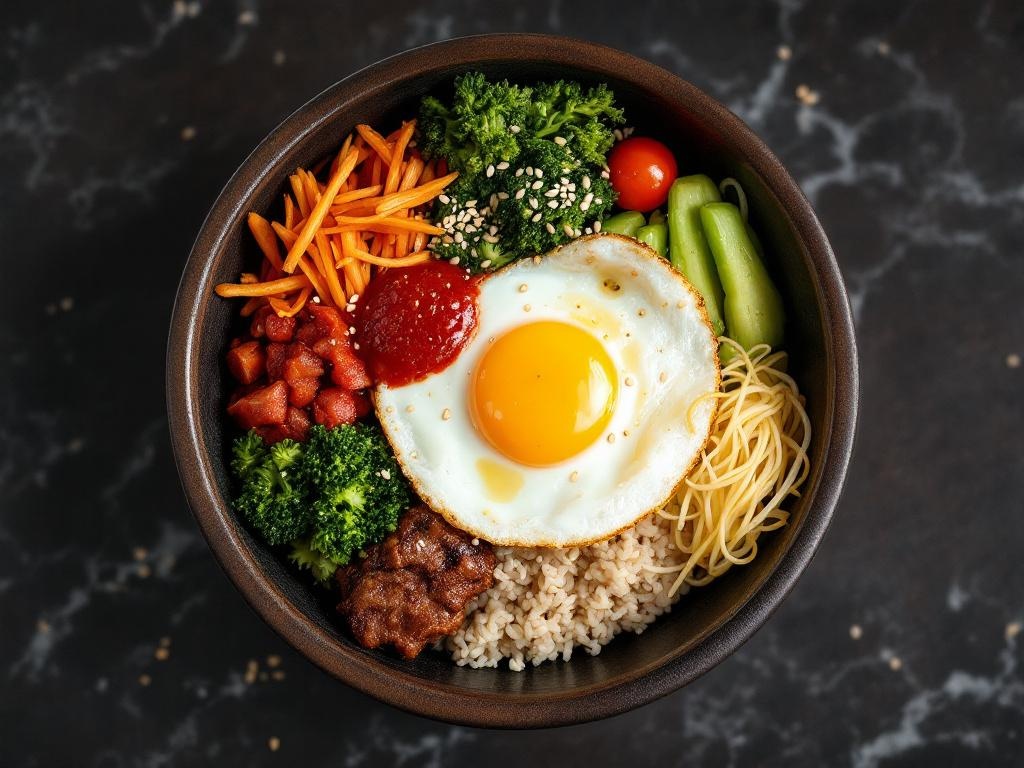
Korea. Bibimbap appears in Korean texts from the late Joseon period. The dish is believed to derive from the tradition of mixing leftover banchan (side dishes) into rice at the end of a meal. The Jeonju bibimbap (from North Jeolla Province) is considered the definitive version.
Bibimbap (mixed rice) is Korea's most internationally known dish — a bowl of warm short-grain rice topped with individually seasoned vegetables (namul), a fried egg, gochujang (fermented chilli paste), and sesame oil, all mixed together at the table. The components must be prepared separately; the mixing is what creates the dish. Dolsot bibimbap (in a hot stone pot) develops a crispy rice crust at the base — the most prized version.
- Japanese donburi (rice bowl with toppings — the same bowl format, different toppings and seasonings); Taiwanese lu rou fan (braised pork belly rice bowl — the Taiwanese bowl tradition); Hawaiian poke bowl (composed rice bowl — the contemporary American bowl derived from similar principles).
Sikhye (sweet rice punch) or barley tea (boricha) — the traditional Korean table beverages alongside bibimbap. Or a glass of Korean makgeolli (milky rice wine) for the evening version.
Further training content for this entry is being completed.
- 200 g short-grain sushi rice
- 240 ml water
- 15 ml rice vinegar
- 5 g sugar
- 3 g kosher salt
- 100 g beef sirloin, thinly sliced
- 15 ml soy sauce
- 2 g sesame seeds
- 120 g kimchi, chopped
- 100 g spinach, blanched and seasoned
- 100 g carrot, julienned and sautéed
- 100 g zucchini, julienned and sautéed
- 80 g mushrooms (shiitake), sliced and sautéed
- 80 g Korean seasoned soy sprouts
- 1 egg, fried sunny-side up
- 30 ml gochujang (Korean red chilli paste)
- 15 ml sesame oil
- 10 ml water
- 5 g sugar
- Rinse rice 3 times until water runs clear; cook in 240 ml water 15 minutes, rest 10 minutes covered.
- While rice cooks, season beef with 10 ml soy sauce and 1 g sesame seeds; sear in hot skillet 2 minutes per side.
- Warm each vegetable component separately if made ahead; season each with salt and sesame oil.
- Whisk gochujang with 15 ml sesame oil, 10 ml water, and 5 g sugar to create sauce; adjust consistency and heat.
- Transfer warm rice to individual stone bowls; arrange seasoned beef and vegetables in decorative pattern on top.
- Crown each bowl with fried egg and remaining sesame seeds; serve gochujang sauce on the side; diners mix bowl thoroughly before eating.
- The moment where dolsot bibimbap lives or dies is the crust — after placing all the components in the oiled, preheated stone pot, press the rice down gently with a spoon and listen. Within 2-3 minutes you should hear a steady sizzling from the base. Leave undisturbed for the full 5 minutes before mixing. The crust (nurungji) should be golden and crackling, releasing cleanly from the pot with a wooden spoon.