Provenance 1000 — Gluten-Free Authority tier 1

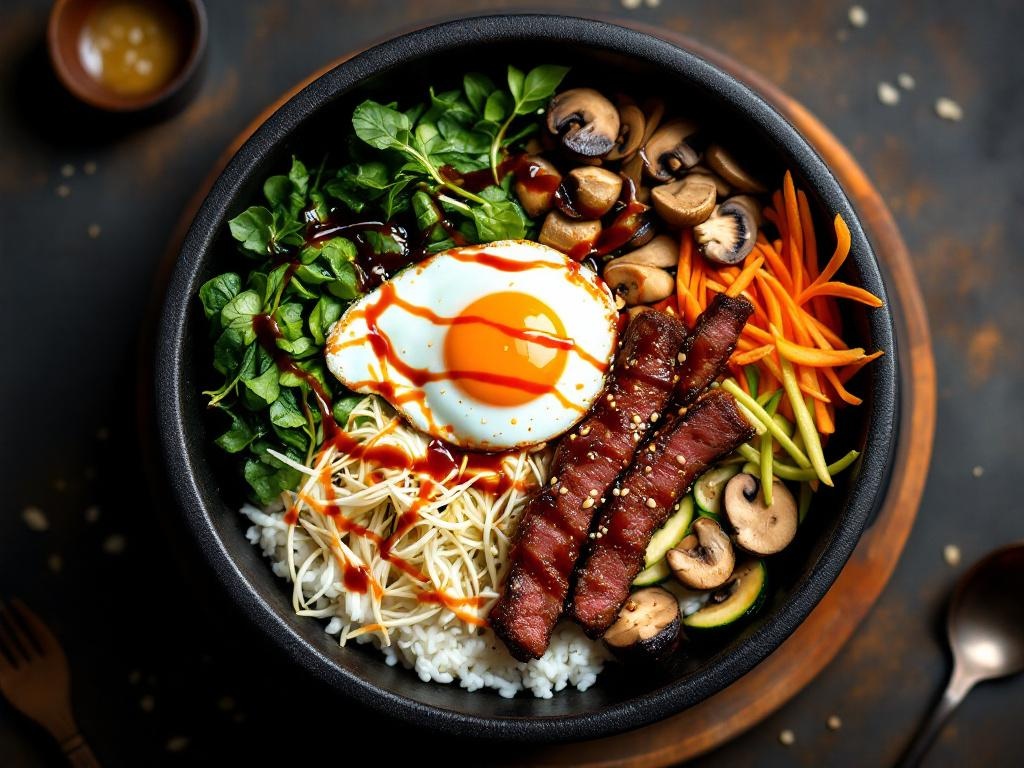
Bibimbap (Naturally Gluten-Free with Tamari)

Korea; bibimbap documented in 'Sieuijeonseo' culinary manuscript c. 19th century; likely much older as a tradition of clearing remaining dishes over rice at the end of a meal.

Bibimbap — mixed rice — is one of Korea's greatest dishes and, with the substitution of tamari for regular soy sauce in the gochujang-based sauce, is fully gluten-free. The dish's genius is in its structure: individual components — steamed rice, separately cooked namul (seasoned vegetables), protein (beef, tofu, or egg), and gochujang sauce — assembled in a bowl and mixed by the eater at the table. Each component is cooked and seasoned independently, which means each retains its individual character until the moment of mixing, when the whole becomes greater than its parts. The dolsot version (in a hot stone pot) goes further: the rice pressed against the superheated pot develops a crust (nurungji) that adds crunch, smoke, and the unmistakable sound of sizzling. This crust-formation is one of the most distinctive textural pleasures in Korean cuisine.

Each vegetable is cooked and seasoned separately — this is the defining technique; a 'bibimbap stir-fry' that cooks everything together is a different dish Nameul preparation: blanch greens briefly, squeeze dry, toss with sesame oil, garlic, and salt while warm — season immediately after cooking Gochujang sauce: gochujang, sesame oil, rice vinegar, sugar — balance sweet, salty, and sour before mixing For dolsot version: heat the stone bowl until extremely hot, add oil, add cooked rice and let it sit undisturbed for 3–4 minutes to form the crust Egg traditionally is raw yolk or fried sunny-side; the yolk breaks into the mix and enriches the bowl Mix thoroughly at the table — the mixing is the final act of cooking

The nurungji (scorched rice crust) is so prized in Korean cuisine that it's sometimes served as a separate dish with warm water (sikhye) poured over it — value it accordingly For the most flavourful namul: season with soy sauce (tamari), sesame oil, and garlic while the vegetables are still warm from cooking — they absorb seasoning better when hot Toasted sesame seeds scattered over the final bowl just before eating add fragrance and texture

Under-seasoning the individual namul — each component needs to be well-seasoned independently; after mixing, the sauce dominates, so individual namul must be able to stand alone Using regular soy sauce — contains wheat; tamari is the correct substitute for GF preparation Not getting the dolsot hot enough — a barely warm pot produces no crust; it needs to be smoking hot Mixing too early — the visual presentation of unmixed bibimbap is part of the dish; mix at the table Over-relying on the sauce — the sauce should season, not overwhelm; more gochujang does not equal more complexity