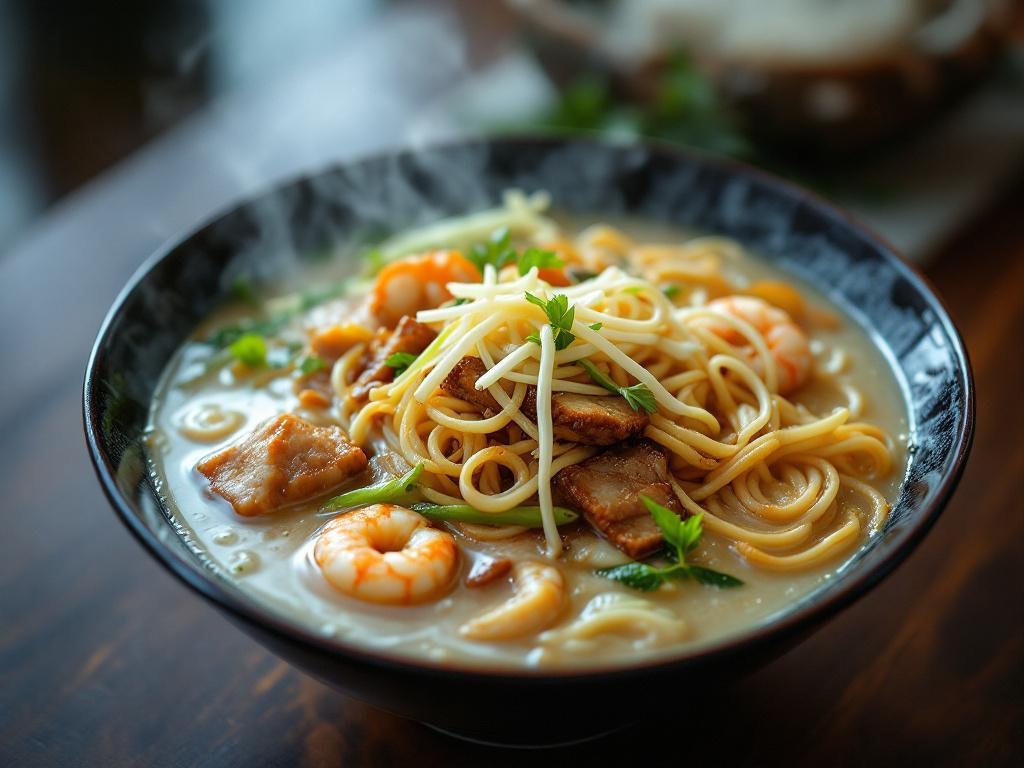
Chanpon (Nagasaki — Pork, Seafood, Vegetable Noodle Soup)
One of 54 entries · Provenance 1000 — Japanese
Nagasaki, Japan — created c.1899 by Chen Pingshun at Shikairō, rooted in Fujian Chinese cooking adapted to Japanese ingredients and local tastes
Chanpon is Nagasaki's defining noodle dish, born from the city's centuries-long role as Japan's sole open port during the Edo period and the cultural interchange it created with China. The dish is attributed to Chen Pingshun, who opened Shikairō restaurant in Nagasaki in 1899 and devised a hearty, inexpensive meal for Chinese students studying in the city. It is therefore neither purely Japanese nor purely Chinese but specifically Nagasakian — a hybrid that could only have emerged from that particular port's history. What separates chanpon from ramen is both process and contents. The noodles — thick, soft, round, made with lye water like ramen but slightly different in composition — are cooked directly in the broth rather than separately, meaning they absorb the stock as they cook and the starch they release thickens it slightly. The broth itself is a cloudy, deeply savoury blend of pork and chicken bones, enriched with lard and seasoned with a light soy tare. The toppings are stir-fried in lard before the broth is added — pork belly, squid, prawns, kamaboko, bean sprouts, cabbage, and sometimes oysters — and this technique means the fat from the stir-fry integrates into the soup, creating the dish's characteristic richness. The vegetables must retain some bite, which requires confident high heat during the initial fry. A cold-weather version called sara udon uses the same toppings and sauce but poured over crispy fried noodles rather than served in soup — demonstrating the dish's adaptability within the same regional tradition.
Rich, cloudy, lard-enriched pork-seafood broth with starchy noodles and vegetable-seafood contrast
visual: Noodles absorb broth as they cook directly in the pot—they soften and take on stock flavour, never firm or…
Noodles are cooked directly in the broth, not separately—they will not absorb the broth flavour and the dish loses its characteristic texture if cooked apart.