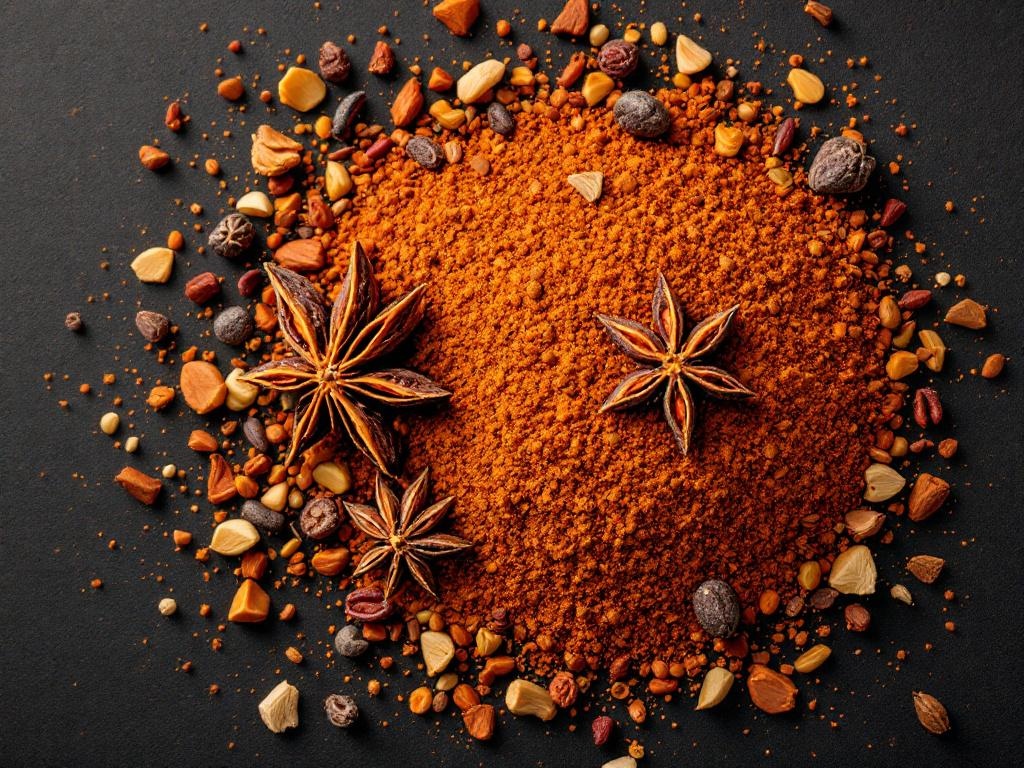
China — ancient Chinese medicinal and culinary tradition; Taoist five-element philosophy encoded in flavour
Five Spice (五香粉, wǔ xiāng fěn) is the foundational spice blend of Chinese cooking — a balance of five flavours and five aromatics that supposedly represents the five flavours of Chinese cooking (sweet, sour, bitter, salty, and pungent) and the five elements (wood, fire, earth, metal, and water). The canonical five spices are: star anise, Sichuan pepper, cassia (Chinese cinnamon), cloves, and fennel seeds. The blend's character is dominated by star anise — aniseed-forward, warm, and slightly medicinal in large quantities. Sichuan pepper (not related to black pepper) adds its unique numbing, floral, citrus-peel quality. Cassia is sweeter and more astringent than Sri Lankan cinnamon. The combination is unlike anything in any other culinary tradition. Five Spice is used in Chinese roasting — char siu pork, Peking duck, roast goose — often as part of a marinade with hoisin, soy, and honey. It appears in red-braised pork (hongshao rou), in the master sauce (lǔshuǐ) used to braise tofu, eggs, and meats, and in the spice-salt mixture for fried chicken. It is also used in sweet applications: mooncake filling, five-spice shortbread, and red bean desserts in some traditions. The balance of star anise to the other spices is the critical variable. Too much star anise produces a medicinal, soapy quality; too little and the blend loses its identity.
Aniseed-forward, warm, slightly medicinal with numbing pepper undertone — distinctive and unmistakably Chinese
olfactory: Smell the ground blend as unified warmth — if you detect star anise, Sichuan pepper, or cloves as separate…
Fresh Sichuan pepper with active numbing compound (hydroxy-alpha-sanshool) — old pepper becomes woody and inert, destroying the blend's signature ma quality.