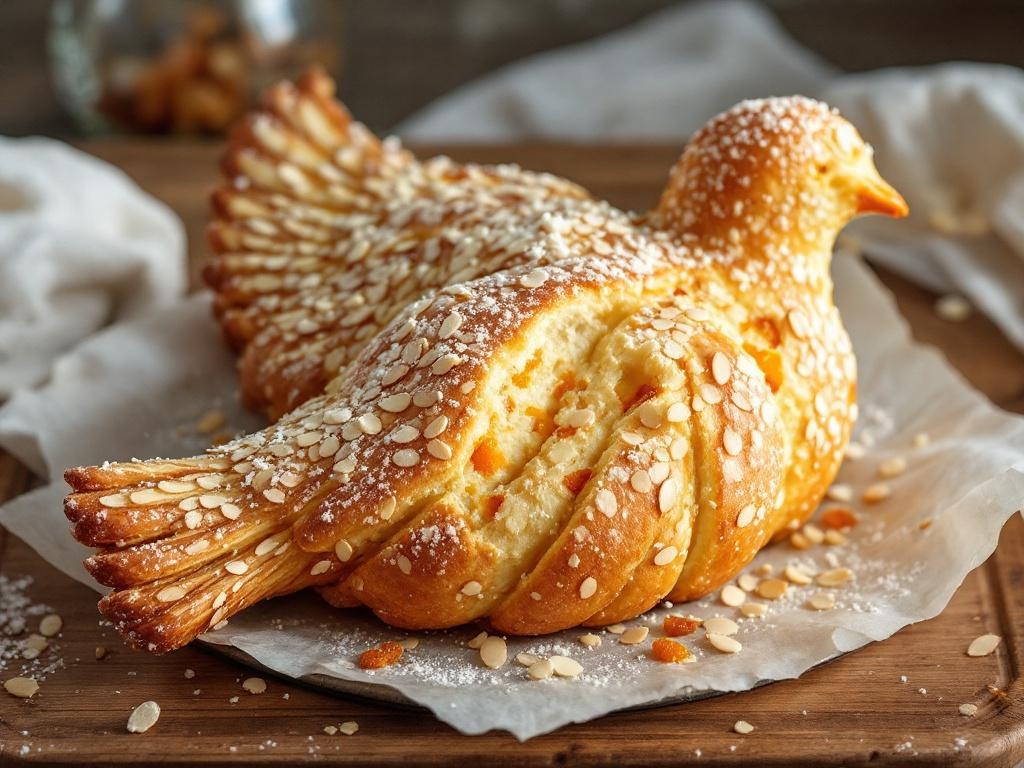
Colomba Pasquale (Italian Easter Dove Bread)
One of 69 entries · Provenance 1000 — Seasonal
Northern Italy (Lombardy); colomba tradition documented from at least the 6th century (a legendary version involves the Lombard Queen Teodolinda); the modern industrialised colomba was developed by Motta in Milan c. 1930s.
Colomba pasquale — the dove-shaped Easter bread of Italy — is panettone's Easter sibling: the same type of enriched dough, the same lievito madre requirement, the same multi-day process, but shaped as a dove (the symbol of peace and the Holy Spirit) and topped with a crunchy pearl sugar and almond glaze rather than the dome shape of the Christmas preparation. The dough is identical to Milan's panettone but typically less rich in dried fruit and more aromatic with citrus and vanilla. The almond glaze (mandorlato: blanched almonds, sugar, and egg white) applied before baking adds a crunchy, sweet exterior that is the colomba's defining textural element — the contrast between the light, feathery crumb and the sweet, slightly caramelised almond top is exceptional. Made by a skilled artisan with a well-cultivated lievito madre, colomba is one of Italian baking's finest expressions.
visual: Crack of almond glaze breaking under your tooth, then the light, feathery crumb dissolving beneath it—the contrast defines the…
Almond glaze too thin or missing entirely: you lose the defining textural contrast and the bread becomes just another enriched bread, not colomba.