Provenance 1000 — Korean Authority tier 1

Dakgalbi

Chuncheon, Gangwon Province, South Korea. Dakgalbi was developed in Chuncheon in the 1960s and became the signature dish of the city. The Chuncheon Myeong-dong Dakgalbi Street (a dedicated street of dakgalbi restaurants) is one of South Korea's most famous food destinations.

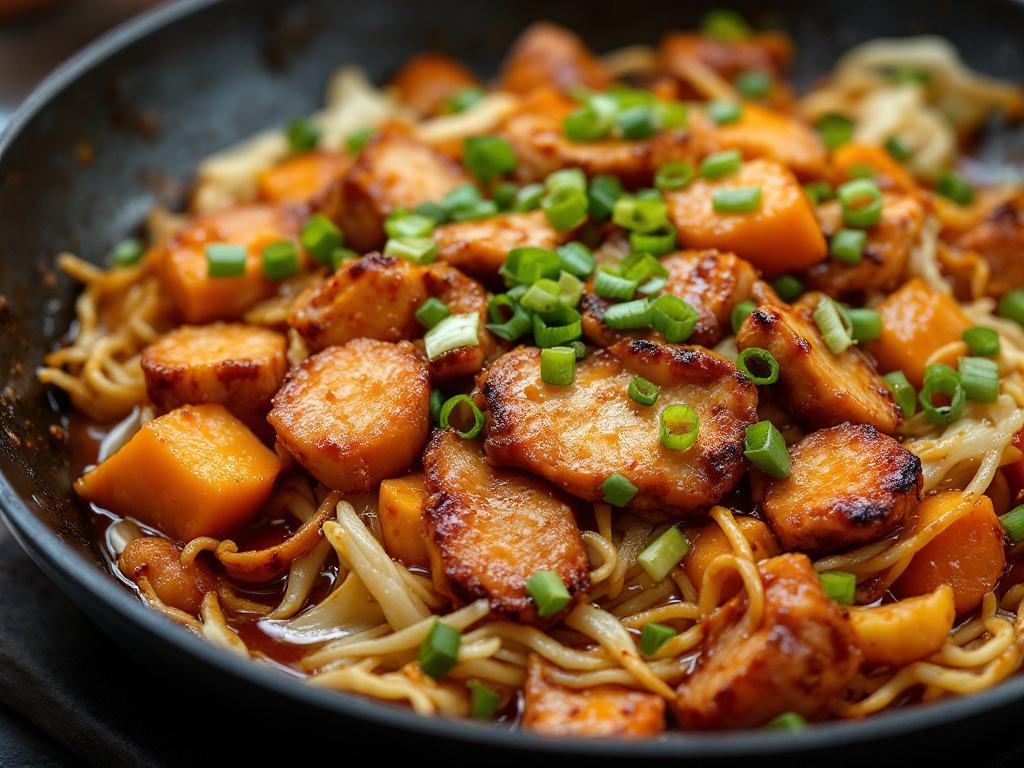
Dakgalbi (spicy stir-fried chicken) is Chuncheon's most famous dish — thinly sliced chicken thighs marinated in a gochujang-based sauce, stir-fried with sweet potato, cabbage, rice cakes (tteok), and green onion in a wide, flat pan at the table. The sauce caramelises in the hot pan and coats every element — the sweet potato softens, the cabbage wilts and sweetens, and the rice cakes become chewy and sauce-saturated. Finished by frying rice directly in the remaining sauce (bokkeum bap).

Korean lager (Hite or Cass) or makgeolli (milky rice wine) — dakgalbi is a drinking food (anju) in Korean culture. The spicy, fatty, caramelised chicken and the cold, refreshing beer are the Chuncheon pairing.

{"Chicken thighs: boneless, skinless, sliced thin (5mm) across the grain. Thighs are essential — breasts dry out in the high-heat stir-fry","The marinade: gochujang, gochugaru (both required), soy sauce, sesame oil, sugar, garlic, ginger, and a small amount of doenjang for depth. Marinate for minimum 2 hours, ideally overnight","Garae-tteok (rice cakes): soaked in cold water for 30 minutes to soften before adding to the pan","The flat pan: a cast iron skillet or Korean dakgalbi pan (shallow, round, with a flat base). The wide surface area allows the sauce to caramelise rather than steam","The cook: chicken in first, then sweet potato, then cabbage and tteok. The vegetables are added in order of cooking time","Bokkeum bap finale: after the chicken and vegetables are eaten, add cooked rice to the pan with the residual sauce and stir-fry until the rice is coated and slightly crispy"}

The moment where dakgalbi lives or dies is the sauce caramelisation — as the dish cooks, the gochujang and sugar in the marinade begin to caramelise against the hot pan. You should see dark, sticky patches beginning to form around the edges of the pan. Toss the ingredients through these caramelised patches rather than trying to avoid them. The caramelised gochujang is the depth in the final dish — it is the equivalent of the Maillard reaction for this preparation.

{"Chicken breasts: dry out and become tough in the high-heat stir-fry. Thighs only","Cooking all elements simultaneously: different ingredients have different cooking times — stagger the additions","Not making bokkeum bap: the fried rice finale in the residual sauce is the best part of the meal"}

S i c h u a n m a l a c h i c k e n s t i r - f r y ( s p i c y c h i c k e n w i t h f e r m e n t e d b e a n p a s t e t h e C h i n e s e p a r a l l e l ) ; T h a i l a r b g a i ( s p i c e d m i n c e d c h i c k e n t h e T h a i s p i c e d c h i c k e n t r a d i t i o n ) ; J a p a n e s e t o r i n o t e r i y a k i ( t e r i y a k i - g l a z e d c h i c k e n t h e J a p a n e s e s w e e t - s a v o u r y g l a z e d c h i c k e n p a r a l l e l ) .