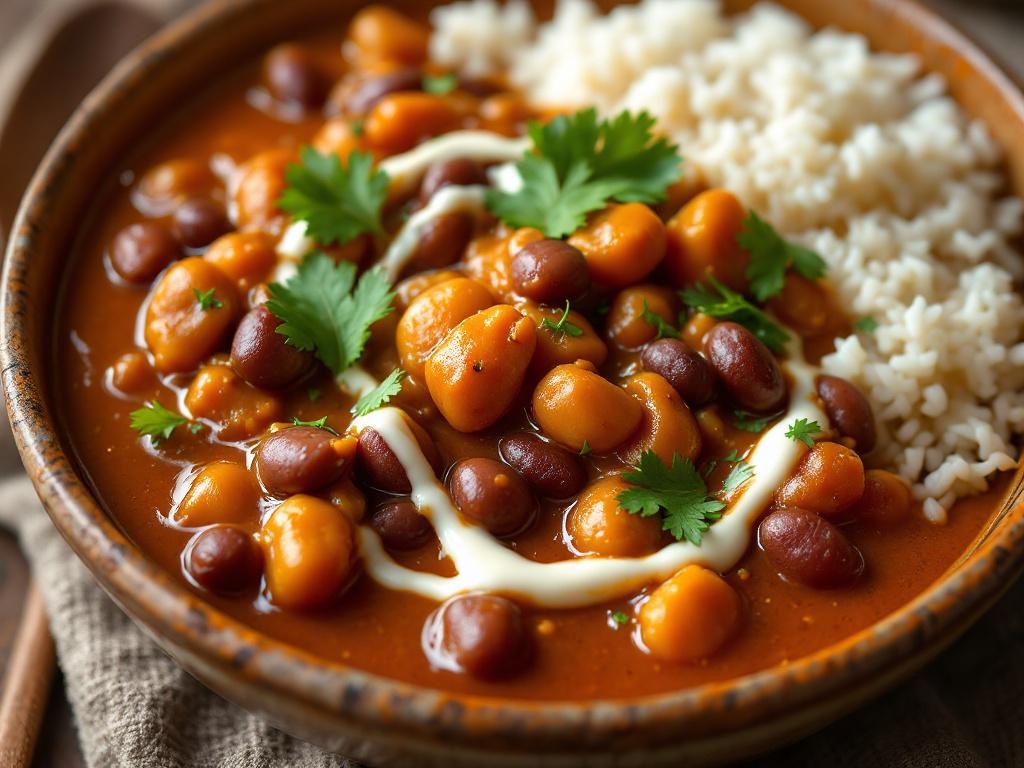
Dal Makhani (Gluten-Free — Naturally)
One of 19 entries · Provenance 1000 — Gluten-Free
Punjab (India and Pakistan); developed at Moti Mahal restaurant, Delhi c. 1947 by Kundan Lal Gujral; now iconic across the Indian subcontinent.
Dal makhani — the rich, slow-cooked black lentil preparation from the Punjab — is naturally gluten-free, made from black urad dal and rajma (kidney beans), butter, cream, tomato, and aromatics with no wheat component whatsoever. It is one of the most luxurious, satisfying, and deeply flavoured preparations in Indian cuisine, and its gluten-free status makes it a rare crossover: a dish that is both genuinely indulgent and safe for coeliac diners. The preparation is defined by time: the dals are soaked overnight and cooked for 8–12 hours (historically overnight in a tandoor's dying embers), during which they develop an unctuous, almost creamy consistency with each lentil retaining its structure. The sauce — butter, cream, tomato — enriches rather than dominates. Real dal makhani is a patient exercise, not a quick weeknight dinner.
Lentils collapse yet hold their structure; tomato oil separates cleanly from the sauce.
Fail: Lentils collapse yet hold their structure; tomato oil separates cleanly from the sauce.
Lentils collapse yet hold their structure; tomato oil separates cleanly from the sauce.
- 150g whole black lentils (urad dal) — rinsed
- 150g red kidney beans — rinsed
- 400ml heavy cream
- 150g ghee — divided
- 20g ginger — minced
- 15g garlic — minced
- 100g yellow onion — finely diced
- 2 dried Kashmiri chiles
- 1 tsp cumin seeds
- 1 tsp garam masala
- 0.5 tsp Tellicherry black pepper
- 10g sea salt
- 500ml whole milk
- 5g fresh cilantro — chopped
- Toast cumin seeds in ghee over medium heat 1 minute; add ginger, garlic, and onion; cook 3 minutes until softened.
- Add black lentils and kidney beans; stir 2 minutes.
- Pour in 800ml water and whole milk; bring to simmer and cook 30 minutes, stirring occasionally, until beans break down.
- Bloom dried chiles in 100ml warm water 5 minutes; blend into smooth paste; strain through fine sieve.
- Stir chile paste and cream into dal; season with garam masala, salt, and black pepper.
- Finish with remaining ghee and fresh cilantro; serve hot.
- The dhungar (smoking) method: after cooking is complete, place a small piece of live charcoal in a metal container in the dal, add ghee, cover immediately — the smoke infuses for 5 minutes and gives a tandoor-adjacent quality
- For a richer result: blend a portion (1/4) of the cooked dal and stir back in — this creates a thicker, creamier sauce without adding extra cream
- Using good-quality Amul butter (Indian white butter, slightly fermented) gives the dish a characteristic flavour note