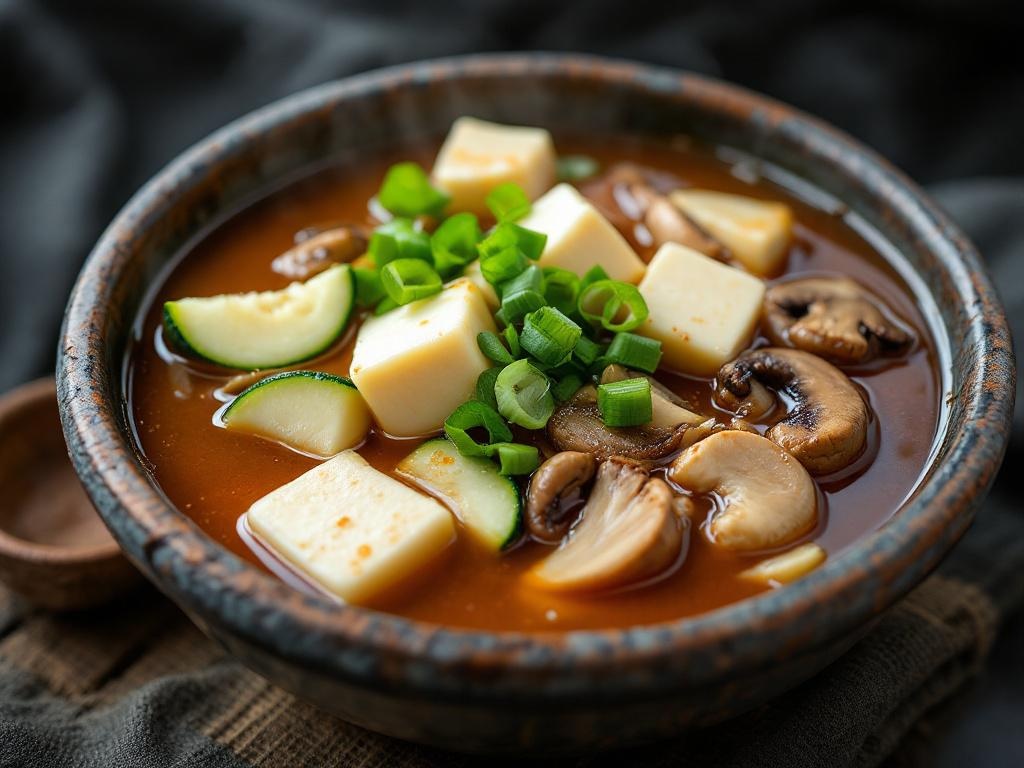
Doenjang Jjigae (Fermented Soybean Paste Stew)
One of 20 entries · Provenance 1000 — Korean
Korea; doenjang is Korea's oldest fermented condiment, predating written records; doenjang jjigae has been a daily staple of Korean home cooking for millennia.
Doenjang jjigae — the daily stew of fermented soybean paste — is the cornerstone of Korean home cooking, eaten at virtually every meal and representing the country's most fundamental flavour: the deep, funky, savoury complexity of doenjang, which is to Korean cuisine what miso is to Japanese but older, less refined, and considerably more intense. Unlike miso, which is typically used to season broth, doenjang is added directly to the stew and simmered — the flavour actually improves with brief cooking, which mellows the most aggressive fermented notes and integrates them with the other ingredients. The classic jjigae includes silken tofu, zucchini, mushrooms, garlic, and often a small amount of meat or seafood; the broth is typically anchovy-and-kelp dashi (dried anchovy stock), which provides the umami foundation on which the doenjang builds. This is a dish that tastes immediately like Korea to any Korean diner — it is the flavour of home.
olfactory: Smell the doenjang as it simmers — funk mellows, edges soften, fermented notes integrate with garlic and anchovy into…
Simmer doenjang 5–10 minutes at the start; uncooked doenjang tastes raw and aggressive; brief cooking integrates the fermented character into the broth.