Provenance 1000 — French Authority tier 1

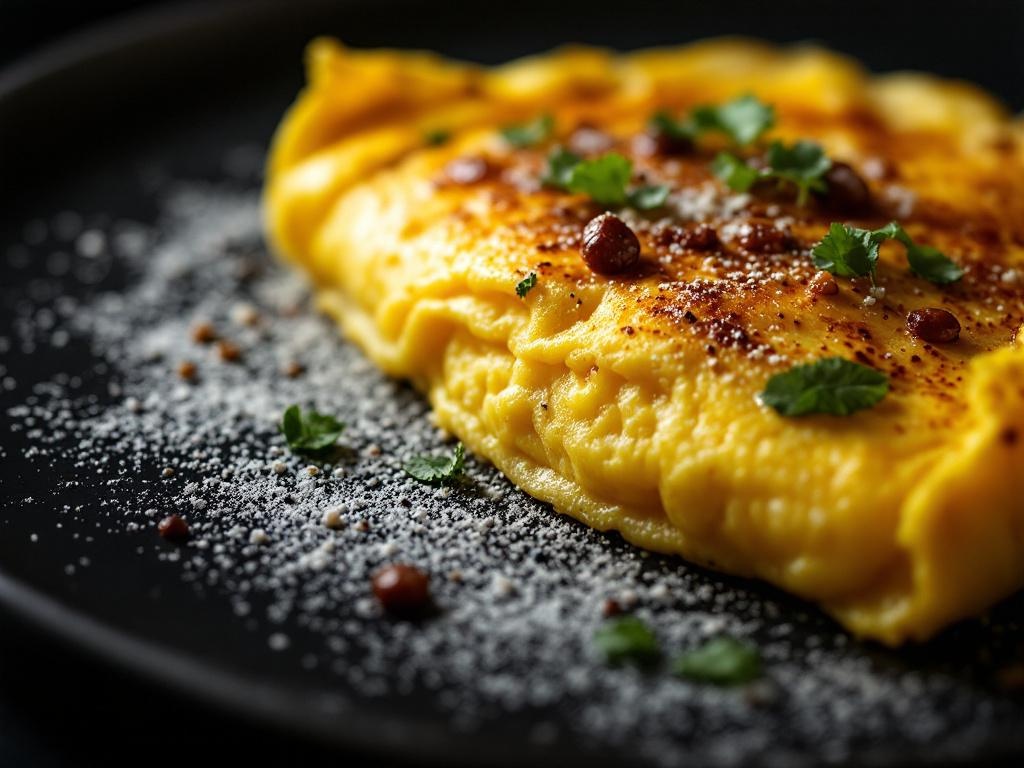
French Omelette

France. The technique of the rolled omelette is quintessentially French — Auguste Escoffier, Ferdinand Point, and Paul Bocuse all treated the perfect omelette as the true test of a cook's skill. Jacques Pepin's television demonstrations of the technique are the definitive modern reference.

The French omelette is the benchmark of kitchen skill. Three eggs, good butter, a hot pan, 90 seconds. The exterior should be pale, unbrowned, uncracked. The interior should be barely set — baveuse (wet, silky) in the French chef's ideal. The technique — rapid circular stirring with a fork followed by a roll-and-flip — is learned, not intuited. This is the first dish a French chef's apprentice must master.

A cold glass of Chablis alongside a plain omelette with fine herbs (chives, tarragon, chervil, flat-leaf parsley). The mineral acidity of Chablis cuts through the butter and egg. For a filled omelette (Gruyere, ham, mushrooms duxelles): a white Burgundy from Macon.

{"Three eggs per omelette, beaten with a fork just until combined — not whisked to a foam. Beat only enough to combine yolks and whites thoroughly","Pan: a 20cm non-stick or well-seasoned omelette pan. The pan must be clean and free of any residue or the eggs will stick in the wrong places","Butter: 15g unsalted butter over high heat — when the foam subsides and the butter is turning golden at the edges (beurre noisette stage), add the eggs immediately","Rapid fork technique: as soon as the eggs hit the pan, begin rapid small circular motions with a fork held flat against the base of the pan while simultaneously shaking the pan back and forth over the burner","When the eggs are almost set but still visibly liquid in places (about 45 seconds), stop moving and tilt the pan handle upward at 30 degrees","Roll: use the fork to roll the far edge of the omelette over itself, then use the pan edge to assist a second fold — the omelette should emerge as a neat cylinder, pale yellow, seamless"}

The moment where the French omelette lives or dies is the 45-second mark — when you must decide that the eggs are done and commit to the roll. The inside will look dangerously wet. It should. The residual heat during rolling and plating finishes the inside to baveuse. If you wait until the centre looks cooked, the omelette will be tough by the time it reaches the plate. Trust the technique, commit to the roll.

{"Browning the outside: a French omelette should be pale — the moment it colours, it is overcooked inside","Over-beating the eggs: foam incorporates air bubbles that become holes in the set omelette","Not hot enough: the pan must be hot enough that the eggs begin to set immediately on contact — testing with a drop of water (it should evaporate in 1 second)"}

J a p a n e s e t a m a g o y a k i ( l a y e r e d r o l l e d e g g o m e l e t t e t h e J a p a n e s e v e r s i o n o f t h e s a m e r o l l e d - e g g d i s c i p l i n e ) ; S p a n i s h t o r t i l l a e s p a n o l a ( t h i c k , s e t e g g a n d p o t a t o c a k e t h e o p p o s i t e a p p r o a c h t o t h e s a m e i n g r e d i e n t ) ; I r a n i a n k u k u s a b z i ( h e r b - p a c k e d e g g f r i t t a t a t h e M i d d l e E a s t e r n i n t e r p r e t a t i o n o f e g g a s v e h i c l e f o r f l a v o u r ) .