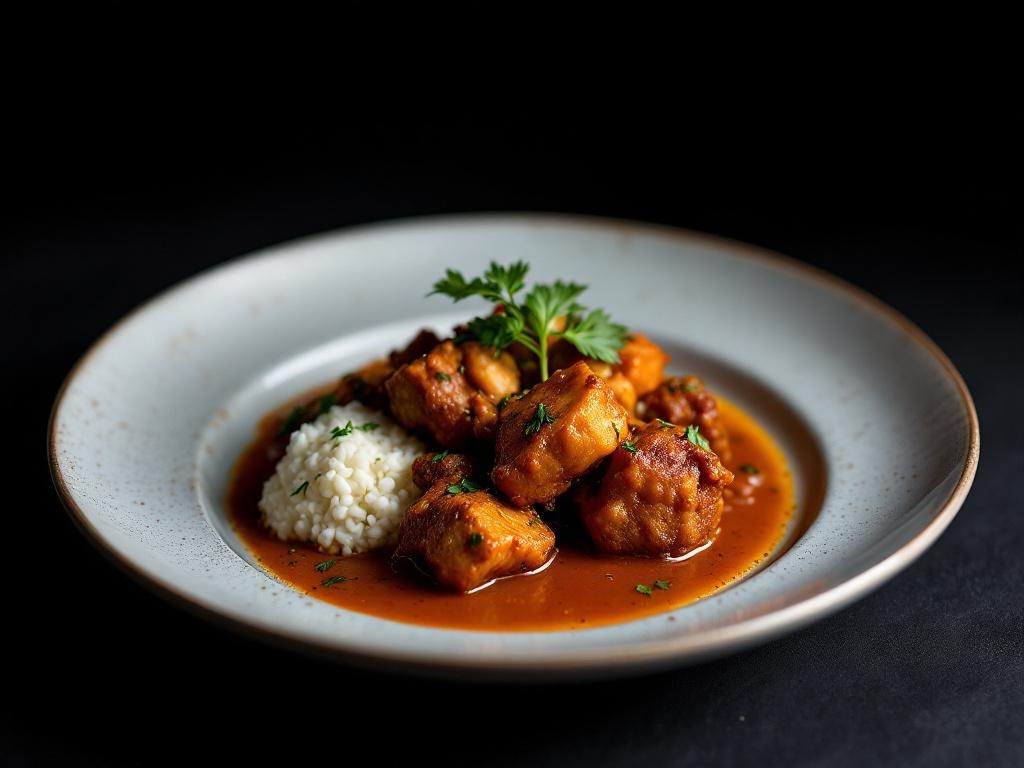
Goan Vindaloo — Full Method (Pork, Vinegar, Kashmiri Chilli)
One of 60 entries · Provenance 1000 — Indian
Goa, India — Portuguese 'carne de vinha d'alhos' transformed over 400 years by the Catholic Goan community into India's most distinctive pork preparation
Goan vindaloo is one of the most misrepresented dishes in Indian cuisine — in its original form it is not merely a fiercely hot curry but a Portuguese-influenced vinegar-marinated pork preparation of considerable complexity. The name derives from the Portuguese 'carne de vinha d'alhos' — meat cooked in wine and garlic — which arrived in Goa with Portuguese colonisers in the 16th century and was transformed over four centuries by the Catholic Goan community into a preparation that blends European technique (vinegar preservation, pork use) with Indian spice (Kashmiri chilli, cumin, cinnamon) into something entirely unique. The correct vindaloo begins with a 24-hour marinade: pork (traditionally fatty shoulder with skin, or a mixture of lean and fat) in a paste of Kashmiri dried red chillies, cumin, black pepper, cloves, cinnamon, cardamom, and large quantities of Goan red wine vinegar or coconut vinegar, blended with garlic and ginger. The vinegar is not merely a flavour element — it is a preservation medium and a tenderiser, and the proportion of vinegar to spice is what distinguishes a vindaloo from a standard pork curry. The cooking is done in lard or coconut oil — the Goan Christian kitchen uses both, which itself marks the dish's Portuguese-Indian synthesis — with the marinated pork cooked in its own marinade until the fat renders and the vinegar reduces into a glossy, concentrated sauce. The result should be deeply red from the Kashmiri chillies (not orange from fresh chilli), sour from the vinegar, and rich from rendered pork fat — heat is present but not the dominant sensation. Authentic Goan vindaloo is not the restaurant 'extra hot' category it has become — it is a carefully balanced preparation where sour, spiced, and fat are in equilibrium, demonstrating Goa's unique position as the meeting point of Portuguese and Indian food culture.
Sour, deeply red-spiced richness — vinegar acidity against Kashmiri chilli colour and heat, rendered pork fat, clove and cinnamon warmth; European preservation technique in Indian spice
visual: At 24 hours, the pork surface has darkened from deep maroon to nearly black and yields no resistance to…
Render the pork fat completely until the shoulder or belly releases its lard and the meat begins to caramelize in its own fat — never…