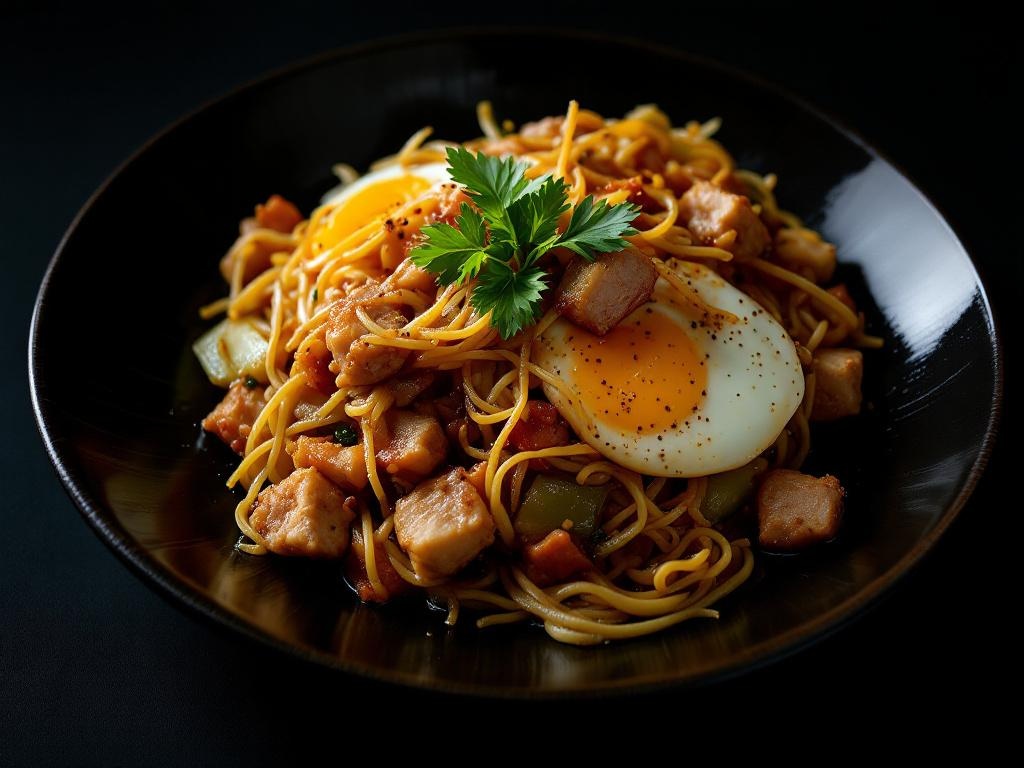
Goya Champurū (Okinawan — Bitter Melon, Egg, Pork Stir-Fry)
One of 54 entries · Provenance 1000 — Japanese
Okinawa, Japan — Ryukyu Kingdom food tradition with Chinese, Southeast Asian, and eventually American (post-WWII spam) influences; a defining expression of Okinawan cultural identity
Goya champurū is Okinawa's most iconic dish — a stir-fry of bitter melon (goya), firm tofu, pork (spam, thinly sliced pork belly, or pork luncheon meat), and egg, seasoned with soy and dashi. The word champurū comes from the Okinawan dialect and means something like 'mixed together' or 'chanpuru,' reflecting a broader cultural tradition of mixing disparate elements into something unified — itself a metaphor for Okinawa's history as a crossroads culture absorbing influences from Japan, China, and Southeast Asia. Goya (Momordica charantia) is the defining and most challenging ingredient. The bitter melon's bitterness — from compounds including momordicin and charantin — is its identity, not a flaw to be eliminated. The Okinawan approach to goya respects this bitterness while managing its intensity: the melon is halved, the seeds and white pith (which carry the most concentrated bitterness) are scooped out, the flesh is sliced thinly, then salted and allowed to weep before cooking. This removes some moisture and slightly reduces the sharpest bitterness without destroying the character that makes the vegetable interesting. The stir-fry requires high heat and a specific sequencing. Tofu — pressed firm, torn or cut into large pieces, and pan-fried separately until golden — is the foundation that absorbs the pork fat and sauce without disintegrating. The pork renders its fat into the pan, which then flavours the goya as it cooks briefly at high heat. Egg, beaten and seasoned, goes in last and is stirred through to just-set, binding the other elements loosely. Okinawa's food culture reflects the Ryukyu Kingdom's centuries of trade with China and Southeast Asia, and goya champurū is an edible expression of that crossroads identity — bitter, complex, and unlike anything else in the Japanese culinary canon.
Bitter, savoury, rich with pork fat — goya bitterness balanced by egg softness, tofu body, and umami soy-dashi seasoning