England; the cross-marked seasonal bread tradition has pre-Christian roots; hot cross buns as a specifically Easter Good Friday food are documented from at least the 18th century; the name appears in 1733 in London.
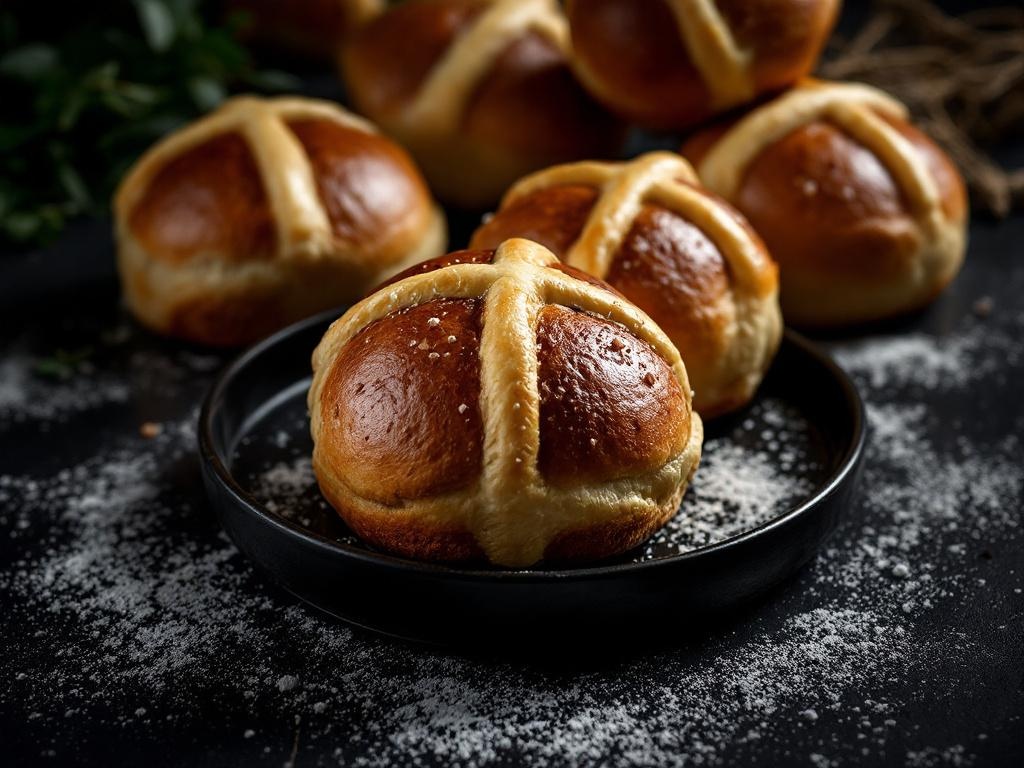
Hot cross buns — enriched yeasted buns spiced with cinnamon, mixed spice, and candied peel, marked with a pastry cross and glazed after baking — are England's Great Easter morning bread, traditionally eaten on Good Friday. The cross is ancient: marked breads have pre-Christian origins across Europe, but the Christian association of the cross with Easter has given this preparation its permanent seasonal identity. A good hot cross bun should be soft and pillowy, with a distinct spice character, plenty of dried fruit, and a shiny, sweet glaze. The pastry cross must be distinct and white (an additional flour-water paste piped over the unbaked buns); the glaze (apricot jam or a simple sugar syrup) applied immediately after baking gives the characteristic shine. They are best eaten warm from the oven, split and buttered, within hours of baking.
Prove the dough slowly — enriched doughs benefit from a longer, cooler prove that develops flavour; a quick warm prove produces a bland bun Spices must be bloomed in the warm milk before adding to the dough — cold spices mixed into dough don't distribute as effectively Dried fruit soaked in tea or orange juice — plumped fruit maintains its moisture during baking; dry fruit becomes hard The cross paste: a thick flour-water paste piped just before baking — not too thin or it spreads and loses definition; not too thick or it becomes dense and gummy Glaze immediately after baking while hot — hot buns absorb the glaze; cold buns repel it Eat within 4 hours of baking — hot cross buns stale rapidly; they are at their best fresh and warm
The richest hot cross buns use a tangzhong (cooked flour and water paste) incorporated into the dough — this milk bread technique produces an extraordinarily soft crumb that stays soft much longer than standard enriched dough For the most flavourful buns: use a combination of candied orange peel, dried cranberries, and golden raisins rather than standard mixed peel alone A tablespoon of honey in the dough alongside the sugar adds depth and keeps the buns moist for longer
Over-proving — the bun structure weakens and the bun collapses in the oven No fruit soaking — dry fruit contracts during baking and creates hard, unpleasant pieces in the crumb Cross paste too thin — spreads and disappears during baking; the cross should be distinct Forgetting to glaze immediately — glaze applied to a cold bun doesn't absorb or shine Over-spiced — the spice should be warming and clear but not dominant; balance is the goal