Eastern Mediterranean (Levant); documented c. 13th century in Arabic cookbooks; hummus bi tahini (with tahini) widely consumed across Lebanon, Israel, Syria, and Egypt.
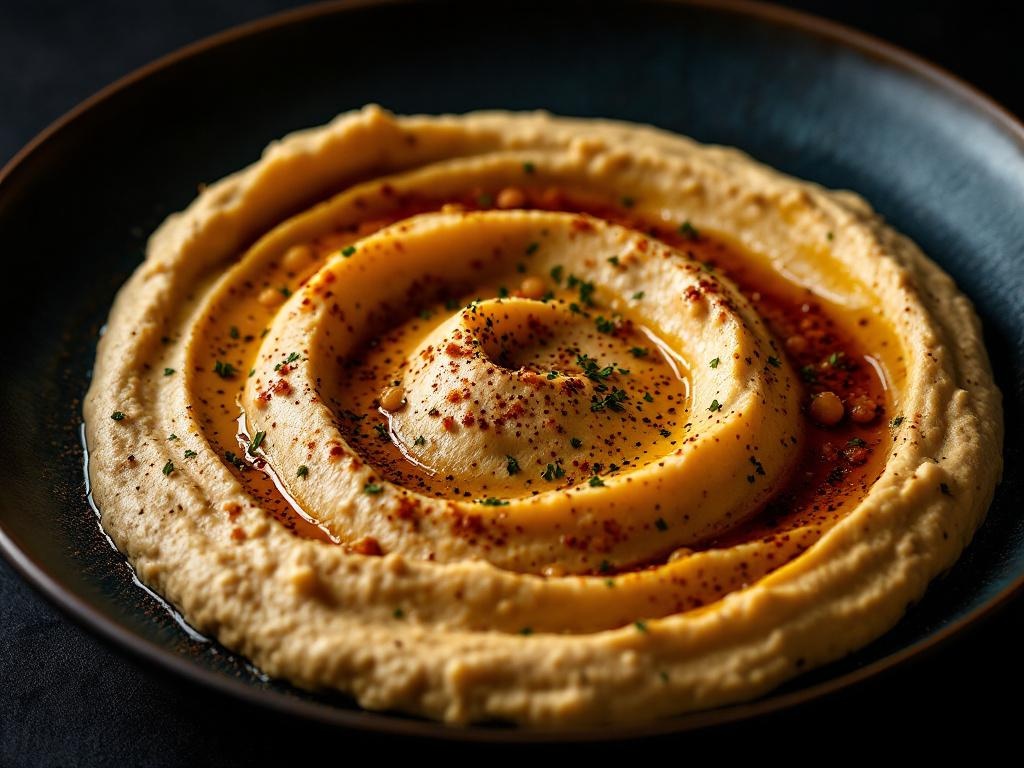
Hummus is one of the world's perfect foods — a naturally vegan preparation that achieves protein, fat, and complex carbohydrate in a single bowl, with flavour that requires no animal product to be complete. The best hummus is made from dried chickpeas cooked from scratch, never canned — the difference in texture and flavour is categorical. Properly made hummus should be completely smooth, almost aeratedIn consistency, and rich with tahini rather than restrained — the ratio of tahini to chickpea is higher than most recipes suggest. The secret of Israeli and Lebanese hummus makers is threefold: cook the chickpeas until they are so soft they collapse between fingers, add the tahini while the chickpeas are still warm (warmth helps emulsification), and thin with ice water to lighten the texture. The result should be pale, silky, and complex — tasting primarily of sesame, with chickpea as the backdrop.
Chickpeas collapse between your fingers when cooked; hummus reaches aerated, mousse-like consistency after 3–4 minutes of blending with ice water.
Fail: Chickpeas must cook until they crush effortlessly between fingers — underdone chickpeas make grainy hummus and ruin the dish.
Chickpeas must cook until they crush effortlessly between fingers — underdone chickpeas make grainy hummus and ruin the dish.
- 300g Canned chickpeas — drained, rinsed
- 90ml Tahini — 100% sesame, unhulled
- 60ml Fresh lemon juice — Amalfi
- 45ml Water — filtered
- 30g Garlic — minced
- 20ml Extra virgin olive oil — Palestinian
- 8g Maldon sea salt
- 4g Cumin — ground, freshly toasted
- 2g Aleppo pepper
- 1g White pepper — freshly ground
- Blend drained chickpeas with tahini and minced garlic in food processor for 90 seconds until crumbly.
- Add fresh Amalfi lemon juice in steady stream while processing; scrape sides as needed.
- Drizzle filtered water slowly while processing until hummus reaches silken consistency (2–3 minutes).
- Season with Maldon salt, freshly toasted cumin, and white pepper; pulse to incorporate.
- Transfer to serving bowl; create shallow well in centre and drizzle with Palestinian olive oil.
- Garnish with Aleppo pepper and whole chickpea; serve at room temperature with flatbread.
- A pinch of baking soda added to the cooking water speeds the chickpea softening significantly and helps achieve the ultra-soft texture required
- The hummusiyeh tradition (a hummus restaurant that serves only hummus) treats this dish with the same seriousness as a three-star tasting menu — visit one in Tel Aviv if you can; it will recalibrate your reference point
- For a richer, nuttier version, brown the tahini lightly in a dry pan before blending — produces a toasted sesame quality