Provenance 1000 — Indian Authority tier 1

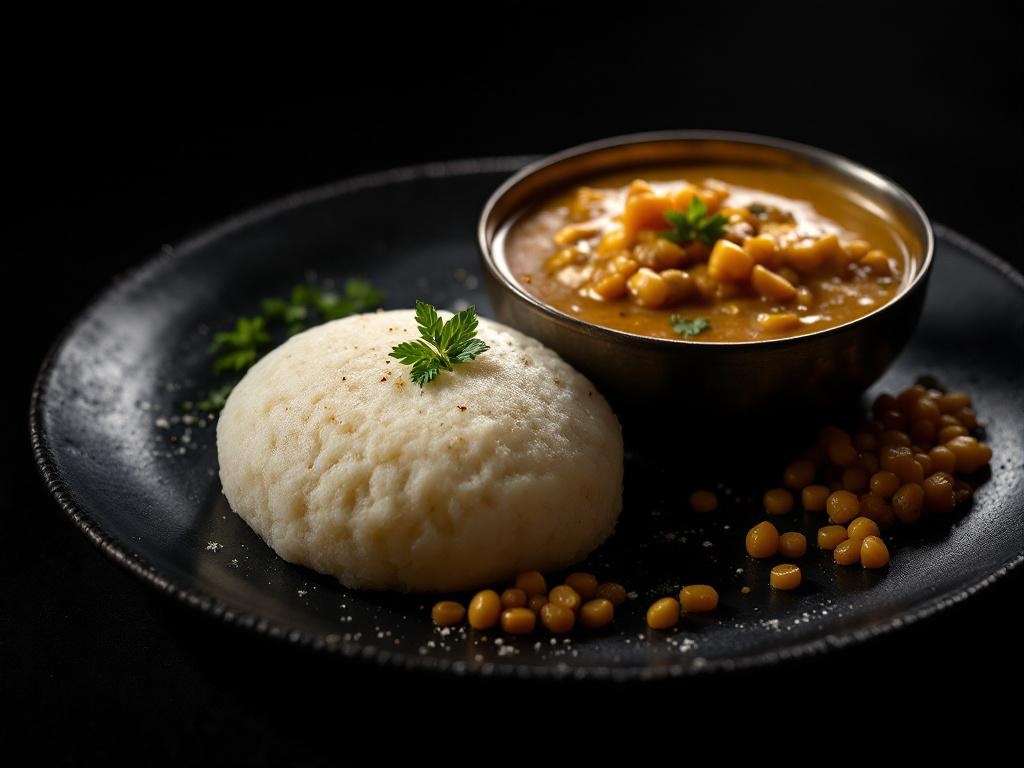
Idli and Sambar

Tamil Nadu and Karnataka, South India. Idli is documented in Kannada texts from the 10th century. The fermented rice-lentil combination is one of the oldest complete-protein food preparations in the world. Sambar is a specifically Tamil Nadu creation, developed in the royal kitchens of Thanjavur.

Idli (steamed rice and lentil cakes) with sambar (spiced lentil and vegetable soup) is the canonical South Indian breakfast — the idli should be pure white, soft enough to tear with minimal resistance, and mildly sour from fermentation. Sambar is the complex counterpart: toor dal (pigeon pea) cooked with tamarind, tomato, vegetables, and sambar powder. Together they represent the nutritional and flavour architecture of South Indian cooking.

South Indian filter coffee — the dark, intense, chicory-enriched filter coffee served in the davara-tumbler set is the inseparable companion to idli-sambar. The bitterness of the coffee cuts through the starchy idli and contrasts the sour-savoury sambar.

{"The batter: same rice-urad dal formula as dosa (3:1 ratio idli rice to urad dal), fermented 12-24 hours until doubled and bubbly","Idli moulds: traditional porous idli trays allow steam to pass through — the steam from below and above cooks the batter evenly","Steam for exactly 10-12 minutes: over-steaming produces rubbery, dense idli. The idli is done when a toothpick comes out clean and the surface is set and dry","Sambar base: toor dal cooked until completely soft, then blended smooth. Tempered separately with mustard seeds, curry leaves, dried red chilli, and asafoetida (hing) in ghee","Sambar powder: the complex spice blend (coriander, cumin, black pepper, dried red chilli, curry leaves, chana dal, urad dal) — either homemade or MTR brand","Tamarind: the sourness in sambar comes from tamarind water — soak tamarind pulp and squeeze through a sieve. The sourness should be present but balanced with the sweetness of tomato and the earthiness of dal"}

The moment where idli lives or dies is the fermentation — the batter must reach the right stage: increased in volume by 50-60%, bubbly on the surface, and smelling mildly sour (not vinegary). In warm climates this takes 8-12 hours; in cold climates it can take 24 hours. The fermentation activates the leavening properties of the urad dal and produces the characteristic lightness of properly made idli. Under-fermented batter produces flat, dense, flavourless idli.

{"Under-fermented batter: idli will be dense and lack the characteristic mild sourness","Over-filling the idli moulds: the batter expands during steaming — fill to 80% only","Sambar without asafoetida (hing): the hing is the defining aromatic note of sambar — there is no substitute"}

E t h i o p i a n i n j e r a w i t h b e r b e r e s t e w ( f e r m e n t e d f l a t b r e a d w i t h s p i c e d l e n t i l t h e s a m e a r c h i t e c t u r e o f f e r m e n t e d s t a r c h b a s e w i t h s p i c e d l e g u m e ) ; S r i L a n k a n p o l r o t i w i t h d h a l ( c o c o n u t f l a t b r e a d w i t h c u r r y t h e c o a s t a l S o u t h A s i a n p a r a l l e l ) ; W e s t A f r i c a n f u f u w i t h g r o u n d n u t s o u p ( s t a r c h b a s e w i t h p r o t e i n - r i c h s o u p t h e s t r u c t u r a l p a r a l l e l ) .