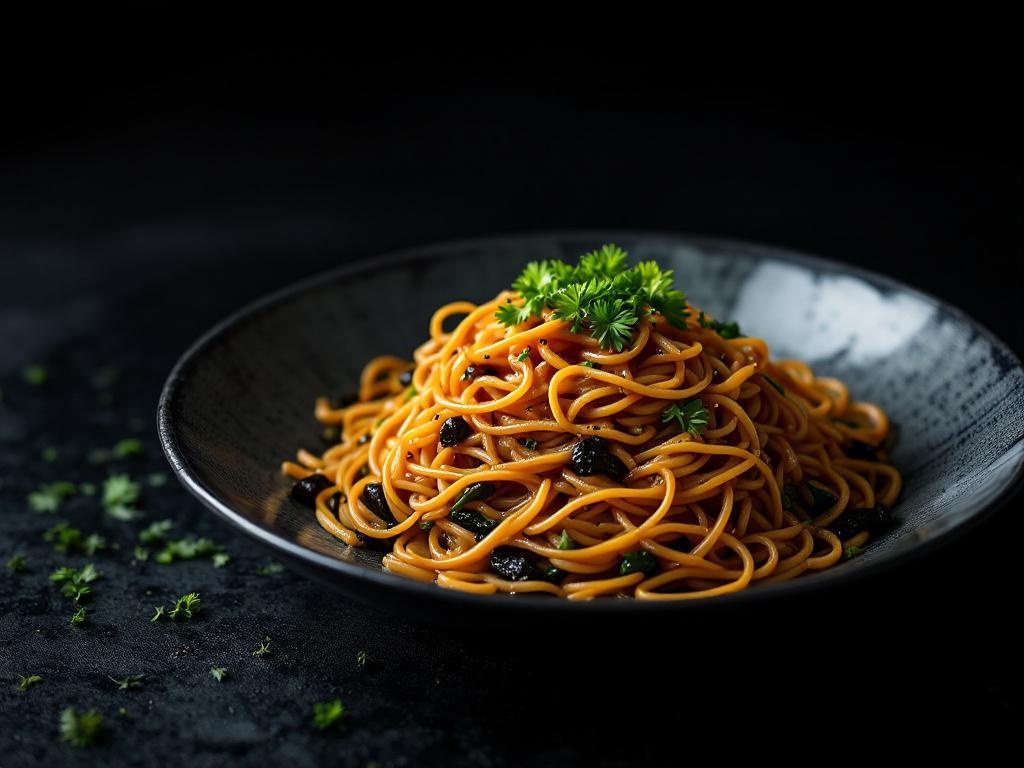
Korea, Joseon Dynasty. Japchae appears in records of royal court cuisine. The original version contained no noodles — it was purely vegetable-based. The dangmyeon noodles were added in the 20th century and became the defining ingredient.
Japchae (mixed vegetables and glass noodles) is Korea's most beloved celebratory dish — sweet potato glass noodles (dangmyeon) stir-fried with spinach, carrots, mushrooms, onion, and beef in a soy-sesame-sugar sauce. Each ingredient is cooked separately before mixing, which maintains individual textures and flavours. The noodles must be translucent, slippery, and slightly chewy — not gummy or dry.
- Chinese glass noodle dishes (fensi — mung bean glass noodles in stir-fry — the Chinese equivalent); Vietnamese mien ga (glass noodle chicken soup — the Vietnamese glass noodle tradition); Filipino sotanghon (glass noodle soup — the Philippine glass noodle dish).
Served as a side dish (banchan) or as a standalone dish at Korean celebrations — birthdays, weddings, Chuseok (harvest festival). Makgeolli (milky rice wine) alongside japchae at a celebration.
Further training content for this entry is being completed.
- 200 g sweet potato glass noodles (dangmyeon)
- 150 g beef sirloin, thinly sliced against grain
- 100 g fresh spinach
- 100 g carrot, julienned
- 100 g mushrooms (shiitake), sliced
- 2 garlic cloves, minced
- 30 ml soy sauce
- 15 ml sesame oil
- 10 ml rice vinegar
- 5 g sugar
- 3 g kosher salt
- 2 g white pepper
- 30 ml neutral oil for cooking
- 1 egg yolk
- 2 green onions, cut into 5 cm lengths
- Bring salted water to boil; add glass noodles and cook 5 minutes until tender; drain, toss with 5 ml sesame oil, and set aside.
- Combine beef with 10 ml soy sauce, 1 minced garlic clove, and white pepper; let sit 5 minutes.
- Heat 10 ml oil in wok over high; stir-fry beef 2–3 minutes until cooked through; transfer to bowl.
- Blanch spinach in salted boiling water 1 minute; drain, squeeze dry, toss with 2 ml sesame oil and 2 g salt.
- Heat 5 ml oil in wok; sauté carrot and mushroom until tender-crisp, 3 minutes; season with salt.
- In small bowl, whisk remaining soy sauce, 10 ml sesame oil, rice vinegar, sugar, and remaining garlic; toss with noodles and all vegetables.
- Transfer to serving platter; top with cooked beef, spinach nest, egg yolk, and green onions; serve with sauce bowl.
- The moment where japchae lives or dies is the noodle finishing — when the dangmyeon come out of the boiling water, they must be tossed with sesame oil and soy within 30 seconds. The hot noodles absorb the sesame oil immediately, creating a glossy, slippery surface that prevents sticking. Cold noodles that have stuck together cannot be easily separated without breaking.