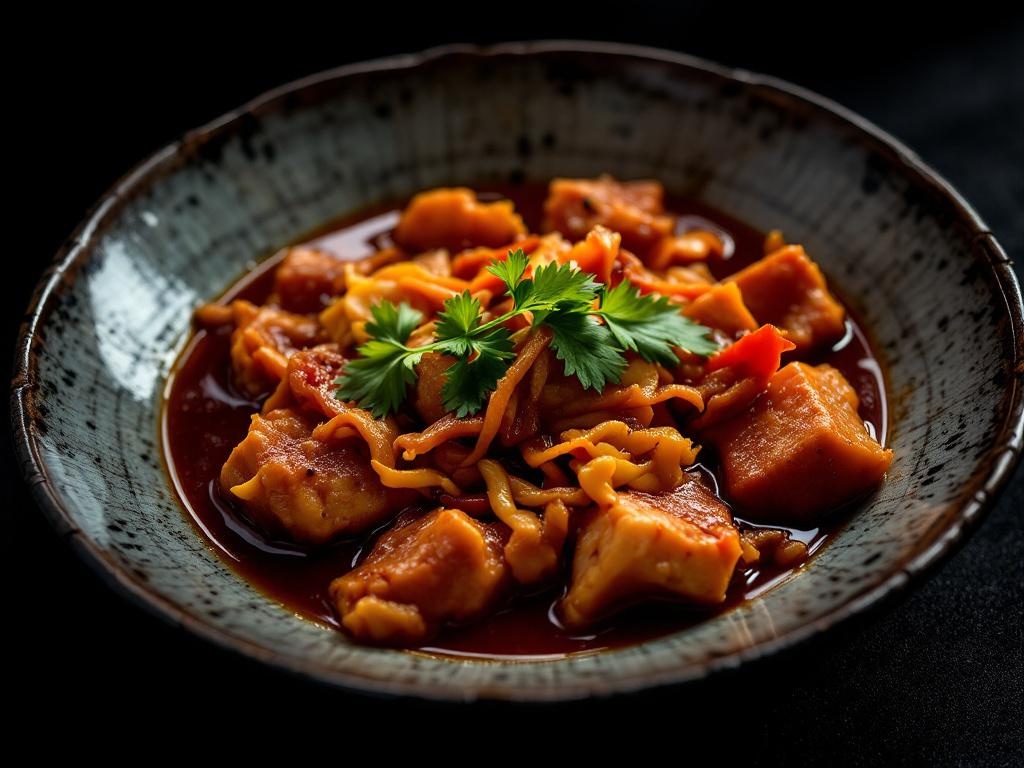
Korea; kimchi jjigae is a direct product of Korea's kimchi culture; the stew using aged kimchi and pork belly is documented across Korean cuisine and is considered one of the two or three most representative Korean dishes.
Kimchi jjigae — the stew made from aged kimchi — is the preparation that most Koreans consider the essential comfort food of their cuisine: deeply flavoured, slightly sour, spicy, and rich with pork, tofu, and the complex fermentation character of old kimchi. The key insight is that old, well-fermented kimchi — the kind that's been in the back of the refrigerator for months and is too sour to eat fresh — makes the best jjigae. The acidity from extended fermentation breaks down slightly during cooking, mellowing from sharp sourness to a complex, rounded tang that forms the backbone of the stew. Fresh kimchi makes a pale, underdeveloped jjigae; aged kimchi makes an extraordinary one. Pork belly or pork shoulder (fatty cuts that enrich the broth) and soft tofu are the standard additions; the dish is simmered until the kimchi is completely soft and the pork is yielding.
Use the most aged kimchi available — minimum 3 weeks old; several months old is ideal; the fermentation character is the dish Pork belly or shoulder (fatty cuts) — the fat from the pork enriches the broth; lean pork makes a thin, disappointing jjigae The kimchi is squeezed of some excess liquid before cooking, then chopped into bite-sized pieces — this controls the sour intensity Fry the pork in sesame oil first until the fat renders — this blooms the sesame aromatics and enriches the base Kimchi is added to the pork and stir-fried briefly before adding the broth — this 'roasting' of the kimchi concentrates and deepens its flavour Soft tofu added last, 5 minutes before serving — it needs only warming through
Add a splash of the kimchi brine along with the kimchi — it contains the most concentrated fermented flavour of all the components For extra umami depth: add a small amount of doenjang (fermented soybean paste) alongside the gochugaru at the beginning The ideal serving vessel is a dolsot (stone pot) — it arrives at the table bubbling, and the heat maintains the stew's temperature throughout the meal
Fresh kimchi — produces a pale, underdeveloped jjigae; aged kimchi is structurally required Lean pork — the fat is essential for the richness of the broth Skipping the kimchi stir-fry stage — adding kimchi directly to broth is the 'lazy' version; frying first concentrates the flavour Over-seasoning with additional salt or gochujang — the kimchi provides the primary seasoning; taste before adding anything Not simmering long enough — kimchi jjigae needs 20–30 minutes of gentle simmering for the flavours to fully integrate