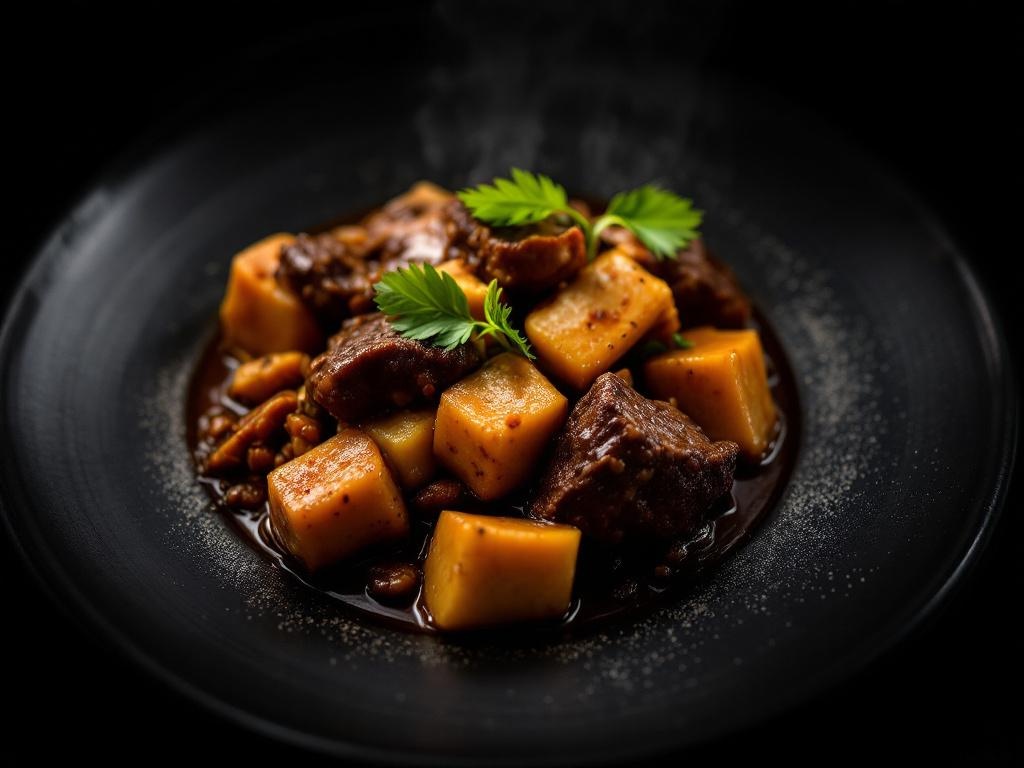
Southern Thailand, with strong Muslim Malay and Persian-Indian influence. The name is thought to derive from Mussulman (Muslim) or from the Persian word musaman. The dish reflects the spice trade routes that brought cardamom, cinnamon, and star anise through the Strait of Malacca to the Thai peninsula.
Massaman curry is Thailand's richest, mildest curry — deeply influenced by Muslim traders from the Middle East and India who brought warming spices to the southern Thai coast. Whole spices (cardamom, cinnamon, star anise, cloves) join the standard Thai aromatics in the paste. Slow-cooked beef, waxy potatoes, and peanuts make this the most substantial of the Thai curries, closer to an Indian korma in character than a Thai kaeng.
- Indian korma (mild, spiced, coconut cream-based — the direct ancestor from the Persian-Mughal tradition); Malay rendang (long-cooked dry coconut beef — the Malay parallel); Moroccan beef tagine with warming spices (similar warming-spice profile in a North African context).
Gewurztraminer from Alsace — the wine's lychee, rose, and spice aromatics mirror the cardamom and cinnamon in the curry. The slight residual sweetness buffers the mild but present heat. Or a cold Singha for the casual pairing.
Further training content for this entry is being completed.
- 600 g beef chuck — cut 2 cm cubes
- 400 ml coconut milk — full-fat
- 50 ml massaman curry paste — store-bought or house-made
- 100 g yellow potatoes — cut 3 cm chunks
- 75 g roasted unsalted peanuts
- 2 tablespoons tamarind paste
- 2 tablespoons fish sauce — nam pla
- 15 ml palm sugar
- 3 bay leaves
- 6 cardamom pods — bruised
- 1 cinnamon stick — 5 cm length
- 4 cloves — whole
- 2 tablespoons vegetable oil
- Salt and Tellicherry black pepper — to taste
- Cilantro — for garnish
- Heat oil in heavy-bottomed pot over medium-high heat; add massaman paste and toast 2 minutes, stirring constantly, until fragrant.
- Add beef cubes; sear on all sides without stirring, 5 minutes total, until browned.
- Pour in coconut milk; add bay leaves, cardamom, cinnamon, and cloves; bring to simmer.
- Reduce heat to low; cover and braise 25 minutes until beef is fork-tender.
- Add potatoes; simmer uncovered 10 minutes until potatoes begin to soften.
- Stir in peanuts, tamarind paste, fish sauce, and palm sugar; simmer 5 minutes to marry flavors.
- Season with salt and pepper; remove whole spices if desired.
- Transfer to serving bowl; garnish with cilantro; serve with steamed jasmine rice.
- The moment where Massaman lives or dies is the same-day versus next-day decision. Massaman improves dramatically when reheated the following day — the spices deepen, the coconut milk becomes more integrated, and the beef absorbs more of the sauce. If time allows, make Massaman the day before.