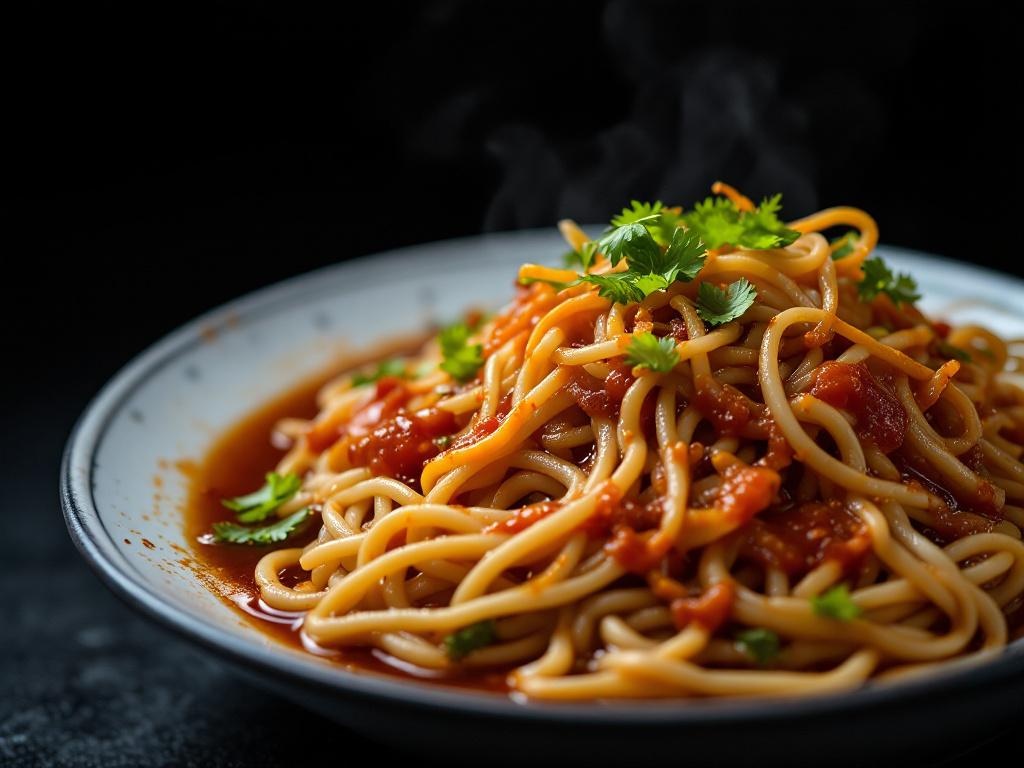
Pyongyang (North Korea) and Hamhung (North Korea) — the two traditional regional styles. Mul naengmyeon (in broth) is the Pyongyang style; bibim naengmyeon (in gochujang sauce, no broth) is the Hamhung style. Both became national Korean dishes after the Korean War, when North Korean refugees brought the tradition South.
Naengmyeon (cold noodles) is Korea's summer dish — thin, chewy buckwheat and sweet potato noodles in an ice-cold, slightly tart beef broth, topped with half a hard-boiled egg, julienned cucumber, pear, and a slice of beef. The broth should be deeply flavoured, cold enough to have ice crystals, and slightly sour. The noodles have a unique springy, semi-translucent texture from the buckwheat. It is traditionally eaten in summer and after Korean BBQ.
- Japanese hiyashi chuka (cold ramen in sesame-soy sauce — the Japanese cold noodle equivalent); Chinese liangpi (cold wheat starch noodles in chilli-sesame sauce — the Northern Chinese cold noodle parallel); Vietnamese bun bo hue cold (cold rice noodle salad — the Vietnamese cold noodle version).
Traditionally eaten after Korean BBQ (the cold broth after the hot, fatty meat) or in the height of summer. Dongchimi (radish water kimchi) liquid is the traditional naengmyeon broth base in some preparations.