Provenance 1000 — Seasonal Authority tier 1

Potato Latkes (Hanukkah — Full Method)

Ashkenazi Jewish tradition; potato latkes as a Hanukkah food became the standard preparation after potatoes arrived in Eastern Europe c. 17th century; earlier Hanukkah fried preparations used cheese or other ingredients.

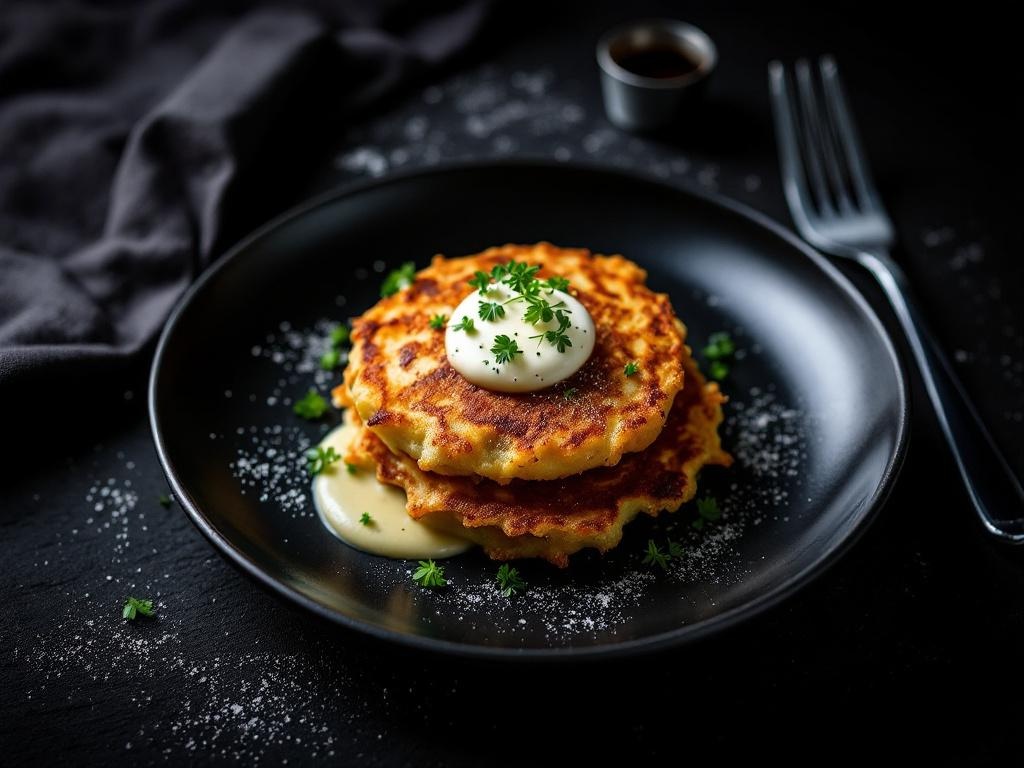
Potato latkes — the crispy fried potato pancakes of Hanukkah — are the most universally recognised symbol of the Festival of Lights, eaten because the miracle of Hanukkah involved oil (the oil that burned for eight nights), and frying in oil connects the food to the celebration's meaning. The preparation is simple in principle — grated potato, grated onion, egg, and matzo meal or flour, formed into pancakes and fried in hot oil — but achieving the perfect latke (crispy on the outside, tender and slightly yielding on the inside, with no grey or soggy patches) requires specific technique. The grating method, the squeezing of moisture, the oil temperature, and the thickness are all critical variables. A properly made latke is one of the most satisfying fried preparations in any culinary tradition.

Squeeze the grated potato until completely dry — this is the single most important step; wet potato produces a steamed rather than fried pancake and grey, unappetising latkes Grate by hand (box grater, coarse side) — food-processor grating produces a finer texture that becomes gluey; hand grating gives the right texture The onion grated into the potato juice (then discarded with the liquid) releases enzymes that slow the oxidation of the potato — this keeps the latkes white longer Oil must be hot — 175–180°C; a drop of batter should sizzle immediately Fry in batches without crowding — crowding drops the temperature and causes steaming rather than frying Drain on paper towels immediately — excess oil from overcrowding is the common cause of greasy latkes

Russet (starchy) potatoes produce the crispiest latkes — waxy potatoes have too much water and too little starch for the best result For extra crisp edges: add a tablespoon of schmaltz (rendered chicken fat) to the frying oil — the chicken fat flavour also adds a depth specific to the Ashkenazi tradition Applesauce and sour cream are the traditional accompaniments — the sweet-sour contrast with the savoury, oily latke is one of the great simple pairings

Insufficient moisture removal — grey, steamed potato; squeeze until no more liquid comes out Crowded frying — the latkes steam each other and lose crispness Low oil temperature — the latkes absorb the oil rather than crisping Too thick — potato that is too thick takes too long to cook through and the exterior burns before the interior cooks Flipping too early — the first side must be set and golden before flipping; premature flipping causes the latke to fall apart