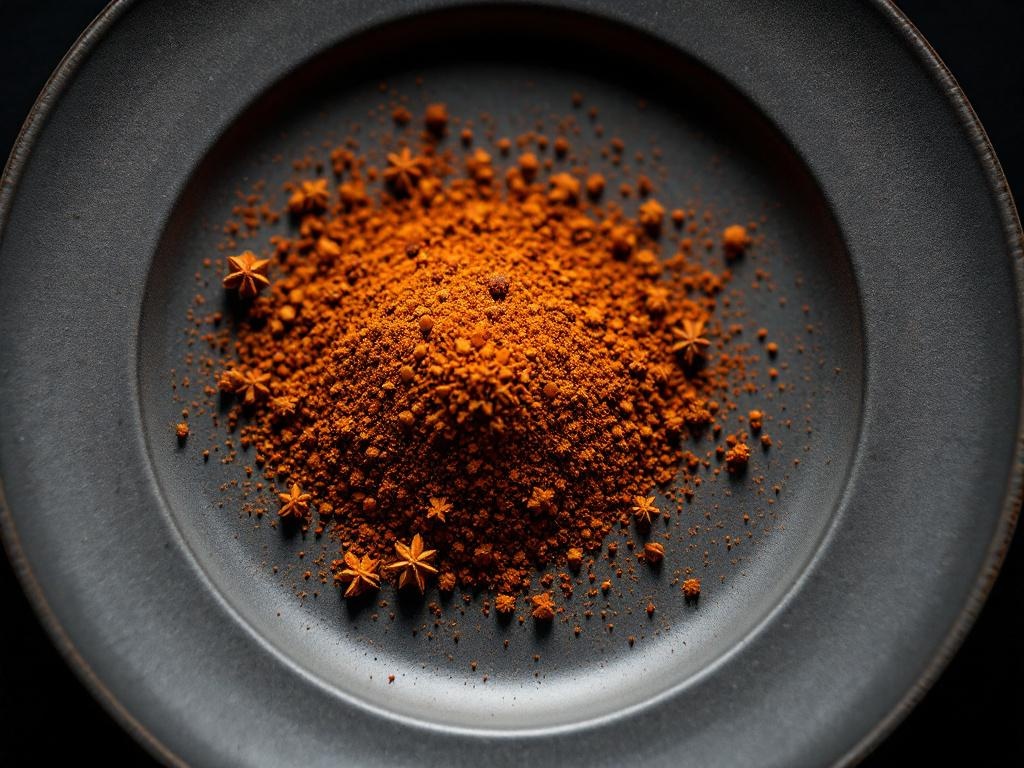
Morocco — ancient Maghrebi spice trading tradition; associated with the great spice merchants of Marrakech and Fez
Ras el Hanout translates from Arabic as 'head of the shop' — the spice merchant's best blend, his finest and most complex mixture, offered to customers who trusted his judgement above their own. The name encapsulates both the blend's character and the relationship between Moroccan cooks and their spice vendors: the blend is never standardised, always individual, always the best of what is available. A full ras el hanout can contain anywhere from 20 to 80 different spices — black pepper, cinnamon, cardamom, coriander, cumin, turmeric, ginger, mace, nutmeg, allspice, cloves, aniseed, dried rose petals, lavender, orris root, long pepper, grains of paradise, cubeb pepper, dried galangal, and sometimes even Spanish fly (cantharides, a beetle traditionally included for its reputed aphrodisiac properties). Most modern ras el hanout excludes the beetle. The complexity of ras el hanout is both the point and the challenge. When all the spices are in balance, the blend is warm, floral, slightly resinous, gently sweet, and deeply aromatic. When it is poorly composed or stale, it tastes of everything and nothing. Ras el hanout is used in tagines, couscous preparations, bastilla (the pastilla), and as a marinade for lamb. It is added at the beginning of cooking in most Moroccan dishes — the long slow cooking time mellows the high notes and allows the deeper spice character to develop.
Warm, floral, resinous, spiced — complex and slowly revelatory
Rose petals lift the blend into balance — no single spice should sing alone when the ras el hanout hits heat.
Fail: Freshness is everything; a 20-spice blend degrades quickly. Buy small quantities from trusted North African specialists with high turnover.
Freshness is everything; a 20-spice blend degrades quickly. Buy small quantities from trusted North African specialists with high turnover.
- 10 g coriander seeds
- 8 g cumin seeds
- 6 g fennel seeds
- 5 g fenugreek seeds
- 4 g black peppercorns — Tellicherry
- 4 g clove buds
- 3 g cinnamon stick — Ceylon, broken
- 3 g cardamom pods — green, crushed
- 2 g dried chilli — Kashmiri
- 2 g ground ginger
- 1 g saffron threads — Persian
- 1 g ground turmeric
- Toast coriander, cumin, fennel, fenugreek, black peppercorns, clove, cinnamon, and cardamom in a dry pan over medium heat for 3 minutes, shaking frequently.
- Cool toasted spices for 2 minutes, then transfer to spice grinder.
- Grind toasted blend to fine powder, approximately 45 seconds.
- Combine ground mixture with dried chilli, ground ginger, saffron threads, and turmeric.
- Mix thoroughly and transfer to an airtight glass container.
- Store in a cool, dark place; use within 4 months.
- The best ras el hanout is from souks in Marrakech, Fez, or Casablanca — if visiting Morocco, buy from a merchant who grinds on-site
- For home composition, start with a base of cinnamon, cardamom, cumin, coriander, ginger, and allspice (about 60% of the blend) and build from there
- Add dried rose petals last — they are delicate and should not be roasted
- Ras el hanout is exceptional as a dry rub for lamb shoulder before slow roasting
- For couscous, add ras el hanout to the butter or oil used to fluff the steamed grain