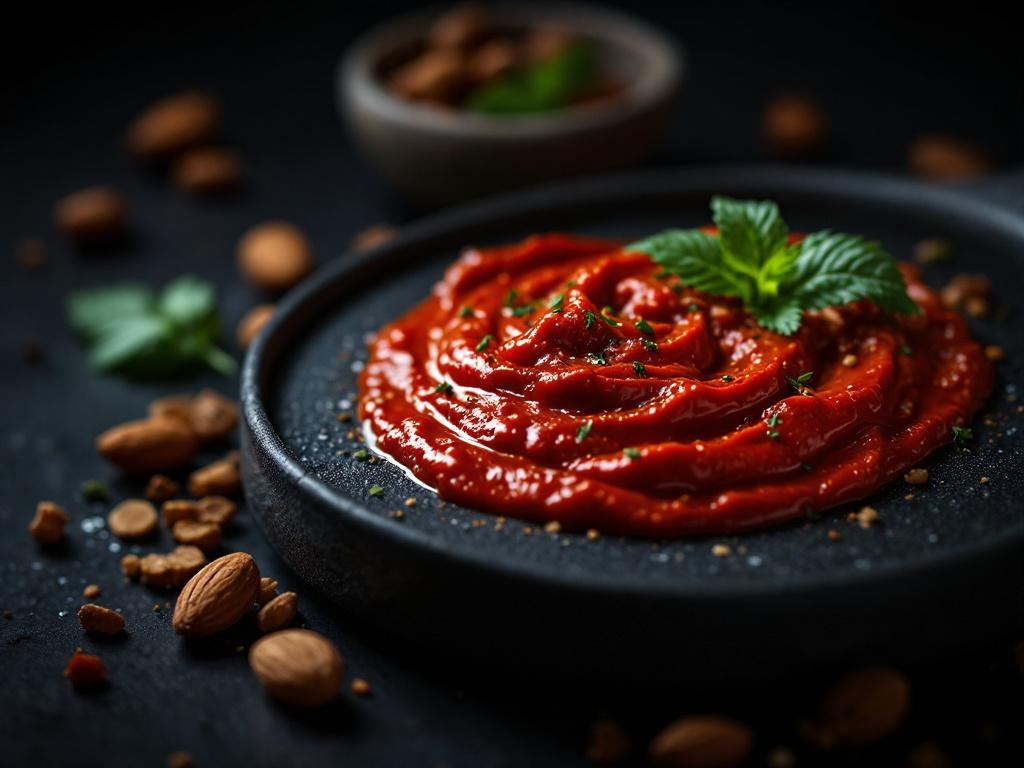
Romesco Sauce (Catalan — Roasted Pepper, Almonds, Pimentón)
One of 44 entries · Provenance 1000 — Pantry
From the Tarragona region of Catalonia, Spain, with roots in the fishing communities of the Costa Daurada. First documented in the late 19th century, though its origins are older. Specifically associated with the calçotada tradition.
Romesco is Catalonia's great sauce — a thick, rust-coloured paste built from roasted tomatoes and peppers, toasted almonds or hazelnuts, fried bread, garlic, pimentón (smoked paprika), and sherry vinegar. It originated in Tarragona as an accompaniment to fish and seafood but has become one of the most versatile condiments in the Spanish kitchen: a dipping sauce, a marinade, a pasta coating, a spread, and a salad dressing depending on consistency and occasion. The genius of romesco is in its construction of contrasting elements: the sweetness of roasted peppers, the smoke of pimentón, the richness of nuts, the texture of fried bread, and the sharpness of vinegar. No single ingredient dominates — they compose. The roasting of the tomatoes and peppers is essential: it concentrates their sweetness and introduces a char that raw versions entirely lack. Nyora peppers — small, dark, dried Catalan sweet peppers — are the traditional choice, rehydrated and scraped. Spanish paprika provides an approximation; fresh roasted red peppers provide sweetness without depth. The bread — pan frito, fried in olive oil until crisp — provides body and binds the sauce without flour or cream. The nuts (traditionally blanched almonds, sometimes hazelnuts) add richness and texture. Everything is processed together, but not to smoothness — romesco should have texture, a slight roughness that speaks to its artisan origins. Over-processing produces something closer to ketchup than to the real thing. Romesco is at its finest with calçots (Catalan spring onions roasted over fire), grilled fish, or simply spread on charred bread with good olive oil. The famous calçotada festival of Tarragona — a spring onion celebration — exists in large part because of romesco.
Smoky, sweet-pepper, rich with nuts and olive oil — a thick, rust-coloured paste of extraordinary depth
Char the peppers and tomatoes until blackened — the smoke and depth won't come from raw fruit.
Fail: Char the peppers and tomatoes until blackened — the smoke and depth won't come from raw fruit.
Char the peppers and tomatoes until blackened — the smoke and depth won't come from raw fruit.
- 2 red bell peppers (280g total), cored and halved
- 50g blanched almonds, raw
- 25g Spanish smoked pimentón (pimentón de la Vera DOP, dulce)
- 1 garlic clove, peeled
- 30ml sherry vinegar (Jerez DOP preferred)
- 60ml extra-virgin Spanish olive oil (Arbequina or Picual)
- 4g sea salt
- 1g Tellicherry black pepper
- Char red bell pepper halves skin-side-down under a hot broiler or directly over a gas flame until blackened, 8–10 minutes.
- Transfer to a bowl, cover with plastic wrap, and rest 10 minutes; peel away charred skin under cool running water.
- Toast blanched almonds in a dry skillet over medium heat, shaking frequently, 4–5 minutes until fragrant and light golden; cool slightly.
- Combine roasted peppers, toasted almonds, pimentón, garlic, sherry vinegar, salt, and pepper in a food processor; pulse until coarsely combined.
- With motor running, drizzle in olive oil slowly until sauce reaches a chunky, pourable consistency.
- Taste and adjust seasoning with salt, vinegar, or additional oil as needed.
- Transfer to a serving vessel; romesco can be served warm or at room temperature.
- Store in a sealed jar, refrigerated, up to 5 days; excellent with grilled vegetables, seafood, or bread.
- For the finest version, use a combination of rehydrated nyora peppers and roasted fresh red peppers
- Toast the almonds in a dry pan before adding — raw nuts produce a blander result
- A small amount of saffron soaked in warm sherry vinegar adds another dimension
- Romesco keeps refrigerated for up to two weeks — the flavour improves after 24 hours
- Thinned with more olive oil, romesco becomes a salad dressing of remarkable depth