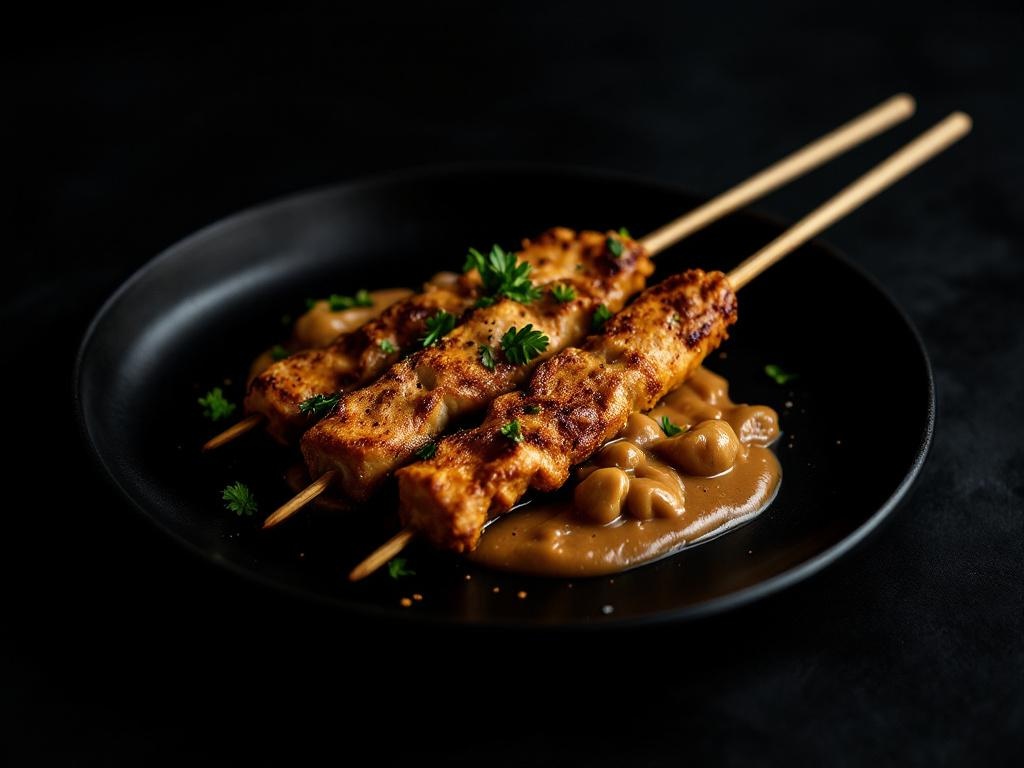
Thailand (and throughout Southeast Asia — satay is pan-regional). The word satay (sate in Indonesian and Malay) likely derives from the Tamil word for meat. The Thai version is distinguished by its turmeric-forward marinade and the cooked peanut sauce — the Indonesian version uses a simpler peanut sauce.
Thai satay is marinated chicken or pork skewers grilled over charcoal, served with peanut sauce and ajat (cucumber relish). The marinade is turmeric-forward — the bright yellow colour is the defining visual. The peanut sauce is cooked, thick, and peanut-forward with red curry paste and coconut milk. This is not peanut butter thinned with hot water — it is a sauce that starts with a paste bloom and builds from there.
- Indonesian sate ayam (the Indonesian version with a thinner peanut sauce); Malaysian satay (similar to Thai, with a spiced marinade and peanut sauce); Japanese yakitori (bamboo-skewered chicken grilled over charcoal — same structural discipline, different flavour profile).
Singha lager or cold Tusker (the Kenyan lager used in satay restaurants internationally). The mild, sweet lager pairs naturally with the turmeric-spiced, peanut-sauced skewers.