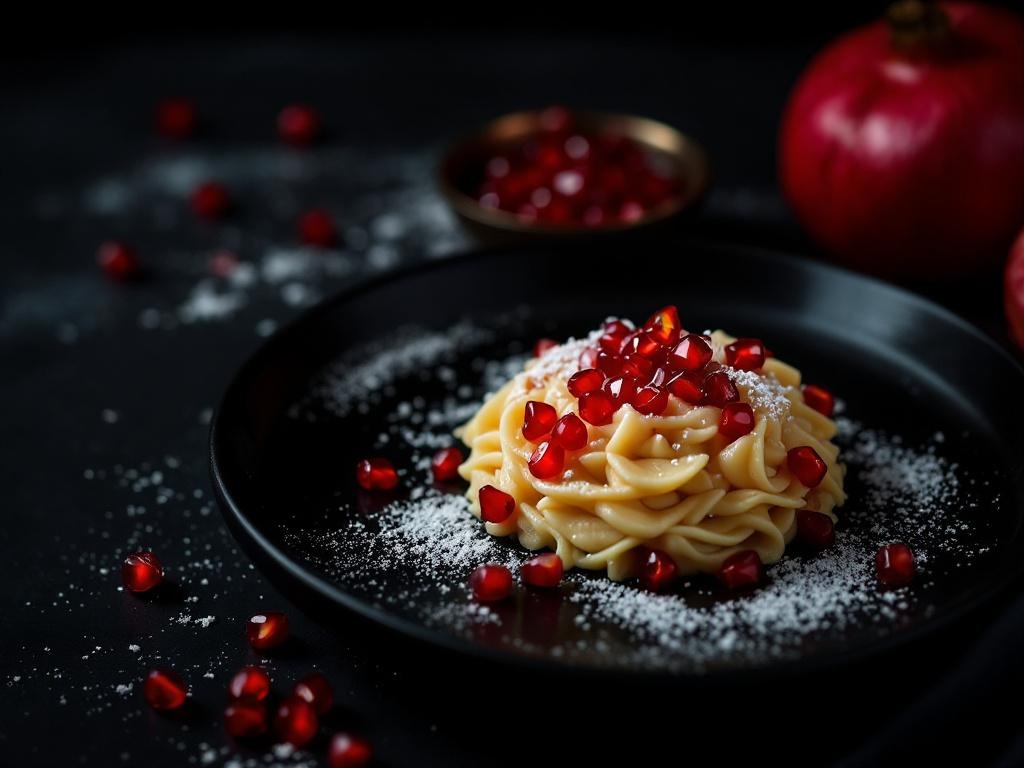
Shab-e Yalda Celebration — Pomegranate and Aash Reshteh
One of 69 entries · Provenance 1000 — Seasonal
Iran; Shab-e Yalda is a Zoroastrian tradition predating Islam; the celebration of the winter solstice has been documented in Persian culture for over 4,000 years; aash reshteh is the celebratory food associated with this and other Persian occasions.
Shab-e Yalda — the longest night of the year (December 21) — is one of Iran's most ancient celebrations, predating Islam by millennia. Families gather at the home of the eldest family member and stay up through the longest night, eating foods associated with blood (red fruits) and warmth (thick soups). Pomegranates and watermelon are the essential fruits (their red seeds and flesh symbolising the light of dawn); aash reshteh — a thick noodle soup of legumes, herbs, and noodles topped with kashk (whey), fried onions, and mint — is the warming communal meal. The Hafez poetry reading tradition (opening the collected poems at random for a personal prediction for the new year) accompanies the food. Aash reshteh is a preparation of extraordinary complexity: multiple legumes, fresh herbs, noodles, dried kashk — each element requires separate preparation and correct timing.
Noodles absorb all liquid and turn gluey within minutes of early addition — you taste the shift from pourable soup to paste on your tongue.
Fail: Noodles go in the last 15 minutes. Add them earlier and they absorb all the liquid and make the aash gluey.
Noodles go in the last 15 minutes. Add them earlier and they absorb all the liquid and make the aash gluey.
- For Aash Reshteh:
- 200g dried reshteh (thin wheat noodles) or angel hair pasta
- 150g dried red lentils
- 120g dried split peas
- 200g fresh spinach, coarsely chopped
- 100g fresh parsley, coarsely chopped
- 50g fresh dill, coarsely chopped
- 2 onions (240g), finely diced
- 6 cloves garlic, minced
- 60ml extra virgin olive oil
- 8g sea salt
- 2g black pepper
- 2g turmeric
- 1g Aleppo pepper
- For Pomegranate Garnish:
- 300g pomegranate seeds
- 30g fresh mint, finely sliced
- Heat olive oil in large heavy pot; sauté onions until caramelized and dark gold, 12 minutes; add garlic and bloom 1 minute.
- Stir in turmeric and Aleppo pepper; cook 30 seconds until fragrant.
- Add lentils and split peas; cover with 1.5 litres water and bring to boil; reduce heat and simmer 25 minutes until legumes soften.
- Add fresh spinach, parsley, and dill; stir well and simmer 5 minutes until herbs wilt.
- Break reshteh into 5cm lengths; stir into soup and cook 8 minutes until pasta is tender but retains slight chew.
- Season with salt, pepper, and additional Aleppo pepper to taste; the consistency should be thick and porridge-like.
- Transfer to serving bowl; garnish generously with pomegranate seeds and fresh mint; drizzle with additional olive oil and serve immediately.
- The kashk and the fried mint-onion topping should be prepared separately and added by each diner to their bowl — this preserves the temperature contrast and the visual impact
- For the pomegranate serving: cut the pomegranate over a bowl of water and separate the seeds underwater — they sink while the white pith floats for easy removal
- The Hafez reading tradition: have a physical copy of Hafez's collected poetry at the table; this is not a culinary technique but it is inseparable from the Yalda experience