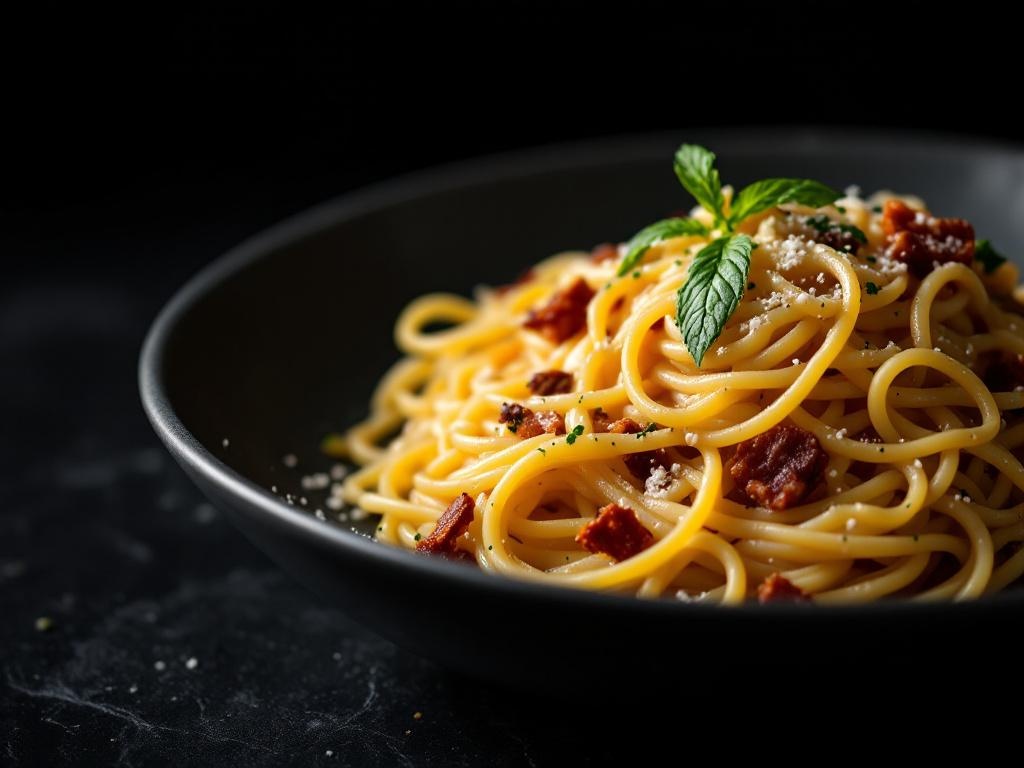
Rome, Lazio, Italy. Likely post-WWII, descended from cacio e ova (cheese and egg pasta) of the Apennine shepherds, adapted when American troops introduced powdered eggs and bacon rations to Roman markets. The name derives from carbonari — charcoal workers of the Apennine mountains.
The definitive carbonara. Guanciale — not pancetta, not bacon — rendered slowly until the edges crisp and the fat is translucent. Egg yolks and whole egg whisked with Pecorino Romano DOP (never Parmigiano — carbonara is a Roman dish, and Romans use Pecorino). The pasta water is the emulsifier. The heat is off when the egg meets the pasta. Everything about this dish is timing.
- Japanese tamago toji (egg-bound dishes cooked entirely by residual heat, as in oyako donburi); French sauce liaison (egg yolk used to finish sauces off the heat — same thermodynamic principle); Chinese silken egg technique in wok-fried noodles where the egg is added to residual pan heat.
Serve with a mineral, dry white wine from Lazio — Frascati Superiore DOCG or Est! Est!! Est!!! di Montefiascone. The chalky acidity cuts through the fat of egg yolk and guanciale. If red is preferred, a light Cesanese del Piglio at cool cellar temperature. Black pepper is the only spice — freshly cracked, coarse, applied with conviction.
Further training content for this entry is being completed.
- 400 g spaghetti
- 200 g guanciale, cut into 5 mm batons
- 4 large egg yolks
- 100 g Pecorino Romano DOP, finely grated
- 2 g Tellicherry black pepper, freshly ground
- Bring a large pot of salted water to a rolling boil; add spaghetti and cook to al dente (8–10 minutes).
- While pasta cooks, render guanciale in a large skillet over medium heat until fat is translucent and edges crisp (5 minutes); remove from heat.
- Whisk egg yolks with 80 g Pecorino Romano and all black pepper in a bowl until homogeneous.
- Reserve 200 ml pasta cooking water; drain spaghetti and add to warm guanciale pan off heat.
- Pour egg mixture over pasta, tossing constantly with 50 ml pasta water to emulsify into creamy sauce (1–2 minutes).
- Add pasta water 25 ml at a time if sauce is too thick; finish with remaining Pecorino Romano and cracked pepper.
- The entire dish assembles in 90 seconds after the pasta hits the guanciale pan. Have everything positioned before draining: the bowl warm, the cheese grated, the egg mixture whisked and at room temperature. The moment where this dish lives or dies is the 10 seconds after the egg mixture hits the pasta — toss continuously with tongs, add pasta water in 30ml splashes, and watch the sauce transform from liquid to silk. When it coats the back of a spoon and a finger drawn through leaves a clean line, stop. Add a final rasp of Pecorino and a generous crack of black pepper at the table. Serve immediately — carbonara does not wait.