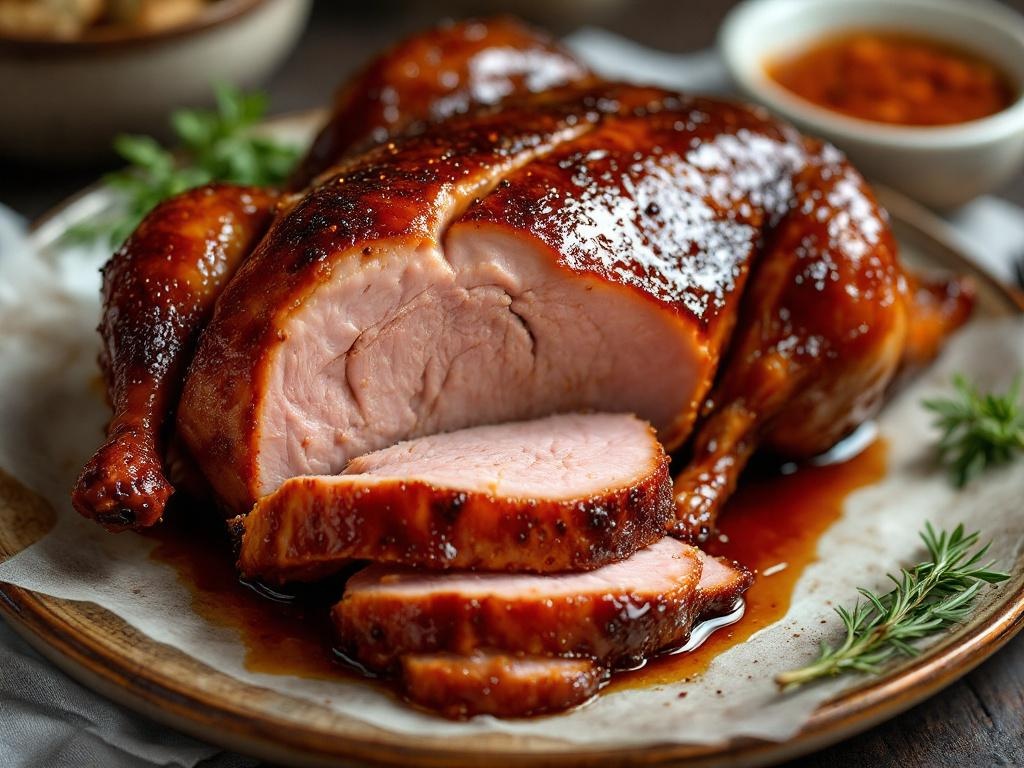
Cantonese Roast Duck (广式烧鸭)
Cantonese roast duck is the civilian counterpart to Peking Duck — equally complex in preparation, faster in execution, and defined by a deeply lacquered skin that shatters on the bite and flesh perfumed from within by a spiced marinade sealed inside the cavity. Where Peking Duck is a ceremony, Cantonese roast duck is a meal: displayed hanging in restaurant windows across the Cantonese diaspora, sold by the half or quarter, eaten over rice or noodles. The preparation involves inflating the duck with air to separate skin from flesh (so the fat renders completely), filling the cavity with a mixture of soy sauce, rice wine, sugar, five spice, and star anise, sealing it shut with a metal skewer, then coating the outside with a malt syrup glaze. The duck is then air-dried — traditionally hanging overnight in a cool, ventilated space — before roasting at high heat. The drying stage is everything: it dessicates the skin so that when it enters the oven, it caramelises immediately rather than steaming. The result is that unmistakeable combination of shattering exterior and juicy, spiced, fat-rich interior.
The Market List
The benchmark for each ingredient, and who stocks it near you. Tap a stockist to go straight to the product.
Each tap is counted, so the stockist sees the demand Provenance sends them.
The Method
Sensory Tests
What to Pour
No pour without alcohol holds against this yet.
Each tap is counted, so the stockist sees the demand Provenance sends them.
Why each one works is part of membership — Enter · from $49 a year →
The whole pairing