PProvenance
Enter
Meat Resting — Carryover Cooking and Juice Redistribution

Meat Resting — Carryover Cooking and Juice Redistribution

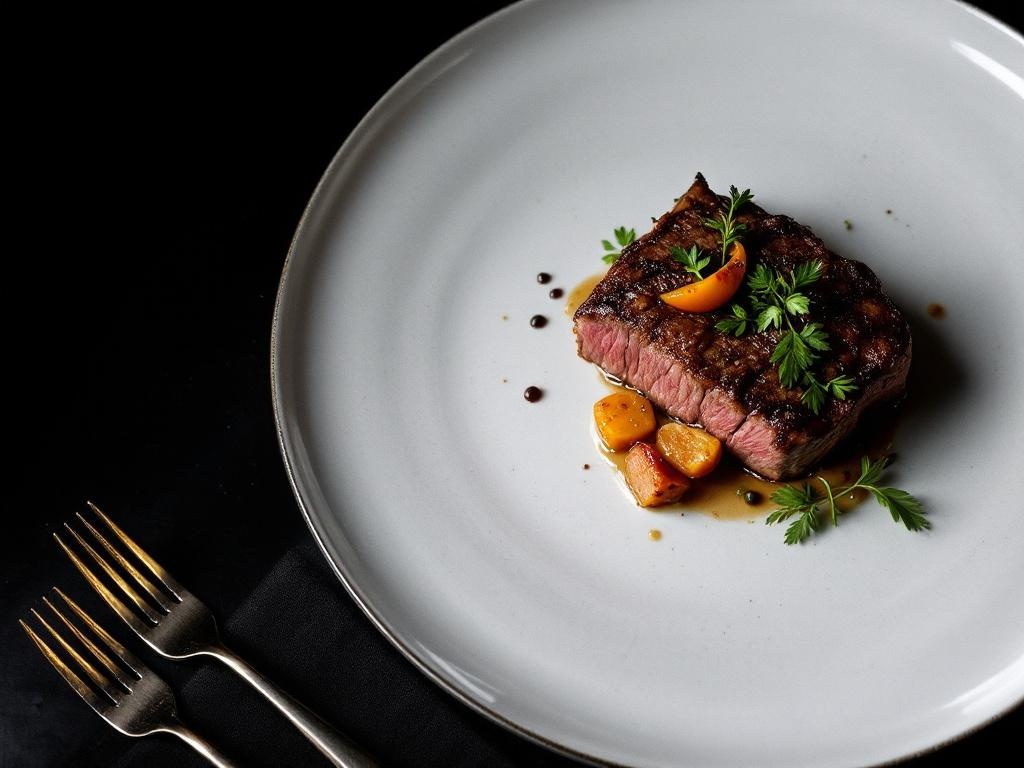
Resting cooked meat after removing it from heat is one of the most frequently cited and least frequently understood techniques in professional kitchens. It involves two distinct but related phenomena: carryover cooking and moisture redistribution — both of which require time to resolve, and both of which affect the final quality of the cooked meat significantly. Carryover cooking occurs because the outer layers of meat accumulate heat during cooking that continues to conduct inward even after the heat source is removed. The rate of carryover depends on the mass of the meat and the gradient between its exterior and interior temperatures. A 1kg roast beef removed from a 220°C oven at 52°C internal temperature may reach 57°C or higher during a 15-minute rest as heat conducts inward. Thin cuts (steak, fish fillet) have negligible carryover; large roasts and whole birds have significant carryover of 5–10°C. Accounting for carryover requires removing meat from heat 3–8°C below the final target temperature. Moisture redistribution is the mechanism behind the observation that rested meat 'holds its juices' better when sliced. During cooking, proteins contract and squeeze free water and dissolved proteins toward the cooler centre of the meat, creating a moisture gradient (centre wetter than exterior). During resting, this gradient relaxes as osmotic and capillary forces partially re-equilibrate water distribution throughout the meat. This does not mean that resting 'reabsorbs' the juices — it means that the moisture gradient normalises, reducing the pressure gradient that causes the central pool to gush out when cut. Resting time scales with the size of the cut: steaks need 5–10 minutes; a whole chicken 15–20 minutes; a large roast 20–30 minutes; a whole turkey up to 45 minutes. Tenting loosely with foil slows heat loss without causing condensation to form and soften the crust — though even tenting is unnecessary for short rests on small cuts.

Sourced0of 4 in BC
Cook
I

The Market List

The benchmark for each ingredient, and who stocks it near you. Tap a stockist to go straight to the product.

PRINCIPLES
Proteins continue cooking internally after removal from heat source
typically 5–10°C rise in core temperature.
Not yet stocked in British Columbia
Residual heat causes muscle fibres to contract further; pausing this process allows juices to redistribute evenly throughout meat.
Not yet stocked in British Columbia
Resting time varies by thickness and protein: 5 minutes for steaks (100 g)
10–15 minutes for poultry breasts and roasts (500–1000 g), 20–30 minutes for whole birds or large roasts (2000 g+).
Not yet stocked in British Columbia
Carryover cooking adds 10–15% to internal temperature; account for this when pulling meat from heat.
Not yet stocked in British Columbia
II

The Method

1
Remove meat from heat when internal temperature reaches 2–5°C below target doneness (rare: 48°C pull, 52–54°C final; medium: 55°C pull, 58–60°C final; well-done: 63°C pull, 65–68°C final).
2
Transfer meat to a warm plate or cutting board; tent loosely with aluminium foil to retain radiant heat without trapping steam.
3
Do not cover tightly—steam will soften the crust and warm the exterior unevenly.
4
Rest for the calculated period (see above); do not cut or pierce until resting is complete.
5
Cut against the grain after resting; juices will remain in the meat rather than pooling on the plate. RESULT: Evenly cooked, moist protein with redistributed natural juices.
IV

Sensory Tests

◇Where it lives or dies. TECHNIQUE: For a restaurant kitchen, build resting into the station's timing — steaks rested on a wire rack at the pass for exactly 6–8 minutes reach the guest in ideal condition For maximum carryover calculation precision, use a probe thermometer and track internal temperature during resting to learn your specific oven and cut combination Pork crackling, duck breast, and chicken thighs are better rested skin-side-up without foil — any covering softens the skin For large format service (whole roast, barbecue brisket), rest in a cooler lined with towels — insulation maintains temperature for up to 2 hours without continuing to cook Slice against the grain of muscle fibres after resting — this shortens fibres, producing tender bite, and is independent of the resting effect
VI

What to Pour

Resting does not change flavour directly but dramatically affects perceived juiciness — an unrested steak loses two to three times more liquid on the plate than a properly rested one

The whole pairing
Pillar VII
Origin and lineage are part of membership.
Where the dish comes from and how it came to be — on every recipe.
Enter · from $49 a year