PProvenance
Enter
Cacio e Pepe (Roman — The Emulsion Method)
Italian · Rome

Cacio e Pepe (Roman — The Emulsion Method)

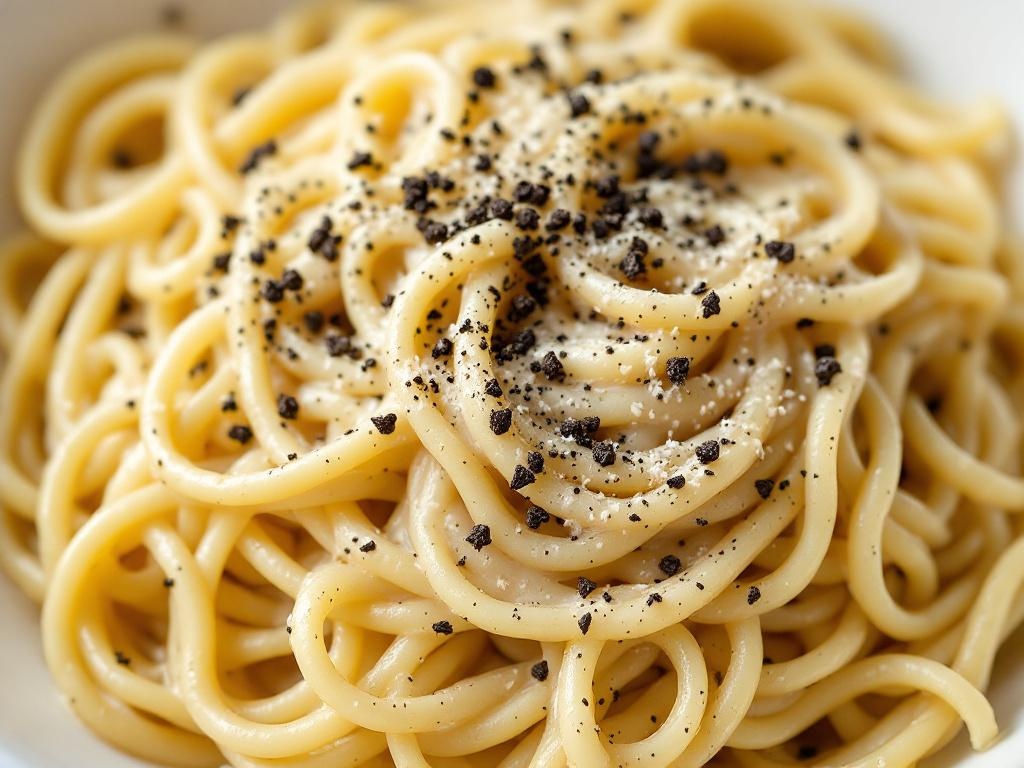
Cacio e Pepe is the intellectual apex of Roman pasta cookery — a dish of three ingredients (pasta, Pecorino Romano, black pepper) that demands precise technique to achieve its defining characteristic: a smooth, creamy sauce that coats every strand without a single lump of clumped cheese. It is a dish that appears simple and punishes arrogance. The dish originates with the shepherds of the Roman campagna, who would carry dried pasta, aged sheep's cheese, and pepper on their transhumance — seasonal migrations between summer and winter grazing grounds. These were the most shelf-stable and high-calorie provisions available. The combination, heated with a little pasta water, produced nourishment in any weather. Its modern Roman form developed in the trattorias of Testaccio and Trastevere in the 20th century, refined from rustic simplicity into a technically demanding restaurant preparation. The emulsion technique is the entire challenge. Pecorino Romano, aged and intensely salty, is grated extremely finely — almost to a powder — and combined with a small amount of cold water to form a paste before any heat is applied. This hydrates the cheese proteins and begins to loosen them. Black pepper is toasted whole in a dry pan until aromatic, then cracked coarsely — size matters, as fine powder disappears and coarse chunks are too aggressive. The pasta (tonnarelli or spaghetti) is cooked in less water than usual to concentrate the starch content of the cooking water. The critical moment: pasta is transferred to the pan with toasted pepper (no oil), a ladleful of hot starchy cooking water added, and the heat killed or reduced to barely warm. The cheese paste is then worked in, adding cooking water teaspoon by teaspoon, and the pasta is agitated — tossed or stirred — continuously until the sauce emulsifies into a glossy, flowing cream. If the pan is too hot when cheese is added, the proteins seize into hard granules. The result, when correctly executed, should sheet off the back of a spoon as a thin, creamy, perfectly uniform sauce.

‹Swipe for the next dish›
Serves2
Total12 min
Sourced0of 6 in BC
Cook
I

The Market List

The benchmark for each ingredient, and who stocks it near you. Tap a stockist to go straight to the product.

200g
Parmigiano Reggiano DOP aged 24 months
finely grated (use microplane)
Not yet stocked in British Columbia
50g
Pecorino Romano DOP
finely grated
Not yet stocked in British Columbia
200g
tonnarelli (or spaghetti if unavailable)
Not yet stocked in British Columbia
50g
guanciale
cut into 5mm lardons
Not yet stocked in British Columbia
Tellicherry black pepper
freshly ground (approx. 1 tsp)
Your own market
Salt for pasta water
Your own market
II

The Method

1
Bring a large pot of salted water to rolling boil; add tonnarelli and cook until 1 minute before al dente (the pasta will finish cooking off-heat).
2
While pasta cooks, render guanciale lardons in a large shallow pan over medium heat until fat is fully released and solids are crisp (4–5 minutes); turn off heat.
From the canon — Guanciale (from 'guancia' — cheek) is the cured pig's jowl that is foundational to Roman cooking — the fat used in amatriciana, carbonara, cacio e pepe's ric… Guanciale — Cured Pig's Cheek of Lazio and Abruzzo →
3
Combine Parmigiano Reggiano and Pecorino Romano in a small bowl; crack a generous amount of black pepper into the same bowl and mix.
4
Reserve 200ml pasta cooking water; drain tonnarelli and add immediately to the pan with guanciale and fat (off heat).
5
Add half the cheese mixture and toss constantly, adding pasta water one tablespoon at a time to form a silken emulsion; the residual heat will cook the pasta to al dente and create a glossy sauce.
From the canon — Pasta cooking water contains dissolved starch (released from the pasta surface during boiling) at a concentration that increases with pasta-to-water ratio an… Pasta Water: Starch Concentration and Sauce Binding →
6
Mount the remaining cheese and pepper, tossing off heat until fully incorporated; serve immediately in warmed bowls with additional pepper on top.
IV

Sensory Tests

◇Sight. Cheese powder hydrated in cold water turns slick and glossy before heat — visual signal the emulsion is ready to build.
◇Where it lives or dies. Direct high heat on cheese causes proteins to seize into clumps; kill or reduce heat before adding the paste.
VI

What to Pour

The pairing
Pieropan Soave Classico Calvarino
Pieropan · Soave DOC
Cut — the acidity ('citrus blossom') scrubs the cream and salt between bites; the palate arrives clean at every pass.
Not yet stocked in British Columbia
Wine
From British Columbia
Fort Berens Riesling
Fort Berens Estate Winery · Lillooet
Cut — the acidity ('lime zest') scrubs the cream and salt between bites; the palate arrives clean at every pass.
Not yet stocked in British Columbia
Wine
Without alcohol
GT's Synergy Organic Kombucha — Gingerade
Cut — the bead ('effervescent') scrubs the cream and salt between bites; the palate arrives clean at every pass.
Not yet stocked in British Columbia
Non-alcoholic
The whole pairing
VII

Origin & Lineage

Roman campagna and Testaccio, Rome — pastoral origins with shepherds of the Lazio region; refined in Roman trattorias through the 20th century