PProvenance
Enter
Rosca de Reyes (Epiphany — Mexico and Spain)
Mexican · Mexico and Spain

Rosca de Reyes (Epiphany — Mexico and Spain)

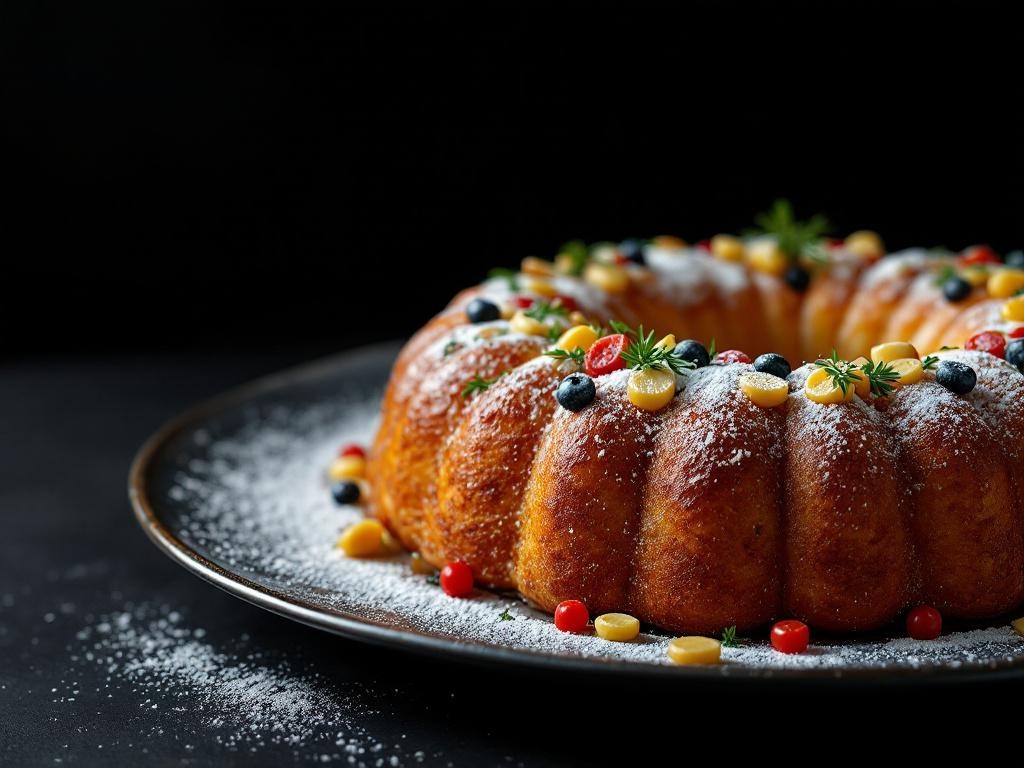
Rosca de reyes — 'ring of kings' — is the oval, ring-shaped sweet bread eaten on January 6 (Día de Reyes, Three Kings Day/Epiphany) across Mexico, Spain, and other Spanish-speaking countries. It is decorated with dried and candied fruit to represent the jewels of the kings' crowns, and like the French galette des rois and the New Orleans king cake, it contains a small plastic baby figure (representing the Christ child). The person who finds the baby in their slice is responsible for hosting a Candelaria party on February 2. The dough is an enriched yeast bread similar to brioche, flavoured with orange and lemon zest, rum, and vanilla, shaped into an oval ring and decorated lavishly before baking with candied fruit, sugar, and sometimes crème pâtissière if it is served as a dessert. In Mexico City, bakeries produce millions of roscas in the days before January 6.

‹Swipe for the next dish›
Serves12
Total180 min (including proofing)
Sourced0of 15 in BC
Cook
I

The Market List

The benchmark for each ingredient, and who stocks it near you. Tap a stockist to go straight to the product.

650g
bread flour
Origin · CanadaNot yet stocked in British Columbia
10g
instant yeast
Your own market
10g
sea salt
Your own market
120g
granulated sugar
Your own market
3
large eggs
Your own market
200ml
whole milk
warmed
Your own market
100ml
fresh orange juice
Not yet stocked in British Columbia
120g
unsalted butter
softened
Your own market
10ml
orange flower water
Your own market
100g
candied fruits (orange peel
citron, cherries), coarsely chopped
Not yet stocked in British Columbia
50g
blanched almonds
sliced
Not yet stocked in British Columbia
1
ceramic coin or fava bean (for tradition)
Not yet stocked in British Columbia
For Glaze
1
egg yolk
Your own market
15ml
water
Your own market
100g
pearl sugar
Your own market
II

The Method

1
Combine flour, yeast, salt, and sugar in mixing bowl; add eggs, milk, and orange juice; mix until shaggy dough forms.
2
Knead dough 8 minutes until smooth; incorporate butter in small pieces, then orange flower water, candied fruits, and almonds; nestle coin into dough.
3
Form into ball; place in oiled bowl, cover, and prove 60 minutes until doubled.
4
Shape into 28cm ring on parchment; cover and prove 60 minutes until puffy.
5
Whisk egg yolk with water; brush over ring and sprinkle generously with pearl sugar.
6
Bake at 190°C for 35 minutes until deep golden and fragrant.
7
Cool on wire rack 30 minutes before serving (warn guests of hidden coin).
IV

Sensory Tests

◇Sight. Orange and lemon zest perfume the dough; candied fruits pressed firmly into the surface stay put during the oven spring.
◇Where it lives or dies. Candied fruits must be pressed firmly into the dough surface; loose decoration slides off during baking.
VI

What to Pour

The pairing
Buffalo Trace Kentucky Straight Bourbon Whiskey
Buffalo Trace Distillery · Kentucky Bourbon Country
Cut — the tannin ('oak') scrubs the cream and salt between bites; the palate arrives clean at every pass.
Not yet stocked in British Columbia
Whisky
From British Columbia
Fort Berens Riesling
Fort Berens Estate Winery · Lillooet
Cut — the acidity ('lime zest') scrubs the cream and salt between bites; the palate arrives clean at every pass.
Not yet stocked in British Columbia
Wine
Without alcohol
GT's Synergy Organic Kombucha — Gingerade
Cut — the bead ('effervescent') scrubs the cream and salt between bites; the palate arrives clean at every pass.
Not yet stocked in British Columbia
Non-alcoholic
The whole pairing
VII

Origin & Lineage

Spain (Galicia and Castille); documented from the 16th century; the tradition traces to Roman Saturnalia celebrations with a coin hidden in a bean cake; the Christian adaptation placed a Christ-child figure inside; adopted in Mexico and Latin America with Spanish colonialism.