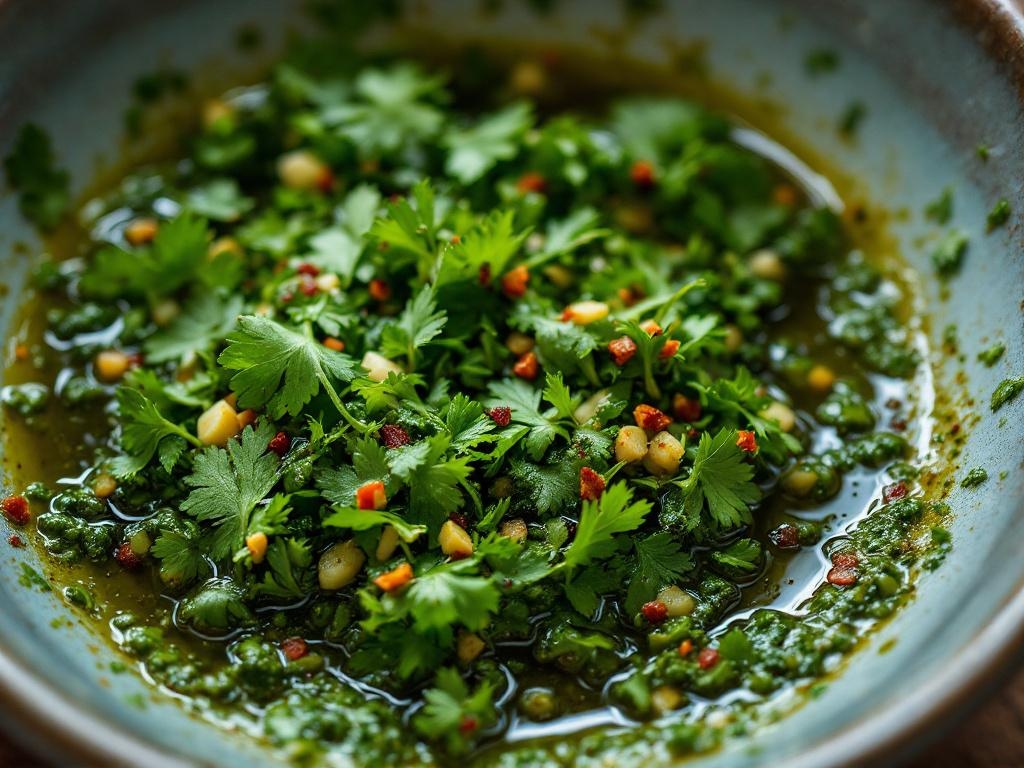
Chimichurri (Argentine — Herb, Vinegar, Garlic — Resting Time)
Chimichurri is Argentina's defining condiment — a raw, uncooked herb sauce of flat-leaf parsley, oregano, garlic, red chilli flakes, red wine vinegar, and olive oil that is as fundamental to the Argentine asado as the fire itself. Unlike European herb sauces that might be refined and emulsified, chimichurri is deliberately rough-textured, bold, and vibrant — it is meant to be a foil to the richness of grilled beef, not a complement to its subtlety. The preparation is simple but the details matter enormously. Parsley must be flat-leaf, not curly — the flavour is completely different. Garlic is finely minced or pounded, not blended — raw garlic blended becomes bitter and uniformly sharp in a way that finely minced garlic does not. Dried oregano is standard in the Argentine tradition, not fresh — the earthy, slightly medicinal character of dried oregano suits the preparation better than the brightness of fresh. Red wine vinegar provides the acidic backbone that makes the sauce cut through rich, fatty asado cuts. The single most important variable is resting time. Chimichurri must rest for at least 30 minutes — ideally 2–4 hours, or overnight — before serving. This is not optional. During the rest, the vinegar draws moisture from the herbs and garlic, the flavours meld, the harsh edges of raw garlic soften, and the sauce becomes a unified whole rather than a collection of separate ingredients. Freshly made chimichurri tastes aggressive and disjointed; rested chimichurri is harmonious and remarkable. Beyond beef, chimichurri is excellent with roasted vegetables, grilled chicken, grilled prawns, or simply spread on bread. A variant chimichurri rojo replaces most of the parsley with roasted red pepper and includes paprika.
The Market List
The benchmark for each ingredient, and who stocks it near you. Tap a stockist to go straight to the product.
The Method
Sensory Tests
What to Pour
Origin & Lineage
Argentine and Uruguayan in origin, dating to at least the 19th century gaucho tradition of cattle herding and open-fire asado. The word's etymology is debated — possibly Basque, possibly British immigrant influence.