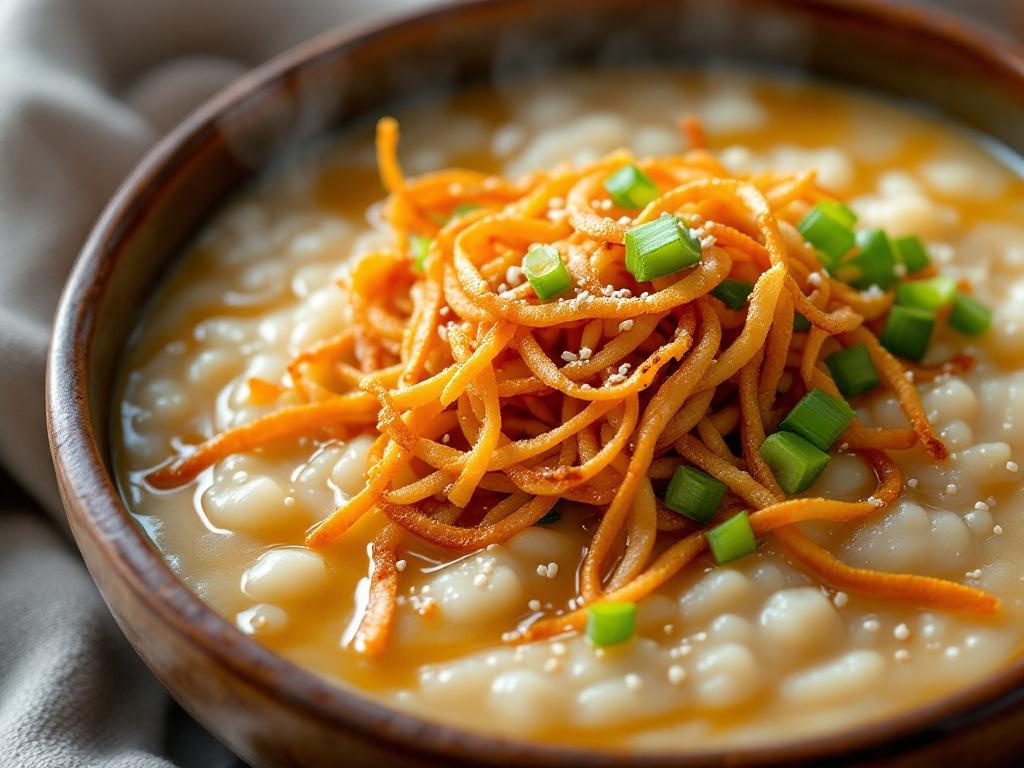
Congee (Jook / Kayu / Cháo)
Rice porridge — made by cooking rice in a large volume of water or stock until the grains break down into a smooth, thick, silky mass — is the most universal breakfast food of East and Southeast Asia, known as congee (English/Cantonese jook), kayu (Japanese), cháo (Vietnamese), xi fan (Mandarin), chok (Thai), and lugaw (Filipino). The technique is deceptively simple but the distinctions matter: Cantonese-style jook is cooked with a high water-to-rice ratio (10:1) and stirred constantly to break the grains completely into a smooth, glossy, neutral porridge that receives toppings; Japanese okayu uses 5:1 ratio and retains more grain texture; Thai chok is somewhere between; Vietnamese cháo is typically made with stock and ginger and served as a congee soup. The toppings and seasonings transform the same neutral base into the specific cultural experience: Cantonese jook with century egg and pork; Japanese okayu with pickled plum and nori; Vietnamese cháo with ginger, scallion, and fish sauce.
The Market List
The benchmark for each ingredient, and who stocks it near you. Tap a stockist to go straight to the product.
Each tap is counted, so the stockist sees the demand Provenance sends them.
The Method
Sensory Tests
What to Pour
Nothing from British Columbia holds against this yet.
No pour without alcohol holds against this yet.
Why each one works is part of membership — Enter · from $49 a year →
The whole pairing