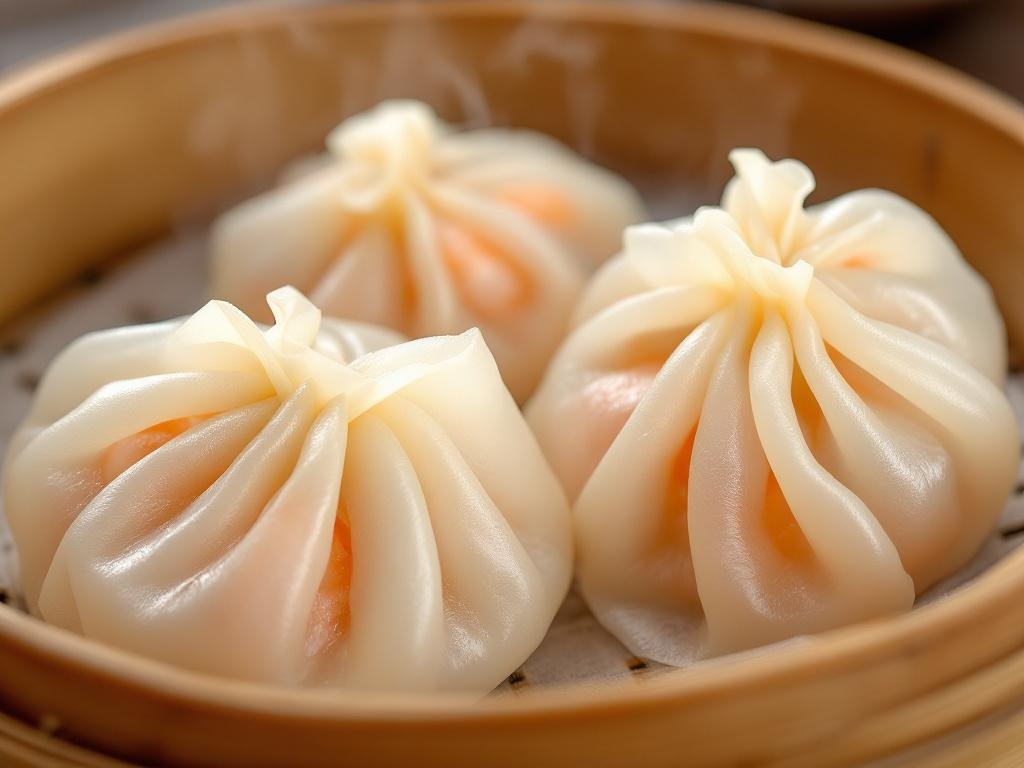
Dim Sum — Har Gow (虾饺 — Steamed Shrimp Dumplings)
Har gow are the benchmark by which a dim sum kitchen is judged. Every Cantonese chef understands that if your har gow is perfect, your reputation is secure — the translucent, pleated, shrimp-filled dumpling requires a mastery of dough, filling, and folding that takes years to develop at a professional level. The wrapper is made from wheat starch (tang mian — the starch left after gluten is washed from flour), mixed with a small amount of tapioca starch for elasticity. The dough is made with boiling water and must be worked quickly before it cools. When cooked, the wrapper turns translucent, allowing the pink of the shrimp to show through — this translucency is the visual signature. The filling is whole or roughly chopped fresh shrimp seasoned simply: salt, white pepper, a touch of sesame oil, cornstarch, and sometimes bamboo shoots for texture. The dumplings are pleated with seven or more folds on one side — an exacting craft — and steamed for exactly 4 minutes. They are served immediately: har gow held for even 5 minutes in the bamboo steamer begin to collapse and stick. The skin should be firm but not leathery, translucent not opaque, and the shrimp filling should retain a snap and sweetness that signals freshness.
The Market List
The benchmark for each ingredient, and who stocks it near you. Tap a stockist to go straight to the product.
Each tap is counted, so the stockist sees the demand Provenance sends them.
The Method
Sensory Tests
What to Pour
Why each one works is part of membership — Enter · from $49 a year →
The whole pairing