French
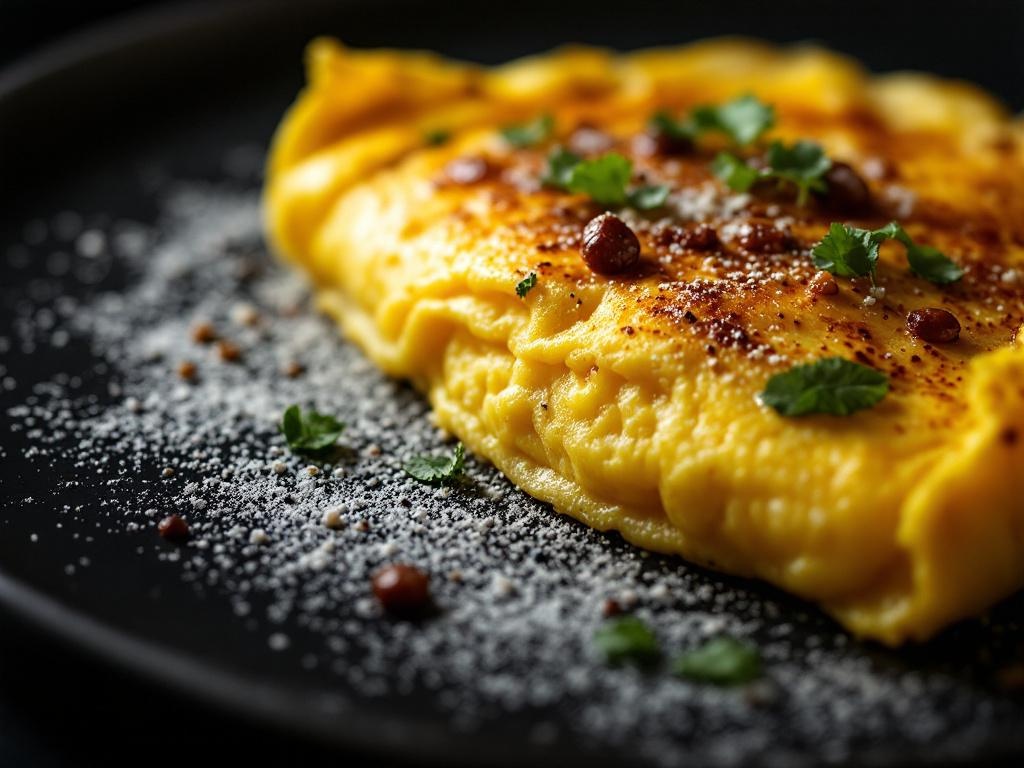
French Omelette
The French omelette is the benchmark of kitchen skill. Three eggs, good butter, a hot pan, 90 seconds. The exterior should be pale, unbrowned, uncracked. The interior should be barely set — baveuse (wet, silky) in the French chef's ideal. The technique — rapid circular stirring with a fork followed by a roll-and-flip — is learned, not intuited. This is the first dish a French chef's apprentice must master.
‹Swipe for the next dish›
I
The Market List
The benchmark for each ingredient, and who stocks it near you. Tap a stockist to go straight to the product.
3
large eggs
room temperature
Your own market
15 g
unsalted butter
Your own market
5 ml
water or cream
Your own market
2 g
fine sea salt
Your own market
1 g
white pepper
Your own market
10 g
Gruyère AOP cheese
grated (optional)
Not yet stocked in British Columbia
II
The Method
1
Crack eggs into bowl; add water and whisk until yolks and whites are just combined but not foamy.
2
Season with salt and pepper; let rest 1 minute.
3
Heat 8-inch nonstick pan or well-seasoned carbon steel over medium heat; add half the butter and allow foam to subside.
4
Pour in egg mixture; immediately begin stirring gently with rubber spatula, pushing cooked edges toward center while tilting pan to allow uncooked egg to flow to edges.
5
When eggs are mostly set but still slightly wet on top (18–20 seconds), stop stirring; dot with remaining butter and sprinkle cheese if using.
6
Fold omelette in thirds using spatula; slide onto warm plate.
7
Serve immediately while center remains barely trembling.
IV
Sensory Tests
◇Where it lives or dies. The moment where the French omelette lives or dies is the 45-second mark — when you must decide that the eggs are done and commit to the roll. The inside will look dangerously wet. It should. The residual heat during rolling and plating finishes the inside to baveuse. If you wait until the centre looks cooked, the omelette will be tough by the time it reaches the plate. Trust the technique, commit to the roll.
Pillar V
Cross-cuisine parallels are part of membership.
The dishes this one teaches you, across the cuisines — on every recipe.
Enter · from $49 a year
VI
What to Pour
The pairing
Charles Joguet Chinon Clos de la Dioterie
Domaine Charles Joguet · Chinon
Not yet stocked in British Columbia
Wine
From British Columbia
Wine
Without alcohol
GT's Synergy Organic Kombucha — Gingerade
Not yet stocked in British Columbia
Non-alcoholic
Why each one works is part of membership — Enter · from $49 a year →
The whole pairingPillar VII
Origin and lineage are part of membership.
Where the dish comes from and how it came to be — on every recipe.
Enter · from $49 a year