PProvenance
Enter
Goi Cuon (Vietnamese Spring Rolls — Tet Preparation)
Vietnamese · Vietnam

Goi Cuon (Vietnamese Spring Rolls — Tet Preparation)

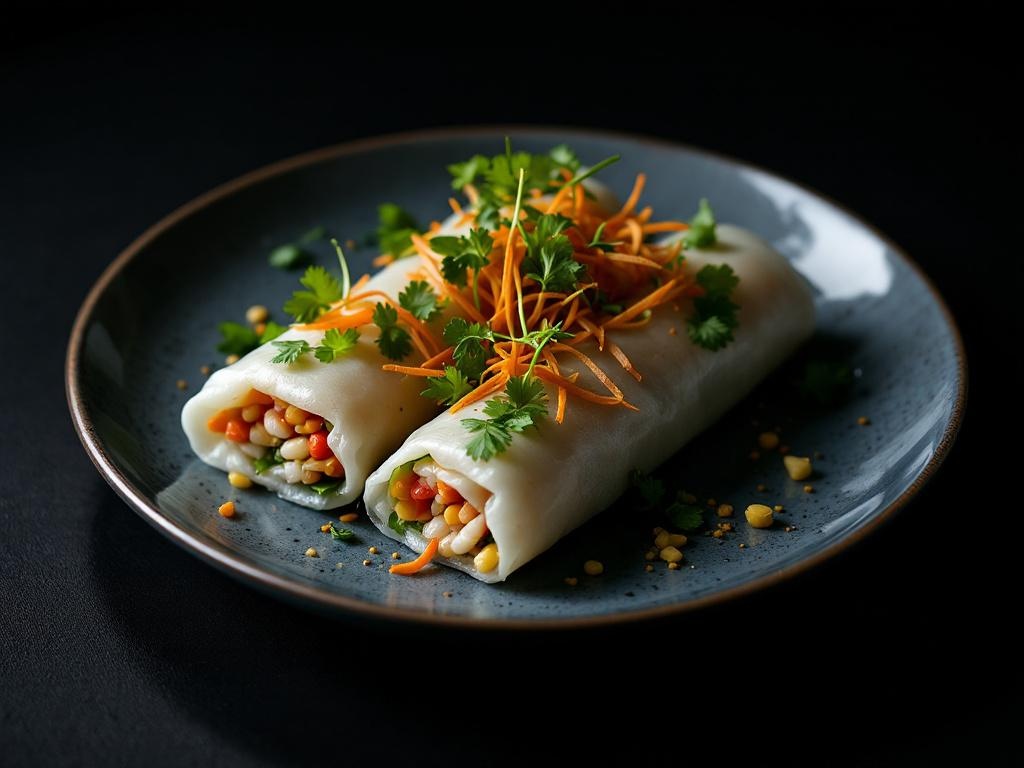
Goi cuon — Vietnamese fresh spring rolls — are made throughout the year but are particularly associated with Tet and celebratory meals. Unlike the fried spring roll, goi cuon are assembled fresh at the table — rice paper wrappers softened in water, filled with shrimp, pork, rice vermicelli, lettuce, fresh herbs (mint, coriander, perilla), and cucumber, then rolled into a translucent cylinder that reveals the colourful filling through the wrapper. The preparation is simultaneously simple and technically precise: the rice paper must be softened just enough (too short and it cracks; too long and it tears), the filling must be arranged in the correct order and proportion (the shrimp along the transparent wrapper side for visual presentation), and the roll must be sealed tightly enough to hold its shape when cut. For Tet, the table preparation of goi cuon together is both a practical way to feed a crowd and a social ritual.

‹Swipe for the next dish›
Serves4
Total25 min
Sourced1of 13 in BC
Cook
I

The Market List

The benchmark for each ingredient, and who stocks it near you. Tap a stockist to go straight to the product.

8 sheets
rice paper (bánh tráng nướng)
200g
cooked shrimp (16/20 count)
halved lengthwise
Your own market
100g
pork shoulder
cooked, sliced thin
Your own market
2 handfuls
fresh mint leaves
Not yet stocked in British Columbia
2 handfuls
fresh cilantro
Your own market
1
head butter lettuce
leaves separated
Your own market
100g
vermicelli noodles
cooked, cooled
Not yet stocked in British Columbia
30ml
hoisin sauce
Not yet stocked in British Columbia
30ml
fish sauce (Megachef)
Your own market
1 tbsp
peanut butter
Your own market
1 tbsp
lime juice
Not yet stocked in British Columbia
1
Thai bird's eye chilli
minced
Not yet stocked in British Columbia
1 clove
garlic
minced
Your own market

Each tap is counted, so the stockist sees the demand Provenance sends them.

II

The Method

1
Whisk together hoisin, fish sauce, peanut butter, lime juice, chilli, and garlic until smooth; set dipping sauce aside.
2
Dip rice paper into warm water for 3 seconds until pliable; lay flat on damp towel.
From the canon — Dried rice paper rounds briefly moistened in warm water, filled with herbs, noodles, protein, and vegetables, then rolled tightly. Rice Paper: Hydration and Rolling Technique →
3
Layer lettuce leaf, vermicelli, mint, cilantro, shrimp half, and pork slice across lower third of paper.
4
Fold bottom edge over filling, tuck sides inward, roll tightly away from you until sealed.
5
Arrange rolls seam-side down on platter; serve immediately with dipping sauce.
IV

Sensory Tests

◇Sight. Rice paper softens in warm water 5–7 seconds — still slightly firm, not limp. Damp surface prevents sticking. Shrimp face down shows through translucent wrapper.
◇Where it lives or dies. Rice paper softens in warm water 5–7 seconds — still slightly firm, not limp. Over-softened wrappers tear immediately; under-softened ones crack. Assemble at service or wrappers dry out and become unpleasantly chewy.
VI

What to Pour

The pairing
Blandy's Sercial Colheita Madeira
Blandy's · Madeira
Bridge — the dish's brine meets 'saline mineral' in the glass; salt water on both sides.
Not yet stocked in British Columbia
Fortified wine
From British Columbia
Fort Berens Riesling
Fort Berens Estate Winery · Lillooet
Cut — the acidity ('lime zest') scrubs the fat between bites; the palate arrives clean at every pass.
Not yet stocked in British Columbia
Wine
Without alcohol
GT's Synergy Organic Kombucha — Gingerade
Cut — the bead ('effervescent') scrubs the fat between bites; the palate arrives clean at every pass.
Not yet stocked in British Columbia
Non-alcoholic
The whole pairing
VII

Origin & Lineage

Vietnam; goi cuon (literally 'salad rolls') are a Southern Vietnamese tradition; their association with Tet is cultural rather than strictly traditional, as they represent freshness, sharing, and communal preparation.