PProvenance
Enter
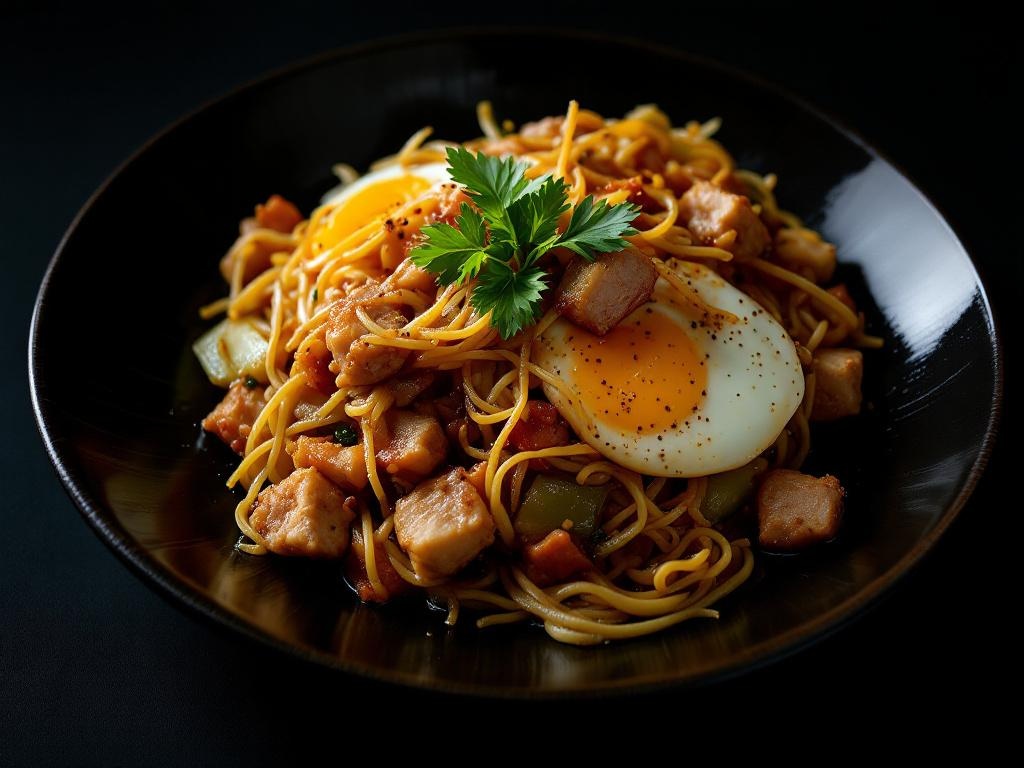
Goya Champurū (Okinawan — Bitter Melon, Egg, Pork Stir-Fry)
Japanese · Okinawa

Goya Champurū (Okinawan — Bitter Melon, Egg, Pork Stir-Fry)

Goya champurū is Okinawa's most iconic dish — a stir-fry of bitter melon (goya), firm tofu, pork (spam, thinly sliced pork belly, or pork luncheon meat), and egg, seasoned with soy and dashi. The word champurū comes from the Okinawan dialect and means something like 'mixed together' or 'chanpuru,' reflecting a broader cultural tradition of mixing disparate elements into something unified — itself a metaphor for Okinawa's history as a crossroads culture absorbing influences from Japan, China, and Southeast Asia. Goya (Momordica charantia) is the defining and most challenging ingredient. The bitter melon's bitterness — from compounds including momordicin and charantin — is its identity, not a flaw to be eliminated. The Okinawan approach to goya respects this bitterness while managing its intensity: the melon is halved, the seeds and white pith (which carry the most concentrated bitterness) are scooped out, the flesh is sliced thinly, then salted and allowed to weep before cooking. This removes some moisture and slightly reduces the sharpest bitterness without destroying the character that makes the vegetable interesting. The stir-fry requires high heat and a specific sequencing. Tofu — pressed firm, torn or cut into large pieces, and pan-fried separately until golden — is the foundation that absorbs the pork fat and sauce without disintegrating. The pork renders its fat into the pan, which then flavours the goya as it cooks briefly at high heat. Egg, beaten and seasoned, goes in last and is stirred through to just-set, binding the other elements loosely. Okinawa's food culture reflects the Ryukyu Kingdom's centuries of trade with China and Southeast Asia, and goya champurū is an edible expression of that crossroads identity — bitter, complex, and unlike anything else in the Japanese culinary canon.

‹Swipe for the next dish›
Serves4
Total25 min
Sourced1of 11 in BC
Cook
I

The Market List

The benchmark for each ingredient, and who stocks it near you. Tap a stockist to go straight to the product.

400g
goya (bitter melon / Okinawan variety)
halved lengthwise, seeds and pith removed, sliced 5mm thick
Not yet stocked in British Columbia
150g
canned Okinawan Spam or quality pork belly (Kurobuta preferred if using fresh)
cut into 1cm cubes
Your own market
2
large eggs
Your own market
100g
onion
sliced 5mm thick
Your own market
30ml
awamori or vegetable oil
Your own market
15ml
soy sauce
Okinawan preferred
10ml
sake or mirin
Not yet stocked in British Columbia
5g
salt
Your own market
2g
white pepper
Your own market
1 tsp
bonito flakes for garnish (optional)
Not yet stocked in British Columbia
Seaweed furikake for garnish (optional)
Not yet stocked in British Columbia

Each tap is counted, so the stockist sees the demand Provenance sends them.

II

The Method

1
Blanch goya slices in salted boiling water for 3 minutes to reduce bitterness; drain and squeeze dry with a clean kitchen towel.
2
Heat awamori in a wok or large skillet over medium-high heat; add goya and sauté, stirring frequently, for 4 minutes until edges begin to soften and lighten.
3
Push goya to the sides of the wok; add Spam or pork cubes to the centre and cook over medium-high heat for 3 minutes until edges render and brown slightly, stirring occasionally to incorporate with goya.
4
Add sliced onion and continue stir-frying for 2 minutes until onion begins to soften and becomes translucent at the edges.
5
Push all ingredients to the sides; crack eggs into the centre and scramble lightly with chopsticks or a spatula for 1 minute, then fold eggs into the goya mixture and stir-fry together for 1 minute until eggs are set but still slightly creamy.
6
Season with soy sauce, sake, salt, and white pepper; toss gently to combine and cook for 30 seconds to marry flavours.
7
Transfer to a warmed serving plate and garnish with bonito flakes and seaweed furikake if desired; serve immediately while steaming.
From the canon — Furikake (ふりかけ, 'to sprinkle') is the category of Japanese dry seasoning blends sprinkled over warm rice — ranging from the simple (nori + sesame + salt) to … Furikake — The Japanese Rice Seasoning Tradition (ふりかけ) →
IV

Sensory Tests

◇Sight. Goya stays slightly crisp and bright green; egg coats loosely without scrambling into dry curds.
◇Where it lives or dies. Goya stays slightly crisp and bright green; egg coats loosely without scrambling into dry curds.
VI

What to Pour

The pairing
Aramasa No. 6 X-type Junmai Ginjo
Aramasa Shuzo · Yamagata
Not yet stocked in British Columbia
Sake
From British Columbia
Fort Berens Riesling
Fort Berens Estate Winery · Lillooet
Not yet stocked in British Columbia
Wine
Without alcohol
GT's Synergy Organic Kombucha — Gingerade
Not yet stocked in British Columbia
Non-alcoholic

Why each one works is part of membership — Enter · from $49 a year →

The whole pairing
Pillar VII
Origin and lineage are part of membership.
Where the dish comes from and how it came to be — on every recipe.
Enter · from $49 a year
Sourced through Provenance

The hands behind the plate.